







Introduction:Want to know what makes the Caturra coffee beans from Colombia’s Huila region so special? This article takes an in-depth look at this globally popular specialty coffee, covering everything from the region’s geography and climate advantages, to the characteristics of the Caturra variety, along with practical flavor descriptions of the washed processed beans and pour over brewing recommendations to help you easily brew a balanced and mellow everyday coffee.
Colombia is the world’s third-largest coffee producer. Thanks to the high-altitude environment of the Andes Mountains, fertile volcanic soil, and diverse microclimates, it has nurtured numerous specialty coffee regions with unique flavors. Among them, Huila Province in the south is one of the representative high-quality production areas, known for producing coffee with distinct layers and a balanced acidity and sweetness. The widely planted Caturra variety here, a Bourbon mutation, is favored by many coffee lovers as an entry point due to its smooth mouthfeel and clear fruity notes.
Located in the northwest corner of South America, Colombia shares borders with Venezuela, Brazil, Ecuador, Peru, and Panama. Its terrain is mainly divided into western mountainous regions and eastern plains. The country features three north-south Cordillera mountain ranges, which not only provide abundant rainfall and suitable day-night temperature differences but also, due to significant altitude variations, create the unique advantage of multiple harvest seasons throughout the year. The mountainous areas between 1,000 and 2,000 meters above sea level have a subtropical climate, with temperatures maintained around 18°C year-round and annual precipitation reaching 2,000 to 3,000 millimeters, offering nearly perfect growing conditions for coffee trees.
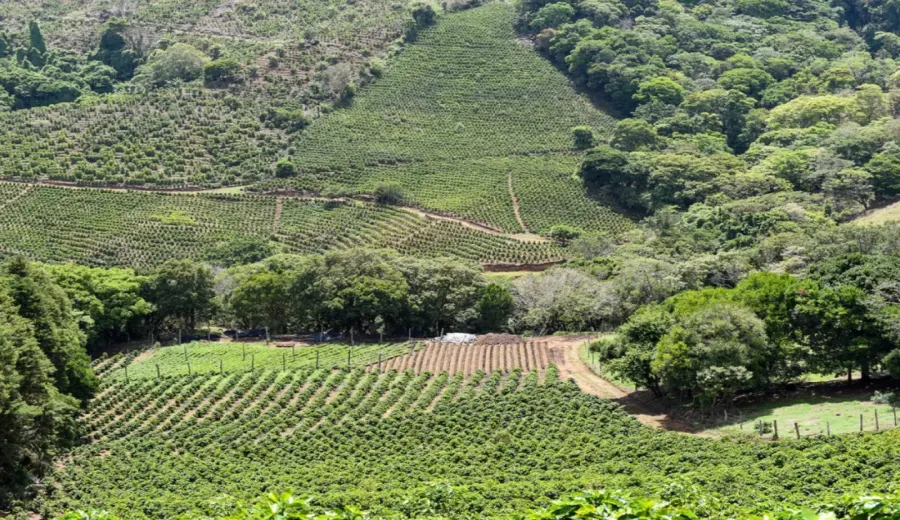
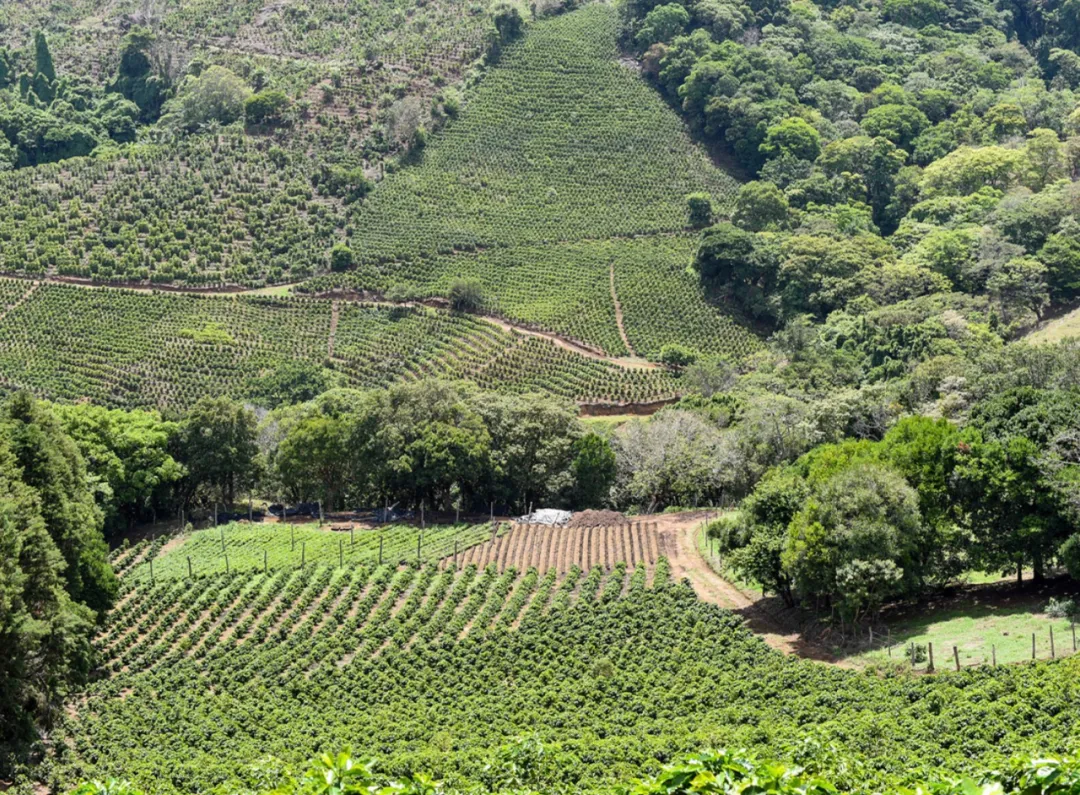
Among the many regions, Huila Province stands out due to its unique geographical environment. Located in the southern section of Colombia’s central mountain range and within the Magdalena River Valley, the province is surrounded by mountains, with coffee cultivation altitudes generally ranging between 1,200 and 1,800 meters. The climate here is mild, with average daily temperatures around 17°C to 23°C, and the soil is mostly mineral-rich volcanic earth. Coupled with a stable microclimate, the coffee produced in Huila often exhibits a distinct sweetness and complex aromatic layers, making it a highly acclaimed source of specialty coffee in the international market.
When it comes to commonly cultivated varieties in the Huila region, Caturra is definitely one of the highlights. As a dwarf mutation of Bourbon, Caturra was first discovered in Minas Gerais, Brazil, between 1915 and 1918. Its name originates from the Guarani language, meaning "small." This coffee tree has a relatively short stature, green leaves, and fruit clusters that are dense, primarily consisting of red berries. The coffee beans are oval-shaped, uniformly sized, and usually slightly larger than Catuai. Although it is relatively high-yielding and suitable for dense planting, it has weaker disease resistance, especially to leaf rust, nematodes, and berry diseases, thus requiring more meticulous field management.
The beginner-friendly option introduced here — the Huila washed Caturra coffee beans — uses the traditional washed processing method to delicately present the true character of this variety. Washed processing not only preserves a clean and bright acidity but also helps highlight the coffee’s sweetness and subtle aromas. The beans from this lot are grown at an altitude of1,500 to 1,800 meters, representing a typical high-altitude growing environment that allows the coffee cherries to ripen slowly, accumulating richer flavor compounds.
In terms of flavor profile, this Huila washed Caturra showcasesdark chocolate, nuts, and caramelas its main notes, along with a slight touch of tropical fruit acidity. The overall taste is mild and well-balanced. With moderate acidity and noticeable sweetness complementing each other, these coffee beans are excellent as an everyday drinking bean and are also well-suited for beginners just starting to explore single-origin coffees.
If you choose to brew using the pour over method, it is recommended to usea V60 dripper, with a1:15 coffee-to-water ratio, and to control the water temperature at around92°C. These parameters can effectively bring out the nutty and caramel aromas in the coffee, while balancing the acidity and sweetness to deliver a smoother overall mouthfeel. During brewing, it is suggested to pour in stages and control the flow rate to ensure the layered extraction of flavors, avoiding over-extraction or under-extraction.
In summary, the Caturra coffee beans from Colombia’s Huila region, with their stable quality and approachable flavors, make a great choice for many coffee newcomers stepping into the world of specialty coffee. By understanding the region’s characteristics, the variety’s traits, and the suitable brewing methods, you too can easily enjoy a rich cup of coffee from the highlands in the comfort of your home.
The above content is compiled by CoffeeHunters, a coffee news website.


