







Introduction:When placing an order at Starbucks, the simple act of writing your name on the cup may seem harmless, yet it often leads to a series of amusing stories and misunderstandings due to accents, misspellings, or homophones. From “Lucy” becoming “Nosi,” to surnames like “Weng” being mistakenly written as “Wen,” “Wen,” or “Wang,” and even cases where one person’s name appeared in 13 different variations—these little mix-ups are both cringe-worthy and laughable. This article compiles real experiences from customers both in China and abroad, exploring the common reasons why Starbucks staff get names wrong, and how to maintain the fun of the service while reducing misunderstandings and inconveniences.
When purchasing coffee at Starbucks, staff typically ask for the customer’s name and write it on the cup to help with identification when picking up the order. While this process is designed to improve efficiency and accuracy, differences in pronunciation, spelling habits, and homophones often lead to hilarious and sometimes awkward “cup name incidents.”
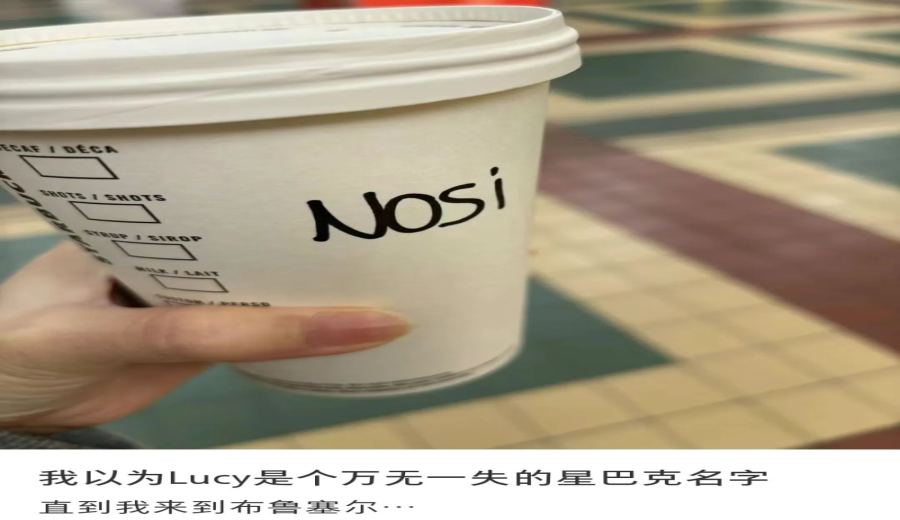
One netizen in Brussels shared that she clearly told the barista her English name was “Lucy,” but her cup ended up with the completely unfamiliar name “Nosi,” which had no relation whatsoever to what she had said. Had she not seen it with her own eyes, she might not have dared to claim her drink. Such incidents are not isolated cases—similar funny or embarrassing situations occur all around the world.
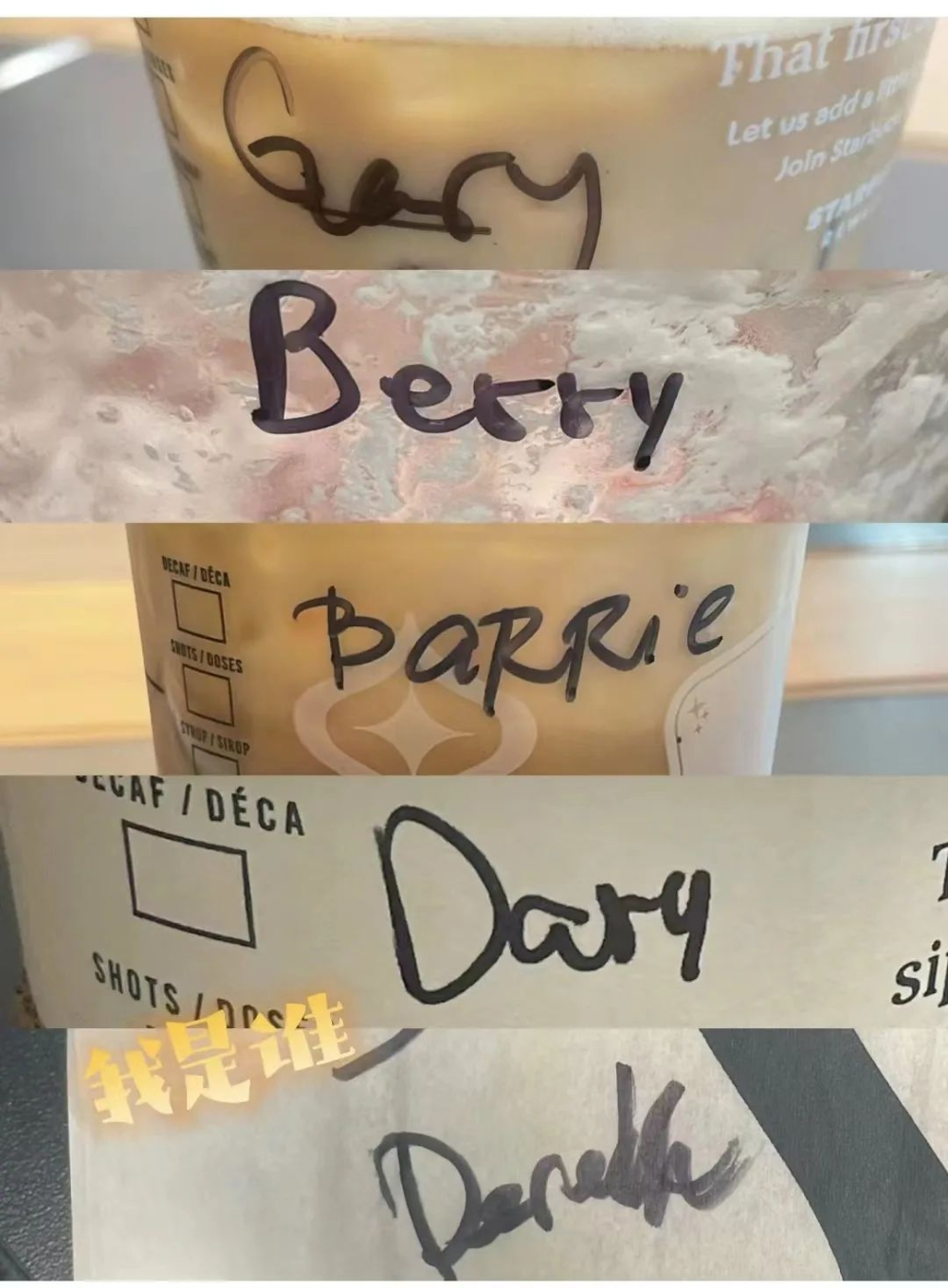
Another customer named “Barry” revealed that he always emphasizes the correct spelling of his name, yet baristas repeatedly get it wrong and have never once written “Barry” correctly. He has even become reluctant to respond to being called by the baristas, fearing he might go to the wrong pickup area. This adds an unnecessary layer of stress to what should be a relaxing coffee experience.
Netizen “Carrie” even compiled a collection of all the incorrect versions of her name, tallying up to as many as 13 different variations. Even common and simple names like “Alice,” “Jay,” and “Amy” can end up being mistakenly written as “Ellis,” “Gay,” or “Eyme.” This shows that even short or single-syllable names can be miswritten due to pronunciation or auditory misjudgment.
Interestingly, because English is a phonetic language, multi-syllabic or uniquely pronounced names are more prone to being misspelled—especially by baristas who aren’t familiar with pronunciation rules. Some customers have resorted to using single-syllable nicknames in hopes of reducing errors, yet many still end up with “unexpected” new names, adding fodder for conversation and laughter.
Turning to the domestic market, where surnames are typically used for labeling, the error rate should theoretically be lower. Yet in reality, surnames like “Weng” are often mistakenly written as “Wen,” “Wen,” “Wang,” “Wang,” or “Wu”; Miss Tang has also been called Miss Kang, Miss Tang, or even Miss Tan. These cases show that even within the familiar Chinese linguistic environment, homophones with different characters continue to occur frequently.
In most cases, these “name-writing mistakes” are unintentional. When faced with uncertain spellings or pronunciations, staff often make judgments based on their own understanding, which inevitably leads to discrepancies. Some customers find these mix-ups amusing and even actively share them with friends, turning them into small daily joys.
However, some consumers do find these issues bothersome, believing that if staff are unsure about the correct name, they should take the initiative to confirm again rather than casually “creating” a new one. This not only helps prevent customers from not finding their drinks, but also avoids unnecessary embarrassment or misunderstanding caused by incorrect labeling.
Overall, while most of the small mistakes with Starbucks cup names are lighthearted anecdotes, they also remind us that attention to detail plays an important role in the service process. For staff, adding an extra confirmation step when encountering unclear pronunciations or uncertain spellings can effectively reduce misunderstandings. For customers, maintaining a bit of understanding and humor can also make the coffee moment more relaxed and enjoyable.
The above content is compiled by CoffeeHunters, a coffee news website.


