







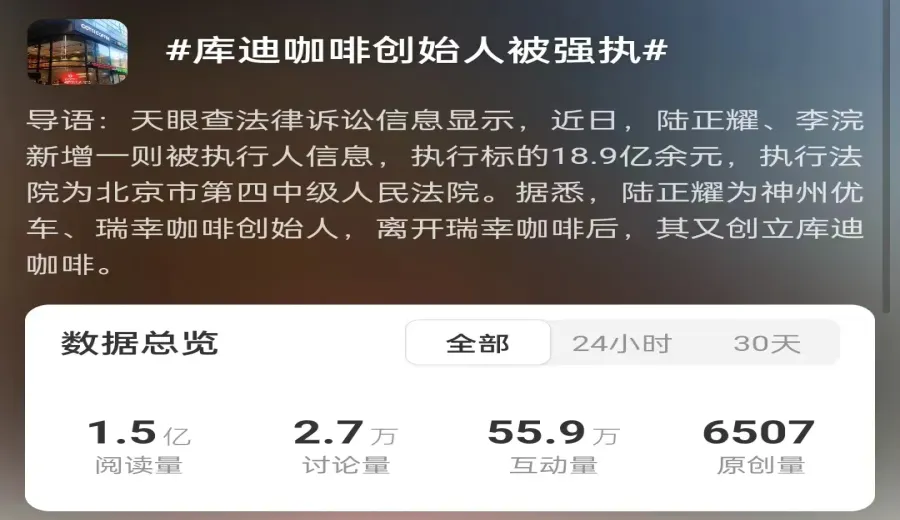
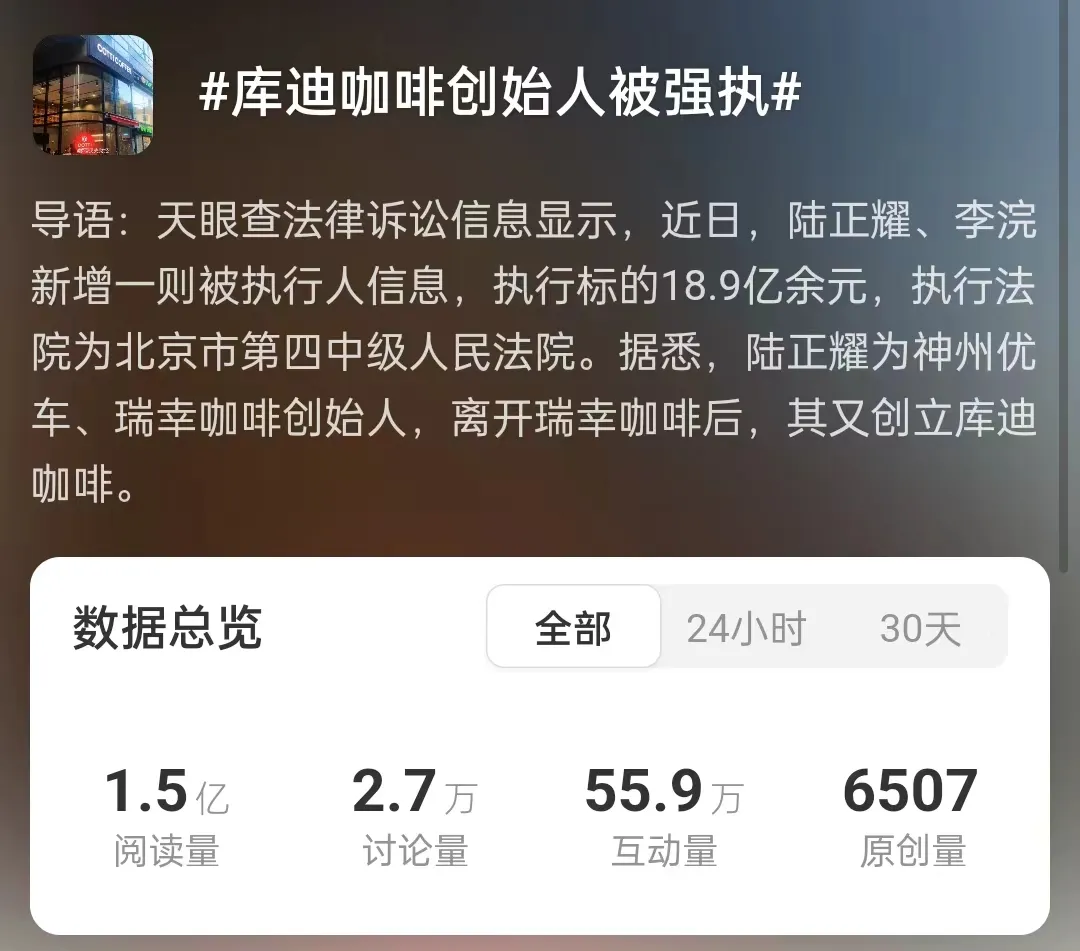
Introduction:As Luckin Coffee’s rival, Cotti Coffee, has just opened its first overseas store in Hawaii, its founder Lu Zhengyao has been hit with a court-enforced execution of nearly 1.9 billion yuan — his third such enforcement within a year, bringing the cumulative total close to 3 billion yuan. This article delves into the ins and outs of Lu Zhengyao’s debt crisis, explores its potential impact on Cotti Coffee’s financing prospects and expansion strategy, and highlights key points in capital chain management that coffee brand operators should pay attention to.
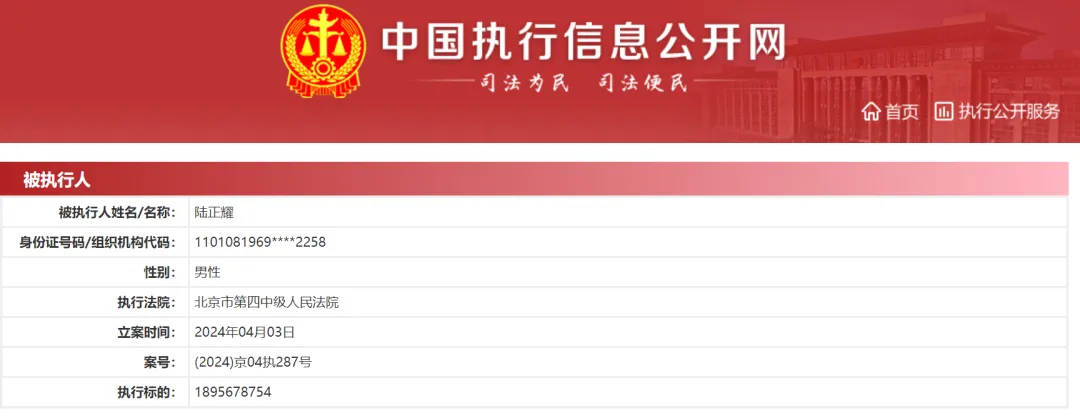
While Cotti Coffee made its debut in Hawaii with its first store, its founder Lu Zhengyao has once again been caught up in a financial storm, with the court enforcing an execution of approximately 1.896 billion yuan. According to data from China’s Enforcement Information Disclosure website, the case was filed by the Beijing No. 4 Intermediate People’s Court on April 3, with an execution target as high as nearly 1.9 billion yuan. This marks his third time facing enforced execution within just one year, with the cumulative amount now approaching the 3-billion-yuan mark.
Although Cotti Coffee has stated that its operations remain normal, the founder’s massive debt issue has still drawn market attention to whether its future fundraising capabilities might be affected. This is especially critical at a time when the brand is aggressively expanding overseas, with its number of stores having already surpassed 7,000 — making financial stability paramount.
Public data shows that this execution case stems from legacy issues of the ‘Shenzhou System’ automotive enterprises founded by Lu Zhengyao in earlier years. Since the Luckin financial scandal in 2020, the Shenzhou System’s capital empire has collapsed, leaving Lu Zhengyao facing numerous contract and debt lawsuits. Notably, since 2021, he and his spouse Guo Lichun have been subject to multiple enforced executions due to contract disputes, with the cumulative amount being substantial, along with as many as 10 high-consumption restriction records.
Data from Tianyancha further reveals that, in addition to this nearly 1.9-billion-yuan case, Lu Zhengyao also has other execution records in March and April 2023, and January 2024, totaling more than 1.1 billion yuan. In other words, within about a year, his total execution amount has reached nearly 3 billion yuan, and there are also multiple equity freezes and consumption restrictions under his name.
As the chairman of Cotti Coffee’s Strategy Committee, although his status as a legal representative means his personal debts will not directly disrupt the company’s daily operations, in a development model where the brand is highly reliant on external funding, the founder’s financial situation will undoubtedly affect investor confidence. Especially as Cotti Coffee has long adopted a low-price strategy, fiercely competing with Luckin Coffee and actively expanding overseas — all of which require stable capital support.
Experts point out that for coffee brand operators, this case highlights the importance of capital chain management. During rapid expansion, in addition to focusing on product and market strategies, it is even more crucial to establish diversified sources of funding and maintain good financial transparency, in order to reduce the potential impact of the founder’s personal risks on business operations.
Whether Cotti Coffee can maintain its growth momentum under the shadow of its founder’s debt will be a focus of continued industry attention. For investors and coffee industry players, this case also provides a valuable lesson, reminding them that when evaluating a brand’s development potential, they need to fully consider the correlation between the founder’s credit status and the company’s financial structure.
The above content is compiled by CoffeeHunters, a coffee news website.


