







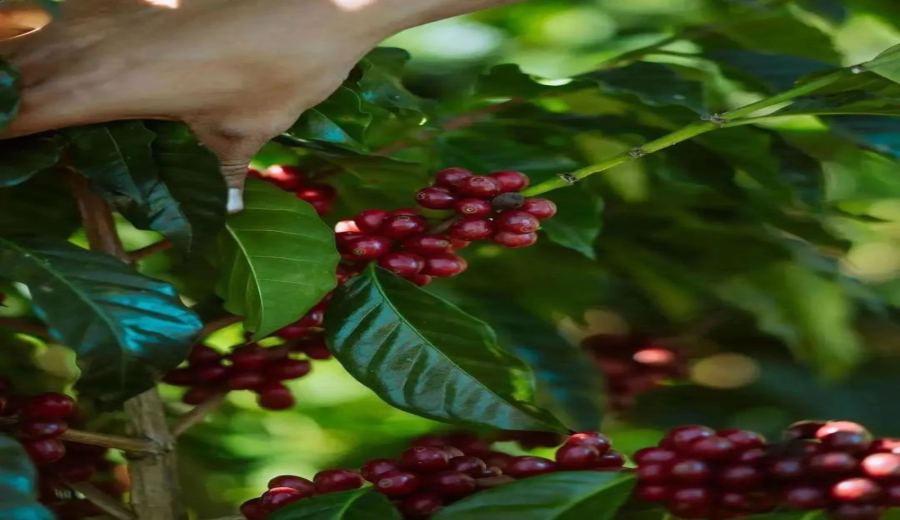
Introduction:Pink Bourbon, as a rising star in Colombia’s specialty coffee competitions, has captured the attention of many coffee enthusiasts with its unique pale pink fruit skin and citrusy, floral flavor profile. But did you know? Genetic testing results have revealed that some Pink Bourbon may not actually be purebred Bourbon at all. This article will delve into the origins, cultivation background, true genetic makeup, and how to brew it to achieve the best flavor—giving you a comprehensive understanding of this mysterious coffee.
In various Colombian coffee competitions, the name “Pink Bourbon” has become increasingly common in recent years. What makes this coffee special is not only its rare pink-colored fruit, but also the extraordinary aroma and complexity it exhibits in cupping. However, recent scientific research has found that many coffees labeled as Pink Bourbon are genetically more closely related to Typica or Geisha, which raises the question: Where does Pink Bourbon really come from? Is it truly a member of the Bourbon family?
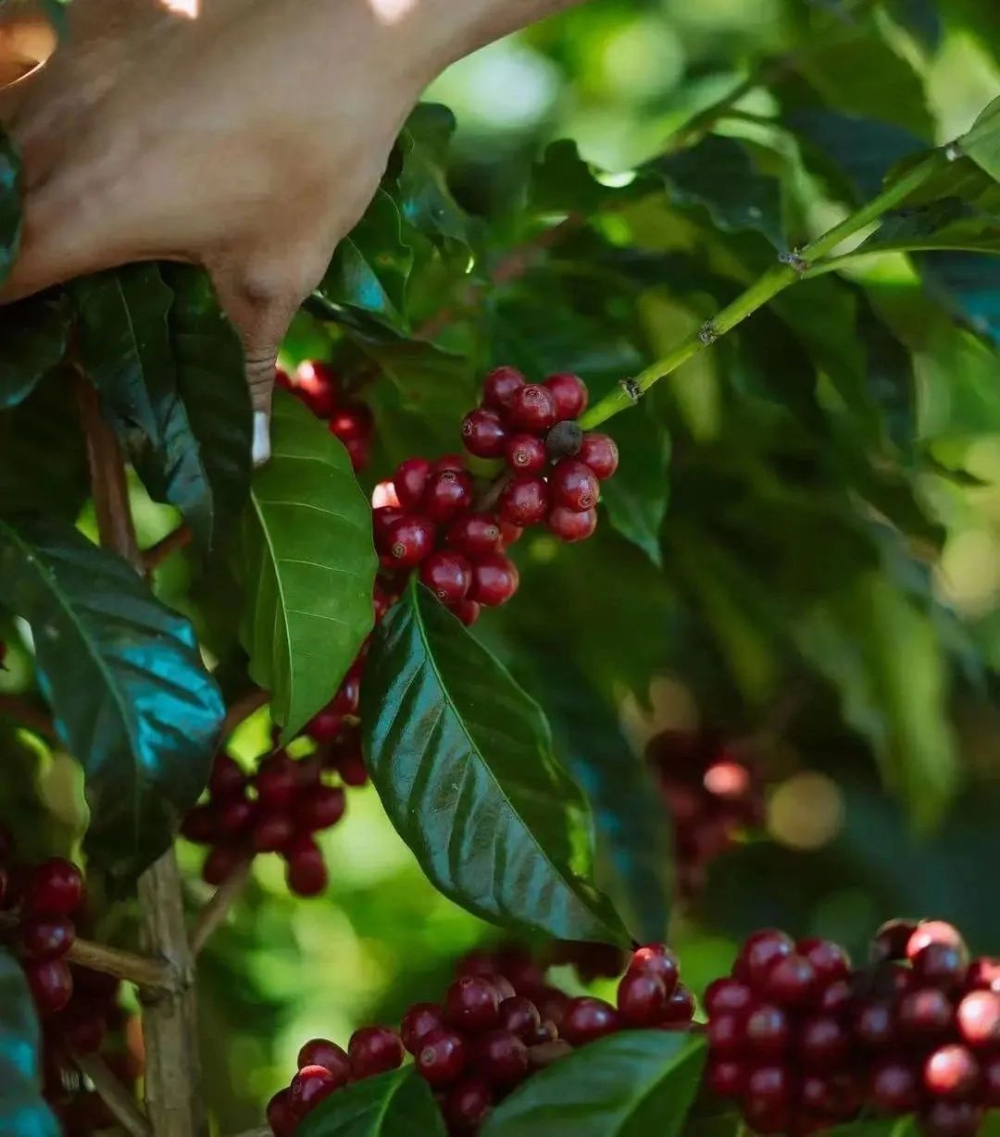
As the name suggests, Pink Bourbon refers to the Bourbon variety with a soft pink outer skin on the fruit. It’s important to note that this refers to the outer flesh layer surrounding the coffee bean, not the color of the green or roasted bean that we commonly refer to. This pink hue is not common and is a recessive trait, so it requires special isolation during cultivation to avoid crossbreeding with other dominant-colored varieties (such as Red Bourbon or Yellow Bourbon), otherwise the pink color can easily be masked.
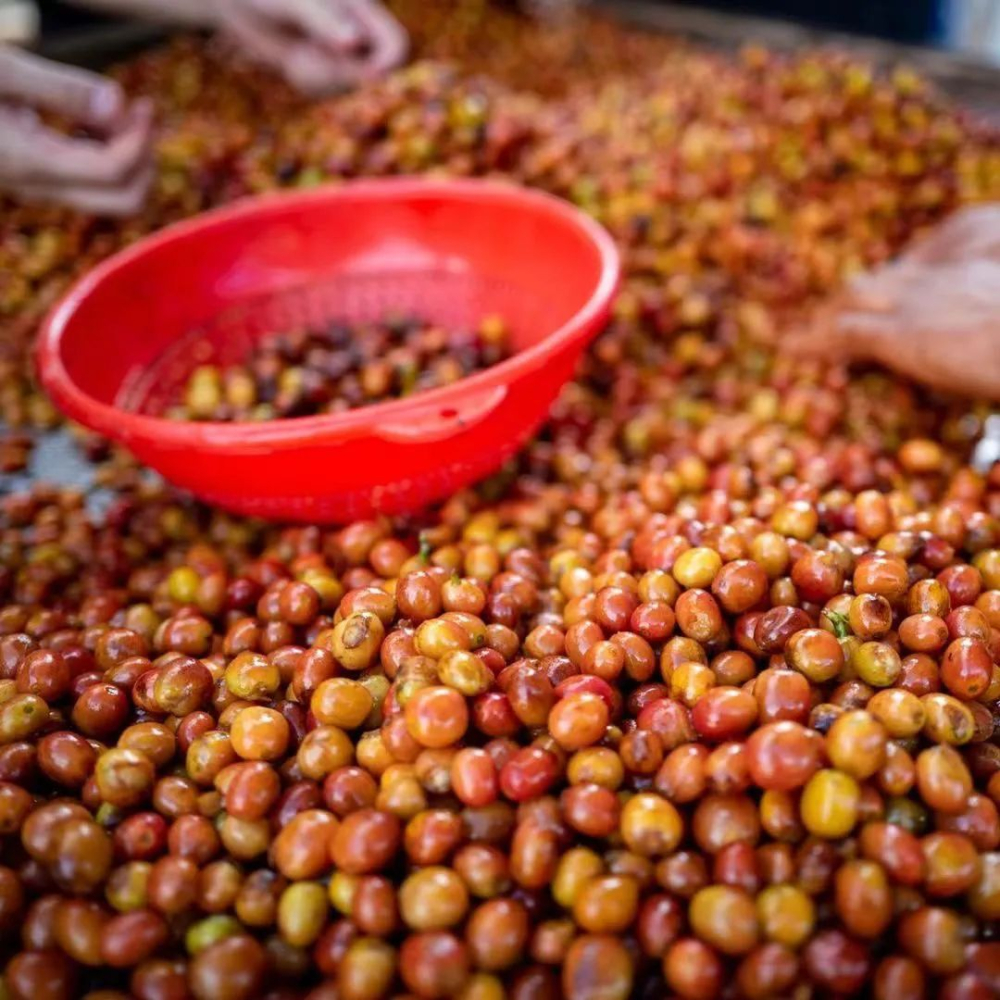
Currently, Pink Bourbon is mainly grown in Central and South America, with Colombia having the largest cultivation scale. According to records, Cenicafe, a research institution under the Colombian Coffee Growers Federation (FNC), established an experimental farm in San Adolfo, Huila, as early as the 1950s to 1980s. The goal was to develop new varieties with greater disease resistance or market potential through crossbreeding between different varieties. Pink Bourbon was born under such circumstances, initially resulting from a cross between Red Bourbon and Yellow Bourbon.
However, Pink Bourbon did not immediately gain much attention. During the coffee leaf rust epidemic that ravaged Colombia in the 1980s, many farms turned to planting disease-resistant varieties such as Caturra and Castillo, and Pink Bourbon was just one of the options introduced. It wasn’t until 2002 that Rodrigo, the owner of Finca Blanca, began to take an interest in cupping and personally tested multiple varieties on his farm. During cupping, he discovered that Pink Bourbon exhibited a refreshing flavor profile similar to Geisha, including bright citrus notes and delicate floral aromas, which led to in-depth research on this variety.
In 2014, Rodrigo decided to cultivate Pink Bourbon separately and shared its seeds with other farms for trial planting. This move gradually brought Pink Bourbon into the public eye and helped it make a name for itself in major international coffee competitions. For example, in the 2023 World Barista Championship (WBC), contestant Boram UM used Pink Bourbon to win the championship, further boosting its visibility.
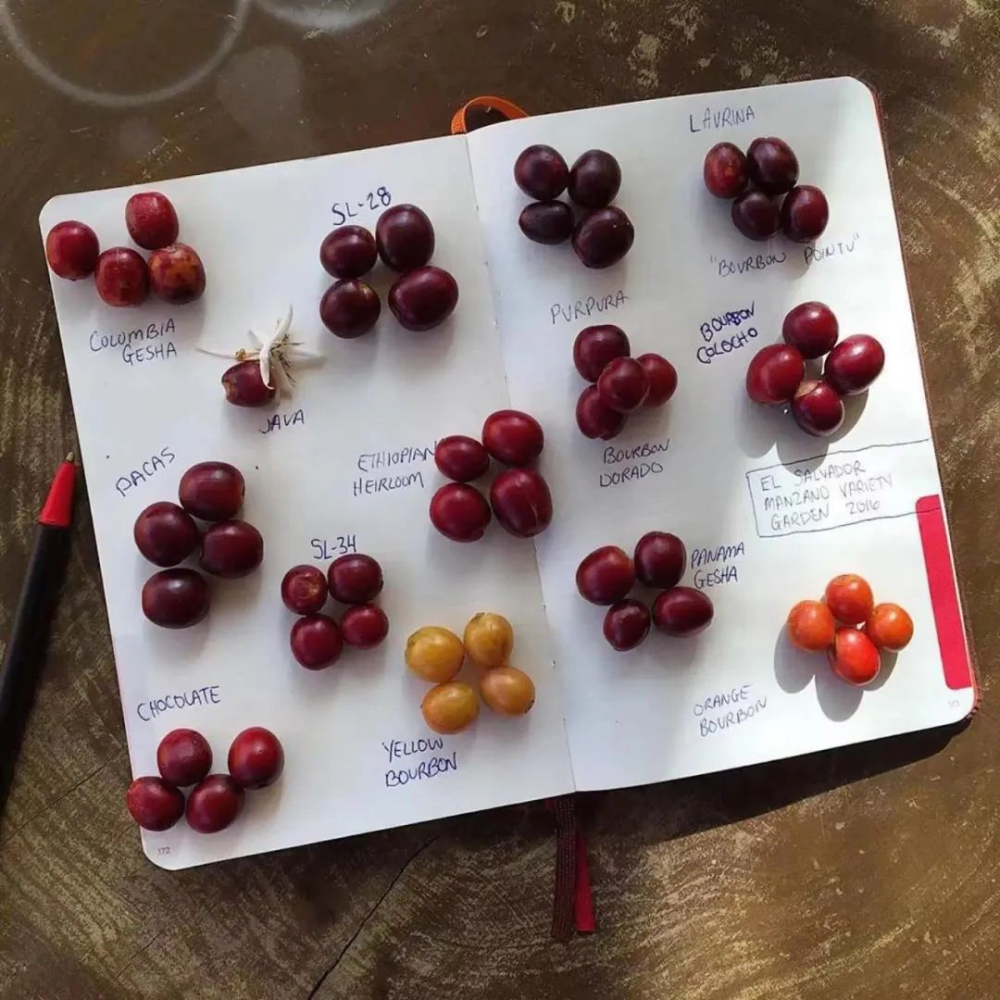
However, the “mystery of its origin” has not yet been fully resolved. Genetic testing results show that many varieties labeled as Pink Bourbon actually do not contain typical Bourbon genes. According to 19 test data entries listed in the book “Specialty Coffee Studies,” up to 70% of the samples did not carry Bourbon chromosomes; instead, Typica, Geisha, and even Ethiopian landrace genes were dominant. Additionally, the top leaves of Pink Bourbon tend to be light brown, which is distinctly different from the green top leaves typical of Bourbon—this also serves as evidence that it may not be a purebred Bourbon.

Since genetic testing has raised doubts, should these varieties, whose actual genetics are primarily Typica or Geisha, be renamed? For instance, those with a higher proportion of Typica could perhaps be called “Pink Typica,” and those with a high percentage of Geisha might be termed “Pink Geisha.” Although there is currently no unified standard, one thing is certain: regardless of their genetic origin, these pink-skinned varieties demonstrate extremely high quality potential in cupping and offer consumers a fresh and unique flavor experience.
For coffee enthusiasts, understanding the characteristics of Pink Bourbon can help make more suitable choices when purchasing or brewing. It is generally recommended to use a medium-light roast to preserve its bright acidity and complex aromatic layers. For brewing, a V60 or other pour over dripper can be used, with a grind size recommended to be between medium-fine and fine (e.g., 18–20 mesh sieve passing rate), and water temperature controlled at 90–92°C. Using mid-section pouring and segmented extraction helps to bring out its citrus, floral, and honey-like sweetness.
In summary, whether or not there is genetic controversy, Pink Bourbon remains a rising star in the specialty coffee market. It reminds us that the classification and naming of coffee varieties still involve many blurred areas in both science and market perception—and exploring these unknowns is one of the fascinating aspects of coffee.
The above content is compiled by CoffeeHunters, a coffee news website.


