







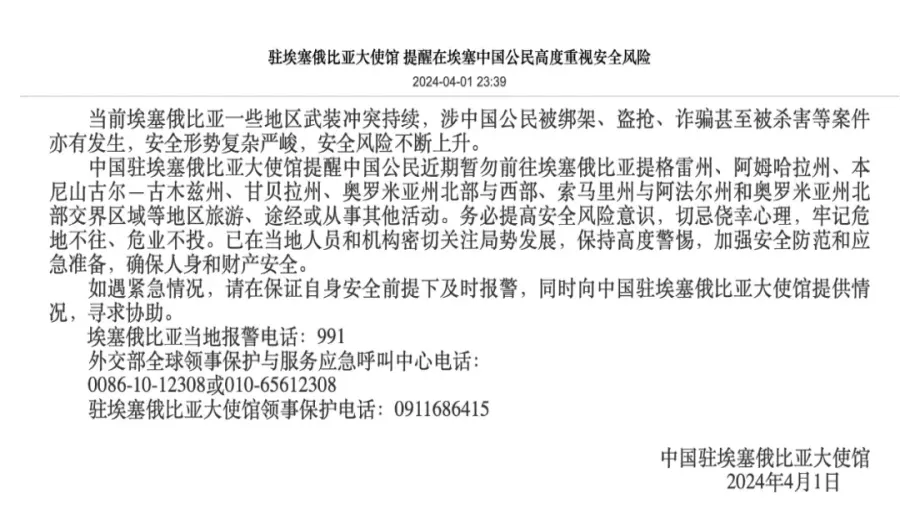
Introduction:Recently, multiple regions in Ethiopia have been designated as high-risk areas, with the Chinese Embassy in the country issuing safety advisories urging citizens to avoid travel to several states, including Tigray. This situation not only poses a threat to local security but also directly impacts the coffee trade and tourism industry. This article provides an in-depth analysis of the background of the conflict, the current situation, and the potential impact on coffee-growing regions and supply chains, helping traders, coffee enthusiasts, and travel planners make more informed decisions.
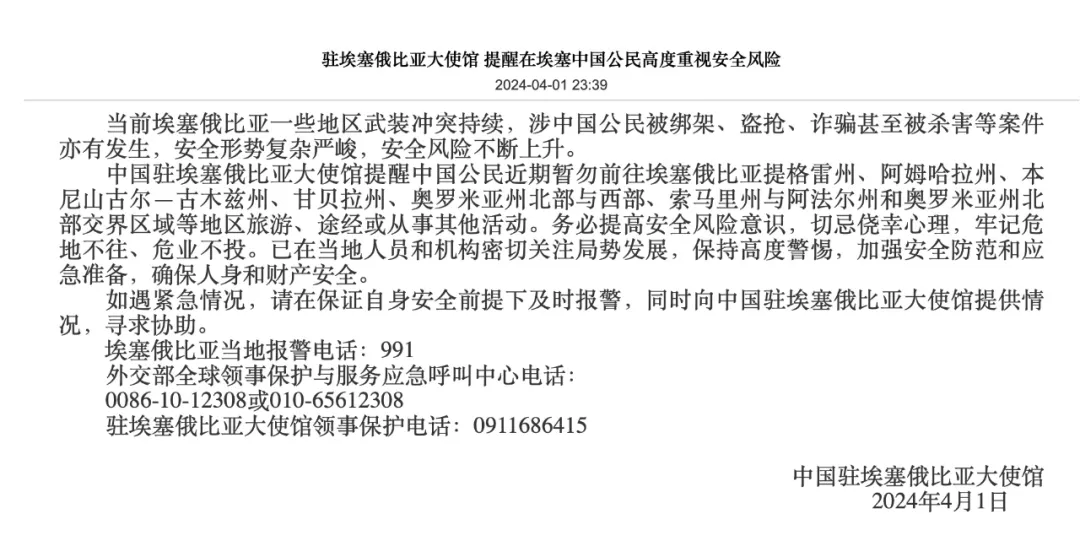
The Chinese Embassy in Ethiopia recently issued an important safety advisory, calling on Chinese citizens to temporarily avoid traveling to multiple high-risk areas, including Tigray and Amhara. These regions have experienced deteriorating security conditions due to prolonged civil war and escalating clashes between local armed groups, significantly affecting the local economy—particularly the coffee and agricultural sectors, which are pillars of the national economy—as well as the tourism industry.
The scope of this advisory includes Tigray, Amhara, Benishangul-Gumuz, Gambella, northern and western Oromia, Somali, and Afar regions, among others. Travelers planning to visit Ethiopia for coffee procurement, research, or tourism should pay close attention to the current situation and follow the embassy’s recommendations by enhancing their personal safety awareness to ensure the protection of both themselves and their property.
The current conflict primarily stems from the long-standing opposition between the Tigray People's Liberation Front (TPLF) and the Ethiopian government forces. This political party, composed of local residents of the Tigray region and classified as a left-wing organization, came into conflict with the central government after it held regional elections independently, contrary to central directives. This eventually led to armed conflict. Although the two sides signed a peace agreement in 2022, localized unrest and sporadic violent incidents continue to occur.
In addition to the Tigray issue, Ethiopia has also seen large-scale protests triggered by longstanding land disputes, leading to the dissolution of the former ruling party and the establishment of a new government. Clashes then reignited between the new government and the TPLF, further complicating the situation. At the same time, in an effort to strengthen national security, the Ethiopian federal government had planned to integrate local armed forces from the original 11 states into the federal military system. However, this move sparked dissatisfaction among the people of the Amhara region, who believed it weakened local autonomy and security guarantees. As a result, clashes broke out again in August 2023 between the regional Fano forces and federal troops, with the fighting continuing to spread to the south and surrounding areas.
This series of upheavals has had a severe impact on Ethiopia’s economy, with agriculture and tourism being the hardest hit. Agriculture and animal husbandry are the main sources of the country’s economy, with exports including leather, gold, and globally renowned coffee. However, as Ethiopia is a landlocked country, all imports and exports rely on the ports of neighboring Djibouti. Currently, routes to these ports have been frequently targeted by armed attacks, leading to transportation disruptions. Key trade routes have been classified as “dangerous zones,” resulting in inflation and economic recession.
In terms of the tourism industry, the Amhara region, known for its historical and cultural heritage, has been particularly devastated. For example, the iconic historic town of Lalibela, which previously relied on tourism revenue to sustain its local economy, has now seen a drastic decline in visitors due to security concerns. This has led to a sharp drop in business for local hotels, cafes, and retail shops, with many workers forced to leave their jobs, relocate, or even seek livelihoods abroad.
It is worth noting that Ethiopia is widely recognized as the birthplace of coffee and is home to over 10,000 native coffee varieties, attracting countless coffee traders and green bean scouts each year. Although the main conflict areas are located north of the capital, recent reports of multiple kidnapping incidents around the capital have also posed potential threats to professionals planning to visit southern coffee-growing regions. Therefore, whether engaging in coffee trade or planning in-depth travel, individuals should carefully assess the current risks.
In summary, according to the official recommendations of the Chinese Embassy in Ethiopia, it is currently advisable to avoid traveling to high-risk areas of the country, whether for tourism, business, or procurement activities. For individuals or businesses already in the country, it is essential to continuously monitor the evolving situation, remain vigilant, prepare for emergencies, and when necessary, promptly contact local police and seek assistance from the embassy to ensure personal safety.
The above content is compiled by CoffeeHunters, a coffee news website.


