







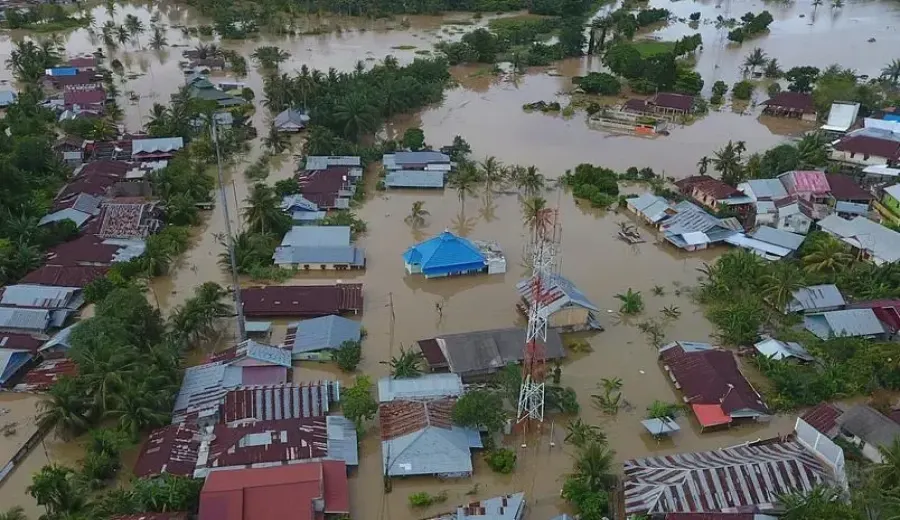
Introduction:As a globally significant coffee supplier, Indonesia is currently facing severe challenges due to extreme weather. Torrential rains have triggered devastating floods and landslides, severely impacting key production areas. Robusta coffee, which was at a critical growth stage, has been hard hit. This article delves into the disaster details in Java and Sumatra, revealing the actual impact of potential production drops of 20%–50%, and analyzes specific government measures such as fertilizer subsidies and industry prioritization policies aimed at mitigating the crisis. It provides first-hand updates on production regions for readers concerned about the global coffee supply chain.
Situated on the equator, Indonesia has long maintained its position as a major global producer of Robusta coffee, thanks to its unique volcanic terrain and climate conditions. Its main growing regions span islands including Sumatra, Java, Sulawesi, and Bali, with the Bandung area on Java Island being the largest coffee-producing region within the island. However, the persistent abnormal climate since the beginning of this year is delivering unprecedented shocks to these prime producing areas.
According to monitoring data from Indonesia’s official disaster management agency, the country has recently experienced frequent heavy rainfall, leading to saturated soil moisture and triggering a cascade of disasters.Especially in coffee-growing zones with widespread volcanic ash soil, excessive water accumulation not only causes root rot but also directly induces large-scale landslides and river flooding.This compound disaster has dealt a fatal blow to coffee trees that are in the fruit development stage.
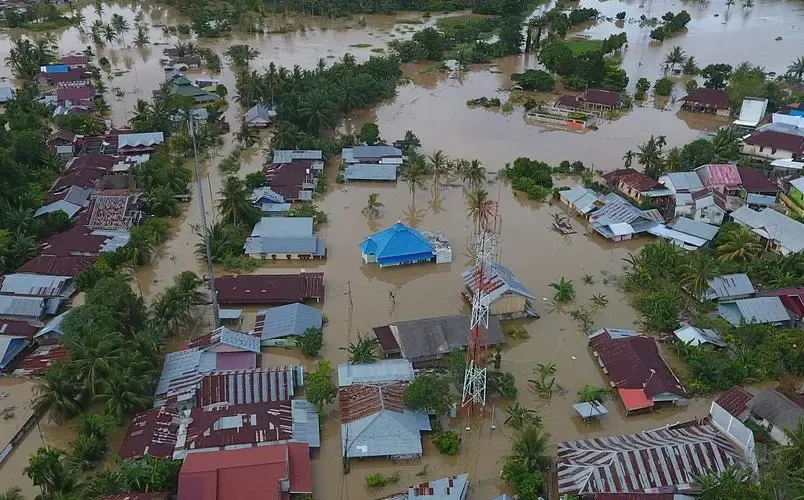
The disaster situation in West Java is a microcosm of the national crisis. Among them, the Bandung area, as the central hub of Java’s coffee production, has recorded the collapse of more than 30 agricultural buildings and the interruption of multiple roads in production regions. More alarmingly, 10 people have already lost their lives to landslides, indicating that the disaster has escalated from purely agricultural and economic concerns to a serious threat to human life.
Turning to Sumatra Island, the distribution of the disaster shows clear regional characteristics. An emergency bulletin from the country’s National Disaster Management Agency notes that nine administrative regions in the west, including the capital city of Padang, have been severely affected, with over 75,000 residents forced to evacuate.Notably, this wave of floods has struck the main cultivation areas of Sumatra’s Robusta coffee — precisely when the coffee trees are in the fruit expansion and color-change stages. The persistently high humidity environment has accelerated the spread of pests and diseases.。
Industry insiders revealed that the most severely affected areas actually avoided the traditional high-altitude Arabica regions, but the Robusta variety, with its stronger disease resistance and high-yield characteristics, has been shouldering the responsibility of supporting the demand of both domestic and international instant coffee markets.Farmers’ field observations have found that in some plantations, the fruit drop rate has exceeded 40%, and unripe green fruits show obvious signs of mold infection.。
Regarding the pessimistic production estimates, several local roasters have analyzed that if the approximate 20% reduction in Java is combined with the potential 30%–40% loss in Sumatra’s Robusta production regions, there is indeed a risk that the national total supply could be cut in half.In particular, the export orders for the third quarter of each year are already showing warning signs of delivery delays.。
In response to the industry crisis, the Indonesian government has initiated a multi-layered contingency plan. The latest revised "National Agricultural Resilience Development Outline" explicitly lists coffee as one of the priority support items. In addition to deploying expanded technical assistance teams into disaster-stricken areas, the government has also made an unprecedented move by raising the fertilizer subsidy quota from the original 4.7 million metric tons to 9.5 million metric tons.This measure mainly provides affected farmers with up to 300 kilograms of specialized replanting fertilizer per hectare, with priority delivery to key cultivation areas at altitudes of 800–1200 meters.。
Industry experts suggest that when selecting Indonesian beans, consumers may pay special attention to origin labeling and roast dates, and prioritize Arabica varieties from the Toraja Highlands of Sulawesi or the island of Flores, as these regions have remained relatively unaffected by the current disaster.At the same time, it’s advisable to check whether the roastery uses the washed processing method, as this technique better highlights the citrus notes and rich aftertaste that disaster-resilient coffee beans should still deliver.。
The above content is compiled by CoffeeHunters, a coffee news website.


