







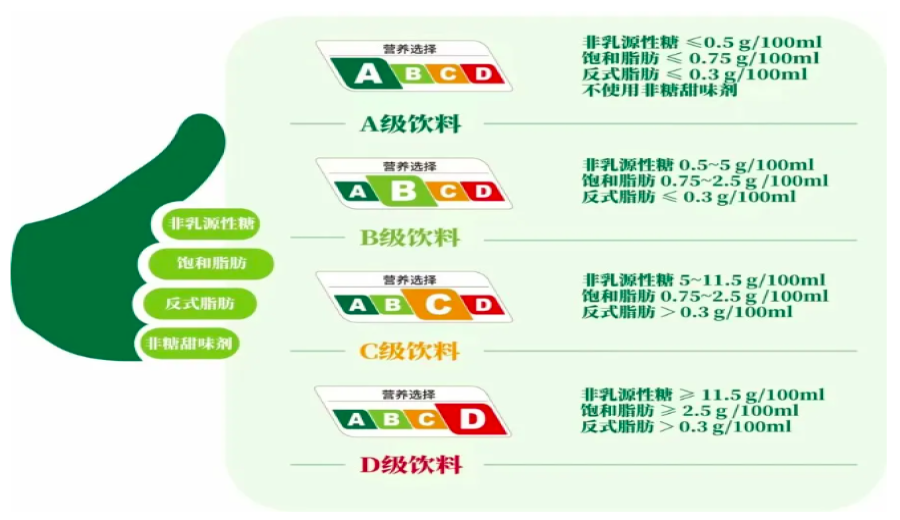
Introduction:The Shanghai Center for Disease Control and Prevention has recently launched a pilot program for the "Nutrition Choices" grading system for beverages, evaluating both freshly prepared and packaged drinks on a four-tier scale from A to D based on their healthiness. Brands such as霸王茶姬 (Hero Tea) and 奈雪的茶 (Nayuki) have taken the lead in implementing this system. Drawing inspiration from Singapore’s sugar-limiting policy, the classification is based on a comprehensive assessment of sugar content, fat, and the use of sweeteners. Consumers can view these grades directly on menus, mini-programs, and beverage cups. This article breaks down the grading criteria, current implementation status, and market feedback to help you make smarter beverage choices.
A major shift is underway in China's beverage market. The Shanghai Municipal Center for Disease Control and Prevention has officially initiated a pilot program for the "Nutrition Choices" grading label, categorizing freshly prepared and packaged drinks into four grades — A, B, C, and D — to help consumers intuitively assess the nutritional value of beverages. Currently, four brands, including霸王茶姬 and 奈雪的茶, have become the first participants in the trial, with Starbucks also set to join soon.
This grading system draws inspiration from Singapore’s sugar-control policies. It evaluates non-dairy sugars, saturated fats, trans fats, and non-sugar sweeteners in beverages to determine their overall health grade. Customers can clearly see the corresponding grade labels on in-store menus, online mini-programs, and even on the packaging of drinks. Some products also include additional labeling of the Glycemic Index (GI), offering more precise health references.
Taking霸王茶姬 as an example, since February 29, it has fully implemented the Nutrition Choices labeling across all its Shanghai outlets. Whether ordering online or purchasing in-store, customers can view the grade information directly on the mini-program, menu, or on the beverage cup itself. Certain drinks also specifically indicate their GI values, helping consumers who need to manage blood sugar levels make more appropriate choices.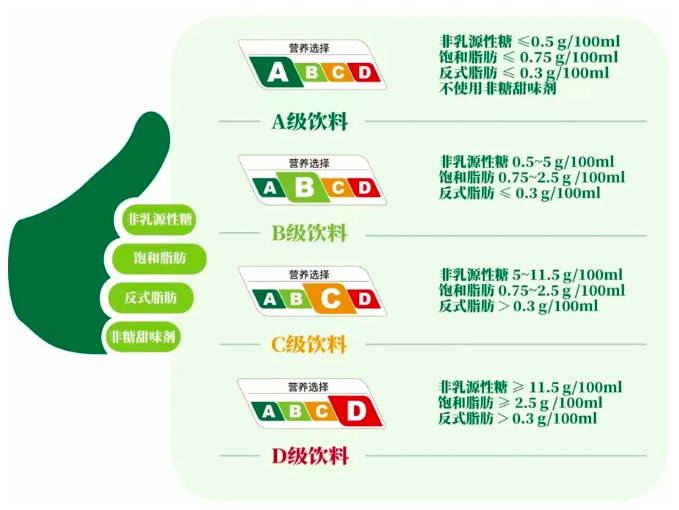
奈雪的茶 has updated the labeling on all its bottled beverages sold in supermarkets, where the prominent A-to-D grading system allows shoppers to quickly understand each product's health rating. The brand states that in addition to physical stores, the grading information has also been integrated into online mini-programs and digital menus in physical locations. In the future, it will also be extended to third-party delivery platforms to ensure consumers receive complete information through all purchasing channels.
This grading measure has garnered support from the majority of netizens. As modern consumers pay increasing attention to healthy eating, being able to clearly understand the nutritional content and potential burden of daily beverages has become an important factor in their choices. The Nutrition Choices grading helps consumers select beverages better suited to their individual needs, further promoting transparency and healthier practices in the beverage market.
According to feedback from pilot stores, many customers, after learning about the grading system, tend to choose lower-burden A and B-grade beverages, leading to a noticeable increase in sales of those grades. However, some consumers have also raised concerns, including whether different grades of beverages might result in price differences, and whether merchants might add extra additives to meet higher-grade standards, potentially affecting the original flavor and quality of the drinks.
Although the "Nutrition Grading" system has officially begun, it will still take time and education for the general public to fully understand and accept it. Balancing taste, nutrition, and health needs will be a shared challenge for both brands and consumers. This pilot not only sets a new benchmark for China’s beverage market but also lays the groundwork for potential future nationwide implementation.
The above content is compiled by CoffeeHunters, a coffee news website.


