







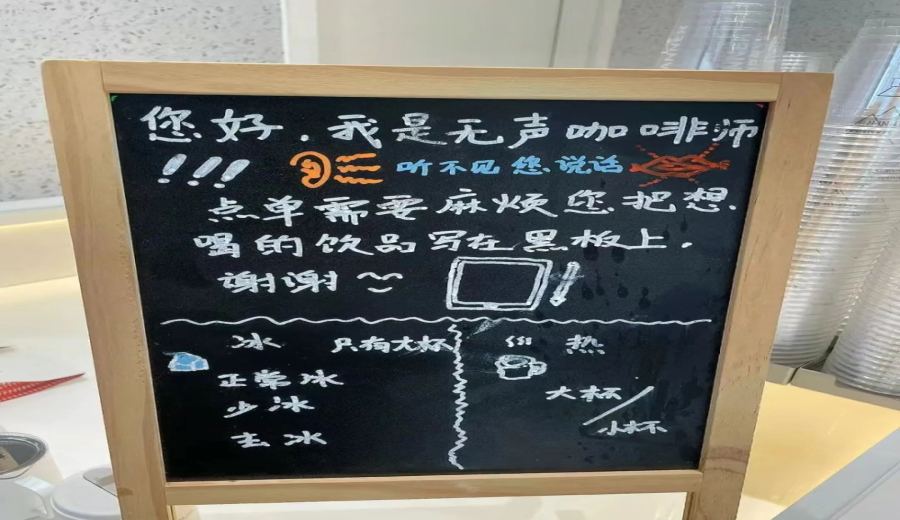
Introduction:When a deaf barista silently prepares coffee at a Manner store, customers interact with them through pen and paper, creating a unique consumer experience. This article delves into the real-life situation of deaf baristas in chain coffee shops—from the warm feelings of customers, the collaborative challenges among staff, to corporate attempts such as introducing sign language menus—and analyzes the opportunities and difficulties behind disabled employment.
In the everyday act of coffee consumption, interaction with the barista often enhances the overall experience. However, when facing a deaf barista, the mode of communication shifts from spoken words to text. Recently, some customers at Manner outlets noticed a sign behind the counter that read “I am a deaf barista,” thus beginning a quiet yet heartwarming purchasing experience.
Although unable to communicate verbally, this deaf barista accurately understands customer needs through writing and carefully responds to each question. After receiving their coffee, customers noted that although communication was somewhat inconvenient, seeing the barista focused on their work conveyed a rare sense of beauty and warmth, making them more willing to revisit the shop.
Many netizens have shared similar experiences, expressing that witnessing a deaf barista quietly crafting drinks behind the counter and communicating via text can bring positive energy and warmth. Even occasional communication hiccups do not diminish the overall favorable impression.
However, from the employees’ perspective, hiring deaf baristas, while bringing positive effects, may also pose challenges for their coworkers. Some staff admitted that if they are not familiar with sign language, they can only rely on written communication, which can reduce efficiency during busy periods and even lead to friction due to incomplete information transfer.
Fellow hourly workers, while understanding the difficulty that people with disabilities face in finding jobs and willing to cooperate as much as possible, still find it hard to avoid the impact of communication barriers on efficiency. Over time, some employees may develop resistance to working alongside deaf baristas.
In recent years, with the government providing policy incentives and subsidies for companies hiring people with disabilities, several cities have seen the emergence of silent coffee shops. These stores not only offer job opportunities but also teach coffee-making skills, contributing to the improvement of the employment environment for the disabled.
To reduce communication barriers, many silent coffee shops have adopted various measures. For example, they print sign language illustrations on menus to encourage customers to use gestures when ordering; or they install voice-to-text devices that allow customers to speak their orders, enabling deaf baristas to read the screen directly—greatly improving the smoothness of interaction.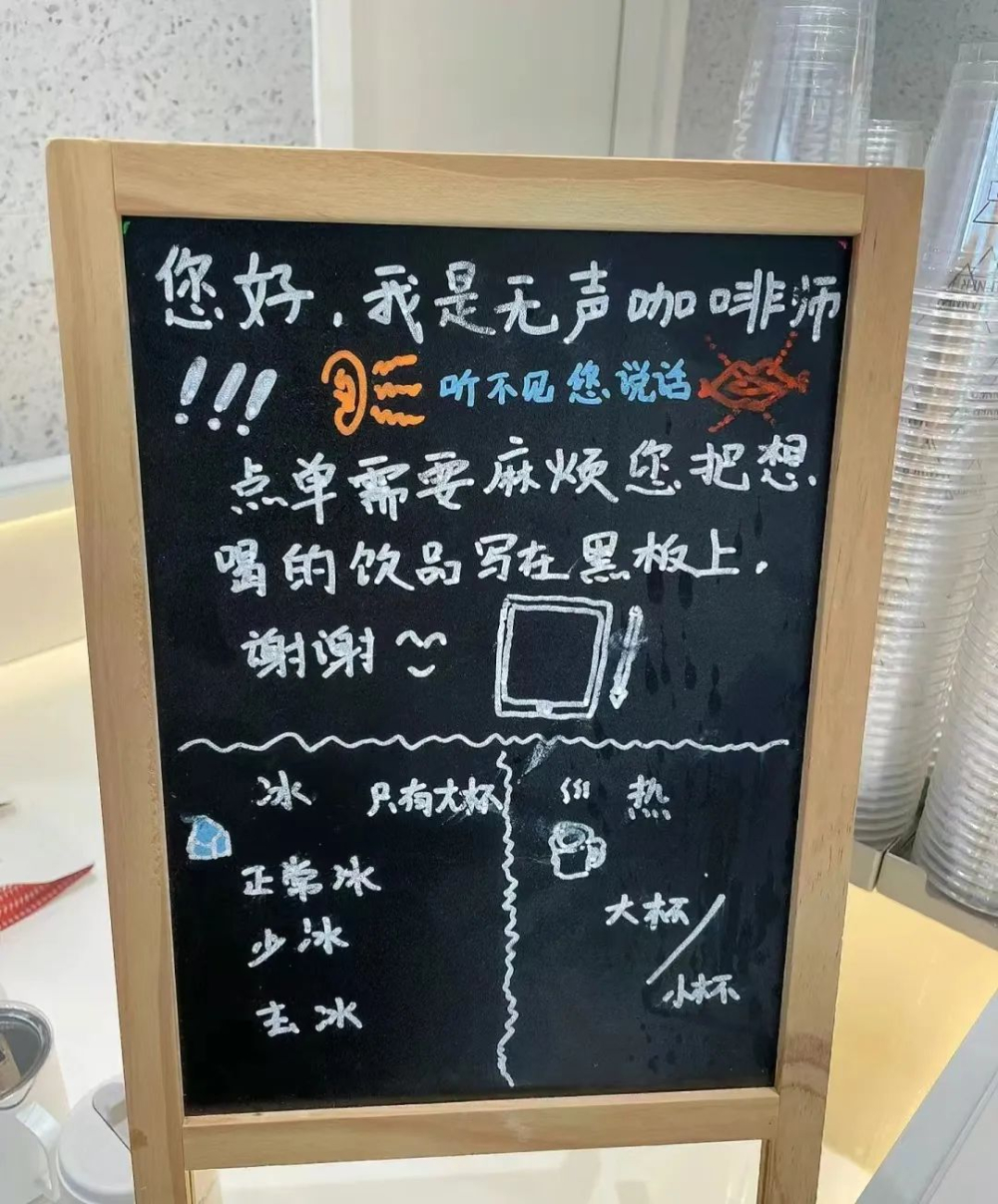
The original intention behind establishing these silent coffee shops is to help people with disabilities acquire a practical skill through coffee-making, and to foster proactive communication abilities through interactions with customers, thereby better integrating into society and embracing career development and life’s challenges. Consumers are generally happy to support such socially responsible establishments because “coffee made by loving businesses always feels especially warm.”
The above content is compiled by CoffeeHunters, a coffee news website.


