








Introduction:Luckin Coffee’s recent second collaboration with Line Friends attracted a huge influx of consumers, but it also placed unprecedented pressure on store staffing and service. This article delves into the operational challenges behind frequent collaborations, including staff working hours far exceeding those recorded, service breakdowns during peak times, and analyzes their impact on the brand’s long-term service quality and consumer experience.
Luckin Coffee’s second collaboration with Line Friends was initially seen as an opportunity to reignite market enthusiasm, given that the adorable IP had already garnered significant popularity on social platforms. However, this collaboration did not receive the expected positive reception, with many customers complaining about long wait times and a noticeable decline in service staff attitude.
A deeper look reveals that this is actually due to the order surge pressure brought by Luckin’s frequent collaboration product launches. Stores were suddenly flooded with a large number of orders, but staffing levels were not increased accordingly, leading to on-site chaos and exhausted employees. Especially during peak hours, only a handful of staff were left to handle a continuous stream of orders and impatient customers, with even the distribution of basic merchandise items seeming perfunctory.
Many Luckin employees have shared their work conditions on social platforms, pointing out that since the so-called “Luckin March 1 Incident,” the work environment has become even more tense. On regular days when business is slow, stores can barely manage, but once the system suddenly spits out a large volume of orders, relying on just one or two employees is simply not feasible. Especially under the dual pressure of riders and customers, staff not only have to quickly make drinks but also ensure order accuracy — the level of stress is imaginable.
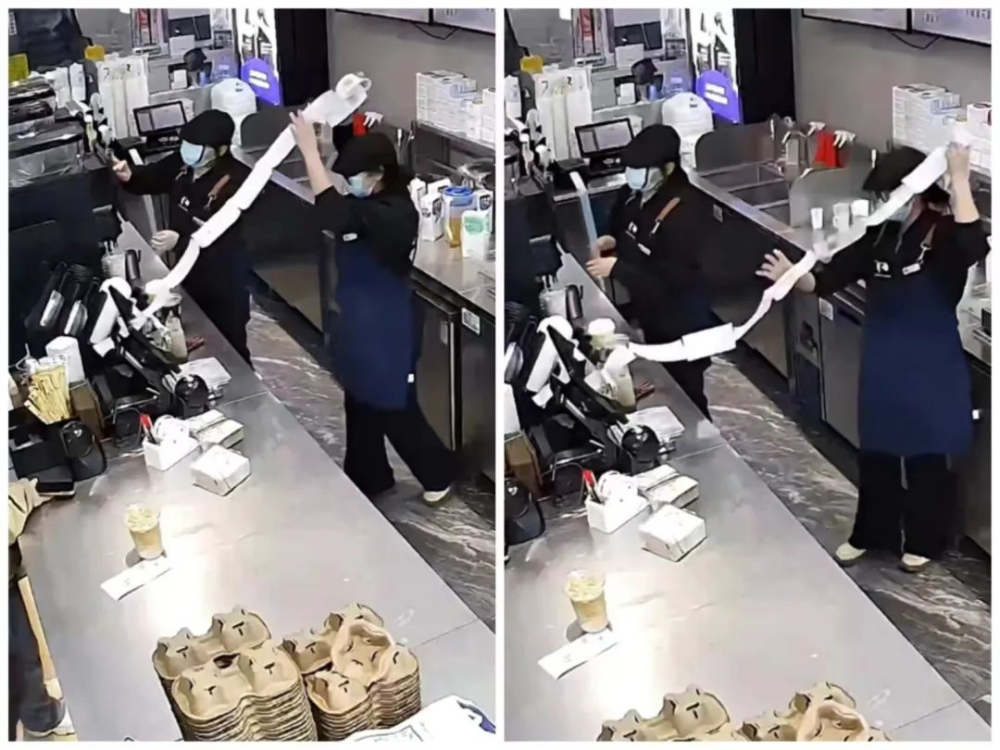
Netizens have reacted strongly to this phenomenon, believing that brands should allocate manpower more reasonably while promoting sales and collaboration activities. However, according to many current employees, Luckin has been continuously controlling labor costs in recent years, with many stores only assigning a single employee to man the counter. This arrangement might be manageable on normal days, but when faced with an order surge, it’s simply impossible to process the volume in real time.
What frustrates employees even more is that, even under high-intensity work conditions, their actual working hours and salaries are not reasonably matched. Some employees revealed that although they may work up to ten-plus hours a day, the system only records seven or eight hours, creating a feeling of “working for free” that deepens their dissatisfaction and burnout.
Industry insiders analyze that this imbalance between manpower and service caused by frequent collaborations not only affects the consumer experience but may also, in the long run, damage the brand image. When customers are disappointed due to long waits or poor service attitudes, brand loyalty naturally declines, further impacting overall market performance.
It’s worth noting that this is not a problem unique to Luckin. Many chain coffee and tea beverage brands also generally adopt a lean staffing strategy to cut costs. But for Luckin, which has frequent collaborations and high daily order volumes, such a staffing arrangement appears even more unreasonable — especially when facing a sudden influx of customers in a short period, service breakdowns are more likely to occur.
In summary, if Luckin hopes to maintain market competitiveness and consumer reputation, in addition to continuously innovating collaboration products, it must re-examine its manpower allocation and service processes to ensure a balance between promotional activities and daily operations. This will help improve overall service quality and safeguard the brand’s long-term value.
The above content is compiled by CoffeeHunters, a coffee news website.


