







Introduction:Using the same grinder and the same grind setting, have you noticed that different coffee beans produce noticeably different grind sizes? This is closely related to the density and brittleness of the coffee beans. Altitude affects bean density, while roast level alters their brittleness, which in turn changes the grinding performance. Through experimental analysis, this article explores why deep and light roasts yield different particle sizes under the same settings, and how that impacts extraction quality — helping you adjust your grinding strategy to avoid over-extraction and paper clogging.
Have you ever experienced this: you’re using the same grinder, set to the same grind size, but when you switch coffee beans, the resulting grind is noticeably coarser or finer? On the surface, the settings seem identical, but behind the scenes, two key physical properties of the beans are at play — density and brittleness. These two factors not only determine the structural characteristics of the beans themselves, but also directly influence the distribution of ground particles, and even affect the final extraction performance.
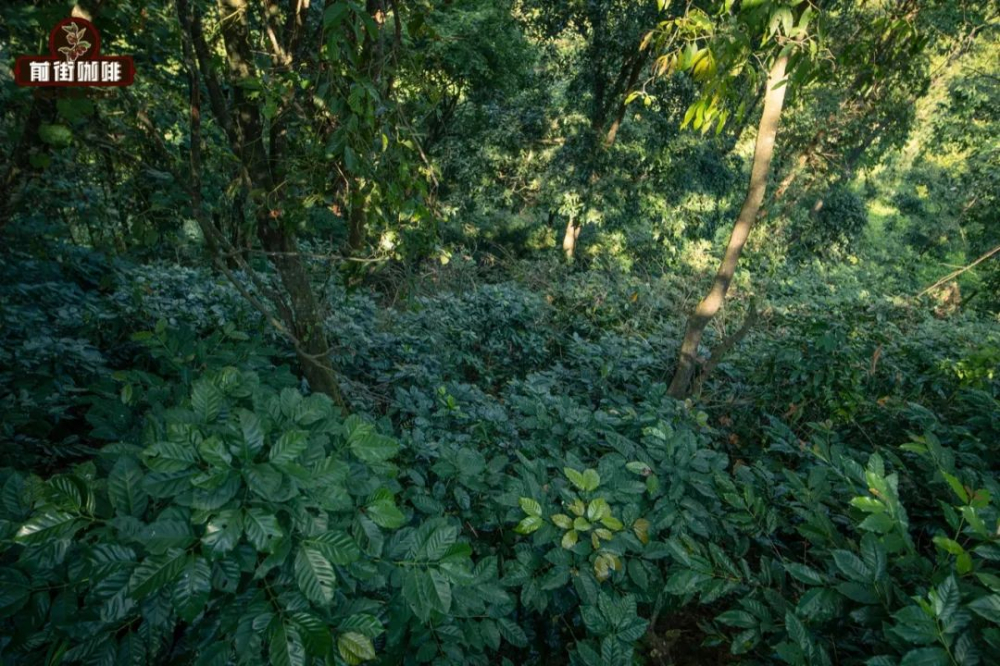
First, let’s clarify what density means. Simply put, density refers to the amount of substance contained in a given volume — the more substance, the higher the density. For coffee beans, density is primarily influenced by the altitude at which they are grown. Generally speaking, the higher the altitude, the lower the temperature, and the slower the growth rate of the coffee cherries.
As the growth rate slows, the beans have more time to accumulate nutrients — these nutrients form the material basis of the beans’ texture. The more substances that accumulate, the greater the bean density and the higher the hardness. High-density coffee beans often indicate richer and more full-bodied flavor potential.
That’s why many coffee-growing regions classify beans by grade and hardness based on growing altitude. For example, in Costa Rica, coffee beans grown above 1,400 meters are categorized as SHB (Strictly Hard Bean), representing a high-quality grade.
Next, let’s talk about brittleness. Brittleness refers to the tendency of a material to break or fracture under external force. Unlike hardness, brittleness describes how easily an object breaks when subjected to pressure or impact. And the level of brittleness is closely related to the degree of roast.
The roasting process is essentially one of dehydration inside the bean. The longer the roast time, the more moisture evaporates, causing the internal structure of the bean to gradually become looser. Once the structure becomes looser, density naturally decreases, and a drop in density leads to an increase in brittleness. In other words, the darker the roast, the more brittle the bean; the lighter the roast, the harder and more resistant to breakage the bean is.
You can try this yourself: place a dark roasted bean and a light roasted bean on a table, and press each lightly with your finger. Typically, the dark roasted bean will crumble easily — that’s a sign of high brittleness; whereas the light roasted bean requires more force to break, because it has higher density and lower brittleness.
So, how do these properties affect our everyday coffee grinding? When you operate a grinder at a fixed grind setting, you're using the burrs’ compressive force and rotational cutting action to break down the beans. However, because dark roasted beans are more brittle, they tend to shatter instantly under the same pressure, often producing more fine particles; whereas light roasted beans, due to their higher density and tighter structure, require more friction and compression to break down, resulting in relatively coarser particles and fewer fines.
This difference is very evident in practical tests. One experiment used an Ek43 grinder, set to grind size 9.5, and ground both dark roasted Mandheling and light roasted Yirgacheffe, then sieved the grinds through a #20 sieve. The results showed that Mandheling had a sieve retention rate of 75%, while Yirgacheffe had only 65%. This means that under the same grind setting, dark roasted beans produce finer particles, with a higher proportion of fines.
This difference directly impacts the pour over or filter brewing experience. Overly fine coffee grounds can easily clog the pores of the filter paper, impeding water flow and leading to over-extraction — making the coffee taste bitter and off-flavored. Therefore, if you notice that your filter paper is particularly prone to clogging after grinding, or if your coffee extraction time is unusually long, it may be because the current coffee beans are more brittle and have been ground too finely.
In summary, even if you keep your grinder setting unchanged, switching to coffee beans from different origins or with different roast levels can result in completely different grind outcomes. Understanding the principles of density and brittleness can help you adjust your grinding strategy more precisely, fine-tuning the grind size based on the beans’ characteristics, avoiding overly fine or coarse grinds, and further improving extraction quality and flavor expression.

The above content is compiled by CoffeeHunters, a coffee news website.


