







Introduction:In recent years, Panama’s Volcán region has gained international recognition in specialty coffee competitions for its high-quality Geisha beans, with the Hartmann Estate being a pioneering representative. This article delves into the region’s geographical advantages, the Hartmann family’s coffee-growing history, and provides a detailed analysis of the flavor profile and optimal pour over parameters for their anaerobic natural Geisha beans — helping you master the brewing techniques of this highly sought-after coffee.
Blessed with exceptional geography and microclimates, Panama produces world-renowned Geisha coffee. Beyond the well-known Boquete region, the Volcán region, located west of the Barú Volcano, has also been earning accolades in international specialty coffee competitions. With its diverse microclimates and ideal conditions of high altitude and unique soil, it has become a prime location for cultivating top-tier coffee. The Hartmann Estate, a pioneer in coffee cultivation in the Volcán region, has fully realized the area’s potential.
Panama is situated at the southernmost tip of Central America, bordered by the Caribbean Sea to the east, the Pacific Ocean to the west, and neighboring Costa Rica and Colombia. It serves as a vital land bridge connecting North and South America. This strategic location contributes to Panama’s complex and varied microclimates. Particularly, the east-west orientation of the central mountain range allows cool air to flow along the mountains and gather in areas above 6,500 feet, creating unique microclimates around regions such as Boquete and Volcán. These highlands not only have fertile soil but also offer ideal growing conditions for coffee trees.
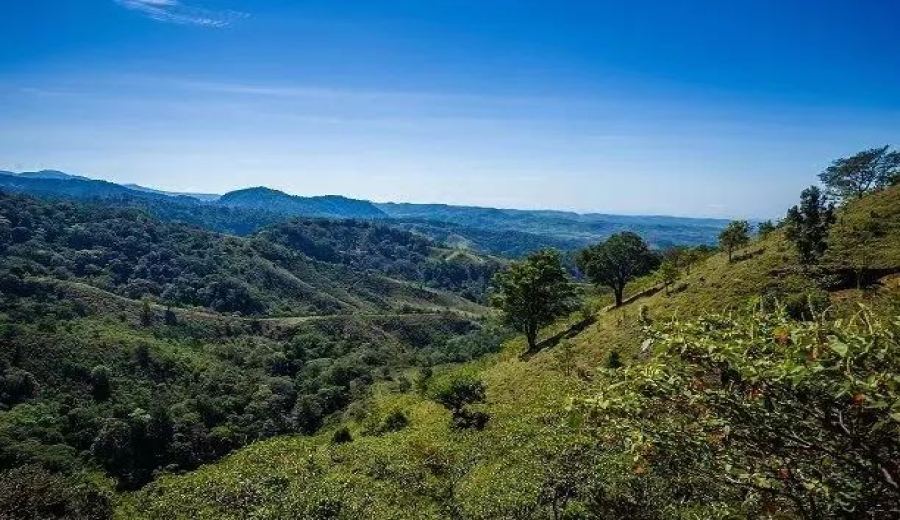
The Volcán region surrounds three volcanoes in Panama — the Barú, El Valle, and La Yeguada volcanoes — and primarily covers the three districts of Boquete, Volcán, and Renacimiento. The elevation in the Volcán region ranges from 1,200 to 1,600 meters. Although its average rainfall is slightly lower than that of Boquete, thanks to its location on the western side of the Barú Volcano, the combination of volcanic soil and high altitude still provides an excellent environment for coffee cultivation. In the early days, the area was mainly used for growing fruits and vegetables, and coffee farming was not common. The Hartmann family was among the pioneers of coffee cultivation in the region.
When talking about the Hartmann Estate, one cannot overlook its founder, Alois Strasil Hartmann. Originally from the Austro-Hungarian Empire (now the Czech Republic), he moved to New York, USA due to political unrest, and later relocated to Panama. However, he found urban life in Panama City unsuitable and eventually settled in the Volcán area, where he started a family and built a life. In 1940, his son Troetsch inherited the farmland and began land clearing and cultivation, officially marking the beginning of the Hartmann Estate’s history.
From the early days, the Hartmann family has committed to preserving most of the original woodland. This respect and protection for the native environment have deeply influenced the management philosophy of later generations. Even today, coffee cultivation occupies only about 20% of the estate’s total area, with the rest maintained as natural forest. Thanks to these conservation efforts, the estate attracts many native bird species, with the toucan becoming a symbol of the estate and even featured on its brand logo. Currently, the estate is jointly managed by five siblings, each responsible for different aspects including coffee tree management, harvesting and processing, and visitor reception. In 2013, the family further expanded its territory by acquiring the Guaguacu Estate located north of the Hartmann Estate, adding more variety to their plantings and increasing production capacity.
The Hartmann Estate now grows a variety of coffee cultivars, including Typica, Caturra, Catuai, Bourbon, Pacamara, Maragogype, and the most iconic Geisha. Each variety is planted at different altitudes and within varying microclimates based on its specific characteristics, allowing it to reach its full potential.
Among them, the Hartmann Estate Geisha beans introduced by a certain coffee brand are processed using the anaerobic natural method and grown at altitudes between 1,500 and 2,300 meters. After being lightly to medium roasted, these beans exhibit a rich and layered flavor profile. For pour over brewing, it is recommended to use a V60 dripper, with a 1:15 coffee-to-water ratio and water temperature of 92°C to fully highlight its unique characteristics.
After brewing, the first impression is a refreshing and pleasant white floral aroma, followed by the gradual emergence of bergamot notes, accompanied by the bright acidity and fruity flavors of tropical fruits such as pineapple and blueberry. On the palate, the coffee feels smooth and silky, with a long-lasting, sweet aftertaste reminiscent of the mellow tones of Earl Grey tea. This coffee bean is an excellent choice for pour over enthusiasts who enjoy fruit and floral notes, and it is also a great option for exploring high-altitude Geisha from Panama.
In summary, the unique geographical environment of the Volcán region, combined with the Hartmann Estate’s long-standing commitment to quality and innovative processing techniques, make this anaerobic natural Geisha bean a must-try specialty coffee for enthusiasts. Whether for tasting or as part of your brewing practice, it offers a rich sensory experience and great learning value.
The above content is compiled by CoffeeHunters, a coffee news website.


