








Introduction:When brewing coffee at home, the grinder is a key factor that influences flavor performance. With a wide range of options available on the market—from budget to high-end models—beginners often don’t know where to start. This article delves into the differences in burr designs between hand-cranked and electric grinders, analyzing grind consistency, convenience, and price ranges, and offers specific recommendations for budgets under a thousand NT dollars and for more advanced needs, helping you find the most suitable grinding tool.
In recent years, more and more coffee enthusiasts have chosen to brew coffee at home, making the grinder an indispensable piece of equipment. Unlike filters or pour-over kettles, which only play a supporting role, the quality of the grind directly determines how the coffee’s flavors are presented. However, when browsing e-commerce platforms, the price range of grinders can vary from just over 200 NT dollars to tens of thousands of NT dollars. Such a wide price gap often leaves beginners puzzled about where to begin.
This article will deeply analyze the core differences between hand-cranked and electric grinders, covering burr structure, grind consistency, portability, and selection strategies across different budgets. Through practical comparisons, we provide useful purchasing advice to help you choose the grinder that best fits your needs from among the many options available.

As the trend of brewing coffee at home becomes increasingly popular, selecting the right equipment has become a top priority for many coffee newcomers. Among the various tools, the grinder has the most direct and significant impact on coffee flavor. Whether you’re using pour-over, French press, or espresso extraction, the coarseness and uniformity of the grind greatly affect the final extraction result and taste.
On e-commerce platforms, the variety of grinders is overwhelming, but compared to other coffee tools, grinders are more worthy of the time and budget invested in careful selection. The primary reason is that grind quality directly relates to how coffee flavors are presented; secondly, the price range of grinders is broad, from affordable to professional-grade high-end products. Making the wrong choice could lead to poor extraction results and negatively impact your overall coffee experience.
When you search online for grinders, you’ll quickly notice a huge price disparity—some products cost just two or three hundred NT dollars, while high-end models can easily reach tens of thousands, with differences of up to several thousand times. This variation often leaves consumers hesitant, unsure whether to opt for a budget model or invest in a high-quality machine. To help readers clarify their purchasing direction, we’ll start from the core technology and practical needs of grinders to provide a clear buying strategy.
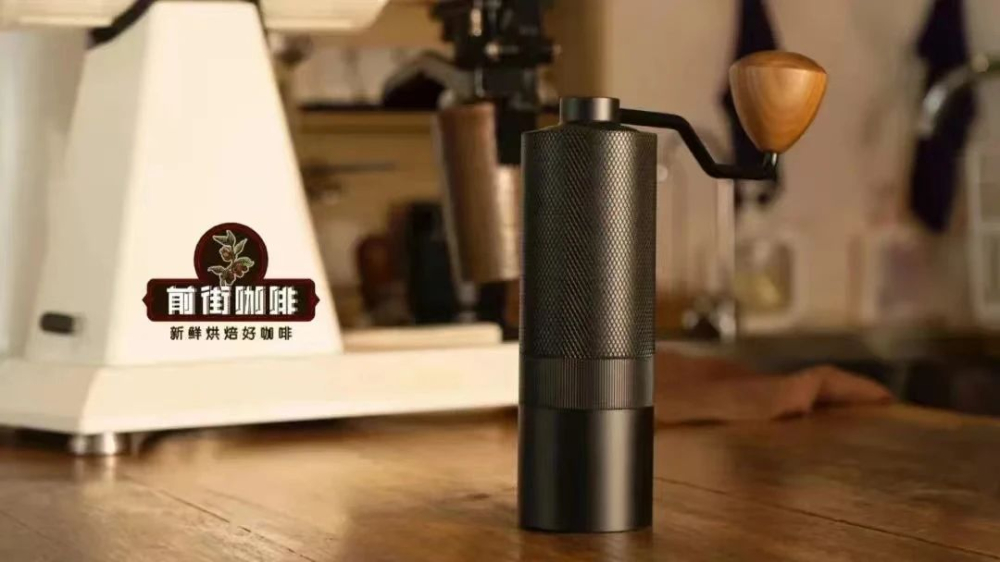
Choosing between a hand-cranked and an electric grinder is one of the first challenges many coffee beginners face. Both types of grinders have their own advantages, but one of the biggest differences lies in the fineness and stability of the grind.
Electric grinders are usually equipped with either conical burrs or flat burrs, with the latter being the most common design. A flat burr consists of two parallel discs—one fixed and the other driven by a motor to rotate. When coffee beans enter the space between the burrs, the stable rotation speed of the motor ensures the beans are evenly crushed. The centrifugal force generated by the rotation of the lower burr then expels the ground coffee powder from the outlets on both sides. Since the entire grinding process is controlled by the motor and is almost unaffected by manual operation, it can produce more uniformly sized particles and reduce the production of fine powder.
In contrast, hand-cranked grinders mostly use conical burr designs, consisting of a fixed outer ring burr and a rotating inner cone burr. Coffee beans enter from the top opening and pass through a channel that is wider at the top and narrower at the bottom, undergoing multiple crushes during rotation. Because it relies on manual turning, the rotation speed is not easy to maintain consistently, and the beans undergo multiple frictions within the channel, resulting in slightly less uniform particle size compared to electric grinders and a relatively higher proportion of fine powder.
From the perspective of grind fineness, electric grinders indeed hold a clear advantage, providing a more consistent and finer grind. However, hand-cranked grinders also have notable benefits, including affordability, portability, and not requiring a power source. For users who frequently travel, commute, or brew coffee outdoors, the flexibility and convenience of a hand-cranked grinder are major advantages.
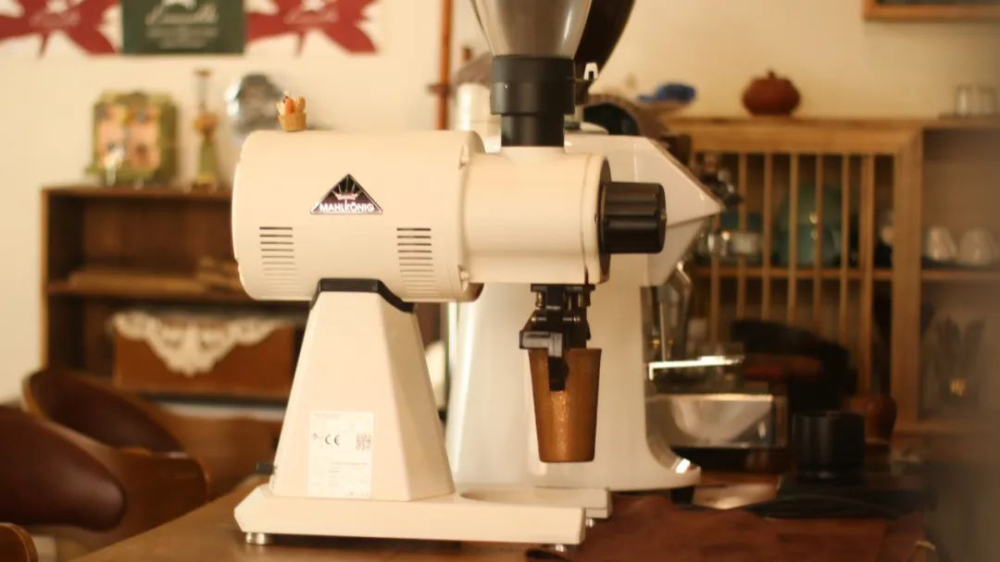
Taking both grind quality and practical usage needs into account, choosing between a hand-cranked or electric grinder should depend on your personal budget and usage scenario. If your budget is within 1,000 NT dollars, or if you often need to brew coffee outside or during your commute, a hand-cranked grinder is a more practical choice. It’s recommended to select a model priced above 200 NT dollars, as many so-called “grinders” on the market that cost less than 200 NT dollars actually perform poorly in grinding and are often referred to as “bean choppers.” These tend to produce uneven particles and excessive fine powder, making them a common pitfall for beginners. Therefore, if you choose a hand-cranked grinder, it’s advisable to set your budget between 200 and 1,000 NT dollars to achieve a better grinding experience.
On the other hand, if your budget is more flexible, you have sufficient storage space, and you hope to achieve professional-grade grind quality right from the start, an electric grinder is a more worthwhile investment. When selecting an electric grinder, it’s also important to avoid low-quality products, but compared to hand-cranked grinders, the chance of encountering a “bean chopper” is relatively lower. Additionally, electric grinders can be divided into two main types: espresso grinders and single-origin (single-origin or specialty coffee) grinders. These two types differ significantly in burr design, grind range, and applicable scenarios, and are generally not interchangeable (except for high-end multi-functional models). Therefore, before purchasing, make sure to confirm the type of grinder you need to avoid the hassle of returns or exchanges later due to type mismatch.
The above content is compiled by CoffeeHunters, a coffee news website.


