








Introduction:The flavor expression of pour over coffee is closely related to pouring speed and water flow control. Many coffee enthusiasts have misconceptions about using large or small streams of water during pour over brewing, believing that the thickness of the water stream directly determines extraction efficiency. In reality, the core of water flow lies in the volume of water poured per second, while the impact force of the stream is also influenced by pouring technique and the design of the kettle spout. This article will take you deep into how different water flows affect extraction time, coffee bed condition, and flavor presentation. It will also teach you how to accurately measure your pouring speed with a regular kitchen scale, and flexibly adjust based on actual brewing conditions—ultimately helping you brew a more balanced pour over coffee.
Throughout the entire pour over brewing process, the speed of pouring not only affects the overall extraction duration but also changes the state of the coffee bed, thereby determining the final flavor direction. Many beginners often misunderstand pour over water flow, thinking that a small stream equals gentle and delicate, while a large stream is necessarily more forceful. In fact, what we refer to as large or small water flow truly refers to the volume of water poured per unit of time—that is, the flow rate in milliliters per second. Whether the water flow has strong penetration or agitation effects is more related to the pouring method, the distance between the spout and the coffee bed, and other factors.

Many people mistakenly believe that a small stream means gentle pouring with weak agitation of the coffee grounds, while a large stream means a fierce rush of water that easily disrupts the coffee bed structure. However, the "size" of the water flow actually refers to its flow rate—how many milliliters of water are poured per second—not its visual thickness or perceived impact. What truly influences the impact force of the water stream is the height and angle of pouring, as well as the stability of your technique. Even if you use what seems to be a gentle small stream, as long as the pouring position is relatively high, the water can still generate enough force to make the coffee grounds swirl. Conversely, a large stream, if controlled properly, can also gently and evenly penetrate the coffee bed.
In addition, the shape of the kettle spout also significantly affects how the water flow appears. Even if you maintain the same pouring angle and pouring force, the thickness of the water column from a narrow-spout kettle versus a wide-spout kettle can vary noticeably, which also impacts your judgment of “water flow size.” Therefore, when discussing water flow, failing to consider differences in spout design can easily lead to misunderstandings.

So, for the average pour over enthusiast, how can you find out the flow rate of your usual pouring? The method is actually very simple, and you don’t necessarily need to purchase expensive professional equipment. Nowadays, many digital scales come with built-in flow rate display functions, allowing you to see the amount of water poured per second in real-time while weighing, making it easy to monitor your pouring rhythm. But if your digital scale doesn’t have this feature, don’t worry—we’ll introduce a practical method next for measuring water flow speed using a regular kitchen digital scale.
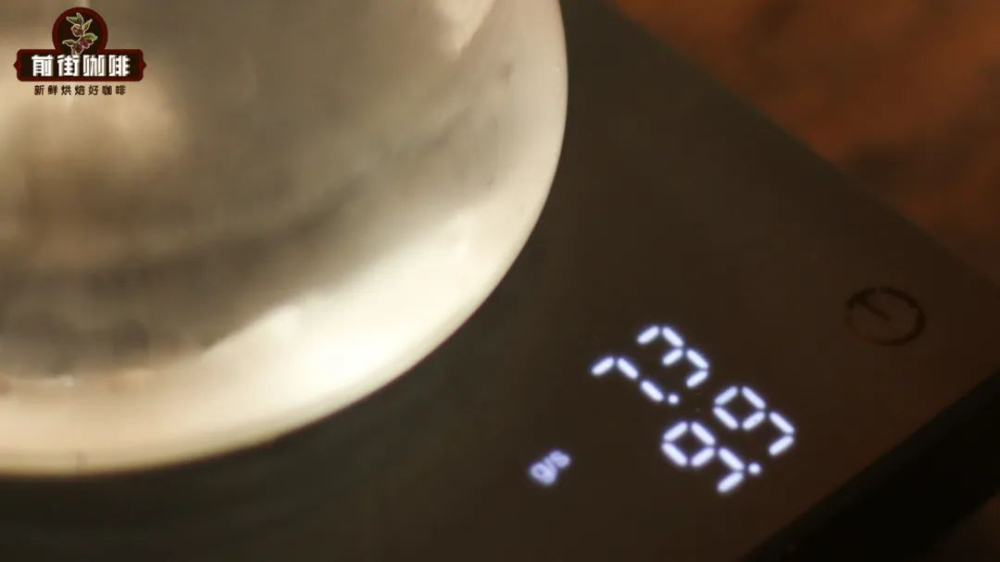
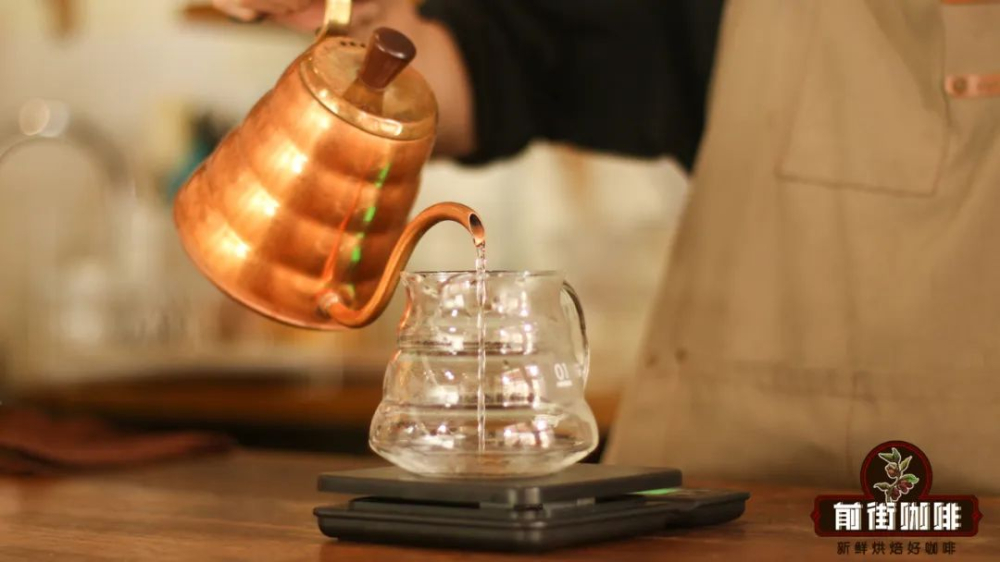
First, prepare a regular digital scale, place a clean container on the scale and tare it to zero, then start pouring water using your usual brewing pouring technique while starting the timer. When the timer reaches ten seconds, stop pouring. Then, convert the weight of the water in the container into volume (generally 1 gram of water is approximately equal to 1 milliliter), and divide by 10 to get your pouring speed in milliliters per second. For example, one team once tested a modified gooseneck copper kettle and found that under vertical pouring conditions, the smallest flow rate was approximately 2.2 mL/s, while the largest could reach up to 9 mL/s. When switching to a Kalita copper kettle with an elephant trunk spout, the minimum vertical pouring speed was 4 mL/s, and the maximum could reach up to 12 mL/s. These data can help you more objectively understand what kind of water flow intensity you usually use.

In actual pour over brewing, few people use just a single water flow from start to finish. Most of the time, the brewing process is divided into multiple stages. Based on the condition of the coffee bed, extraction progress, and the need for flavor release, adjusting the pouring speed appropriately at different stages leads to a more balanced extraction result. Therefore, mastering the characteristics of both large and small water flows, and understanding their respective impacts on coffee flavor, coffee bed height, and overall extraction time, is a crucial skill.
So, what different brewing effects do large and small water flows bring? We can observe this through a set of actual brewing tests. The test used Guatemalan New Oriental Geisha coffee beans, ground to 9.5 on an Ek43 grinder, with a brew ratio of 1:15 (that is, 15 grams of coffee beans to 225 milliliters of 92°C hot water), using a common three-stage pouring method for comparison.
First is the difference in extraction time. When the entire brew is done with a small stream, the total time is approximately 2 minutes and 5 seconds, while using a large stream for the whole brew shortens the total time to 1 minute and 57 seconds. This shows that under the same grind size and brew ratio, a small stream results in a naturally longer overall extraction time due to slower pouring, whereas a large stream completes the brew more quickly.
The second point is the change in the coffee bed. What many refer to as "raising the coffee bed" actually happens because the amount of water poured is greater than the amount that actually penetrates downward, causing the coffee layer to gradually pile up and rise. How quickly this happens depends on the difference between the speed of pouring and the speed of drainage. With a small stream, due to the slower flow rate, the coffee bed rises more gently; a large stream, because it pours more water per unit time, is more likely to significantly raise the coffee bed in a short period.
Finally, there’s the difference in flavor expression. Coffee brewed entirely with a small stream usually exhibits richer and more concentrated aromas. This is because the longer extraction time, along with more agitation, helps fully extract the flavor compounds. In contrast, although a large stream can complete extraction more quickly, the resulting flavors are often clearer and brighter, though sometimes slightly thinner, lacking the layered complexity of a small stream.
So, in practical operation, when should you use a large stream, and when should you switch to a small one? According to the experience of some teams, the choice of water flow should depend on the brewing method, the current state of the coffee bed, and the brewing progress—not a one-size-fits-all approach.
If you usually prefer brewing with a large stream, but encounter the following situations, it’s recommended to switch to a small stream: When the drainage speed is unusually fast—for instance, due to overly coarse grinding, causing the water level to drop too quickly and possibly nearing the bottom of the filter cup before the intended time—you should switch to a small stream to extend the extraction time and avoid under-extraction. On the other hand, if you’re accustomed to brewing with a small stream but find the extraction time is too long, the coffee tastes bitter or astringent, or serious clogging occurs due to overly fine grinding, then you should consider switching to a large stream to speed up drainage and reduce the risk of over-extraction.
Additionally, when you want to deliberately raise the coffee bed to allow the coffee grounds to be more evenly soaked, a large stream is also a more suitable choice. Especially after the bloom phase, using a slightly larger stream can quickly elevate the coffee bed, creating a more stable extraction environment for subsequent pouring.
It’s important to note that when adjusting the water flow, there’s no need to make drastic changes. It’s recommended to fine-tune by only about 1–2 mL/s based on your current pouring speed. For example, if your usual pouring speed is around 5 mL/s, increasing it to 6–7 mL/s is sufficient when you want a stronger flow—there’s no need to suddenly ramp up to extreme values like 8–9 mL/s, which could overly impact the coffee bed and affect the stability and flavor balance of the overall extraction.
The above content is compiled by CoffeeHunters, a coffee news website.


