








Introduction:After Starbucks launched its Valentine’s Day limited-edition Cocoa Raspberry Mocha, it sparked widespread discussion. Many consumers noted that its flavor resembled traditional Chinese medicine, with its pink hue sharply contrasting its overly sweet appearance. This article delves into the drink’s ingredient composition, real consumer feedback, and explores the reasons behind Starbucks’ recent string of new product launches that have frequently missed the mark—helping coffee enthusiasts better understand flavor pairing essentials and market trends.
Valentine’s Day symbolizes romance and sweetness, and Starbucks traditionally releases festive limited-time drinks. This year, the Cocoa Raspberry Mocha was the seasonal offering. This pink-hued mocha is infused with raspberry syrup and pink whipped cream, designed to be eye-catching and evoke a romantic atmosphere. However, many customers were left deeply disappointed after trying it, describing the taste as similar to Banlangen (a type of herbal medicine) or cold remedies, even evoking a strong sense of traditional Chinese medicine—leaving some to quip, “So this is what love tastes like.”
Shortly after its release, this Valentine’s Day special quickly became a hot topic—not for its deliciousness, but for being “simply unpalatable.” Numerous netizens shared their tasting experiences, with some bluntly stating it “tasted like a Chinese medicine concoction,” while others joked it “might cause couples to break up.” Flavor feedback suggests the issue lies in poorly executed flavor layering and controversial ingredient choices.
A closer look at the composition of this mocha reveals its main elements: a mocha coffee base, raspberry syrup, pink whipped cream, and the notably added freeze-dried dragon fruit. Among these,the raspberry syrup and the inherent acidity and sweetness of the coffee were meant to harmonize,but some consumers reported that the two failed to blend well, instead creating a distinctly layered taste—as if “two separate drinks were forcibly combined.”

Another point of contention isthe inclusion of freeze-dried dragon fruit,which, while adding visual dimension, has a tangy taste and unique fruity aroma. When paired with coffee and whipped cream, it often leads to an unbalanced result. Some customers indicated this element was what “worsened” the overall flavor, describing it as pushing an already unappealing taste “to another level of bad.”
In fact, this isn’t the first time Starbucks has faced backlash over the taste of a new product. Over the past six months, the brand has noticeably accelerated its new product rollout in the Chinese market—from the early-year Flow Frozen Latte, to the Lunar New Year limited series, and now this Valentine’s Day special, with new items debuting around nearly every major holiday. Compared to previous years,the pace of new releases has significantly increased, described by netizens as “moving as fast as a rocket,”yet it has also been accompanied by continuous negative reviews.
For example, the previously launched Toffee Baked Sweet Potato Tea Latte was mocked for lacking any actual sweet potato flavor, with some even suspecting it was a rebranded version of an old hidden menu item. This Valentine’s Day special has also been suspected of being derived from popular hidden menu combinations circulating on social media platforms—such as the Raspberry Latte or Raspberry Frappuccino—rather than being an original Starbucks creation, further fueling skepticism about the brand’s innovation sincerity.
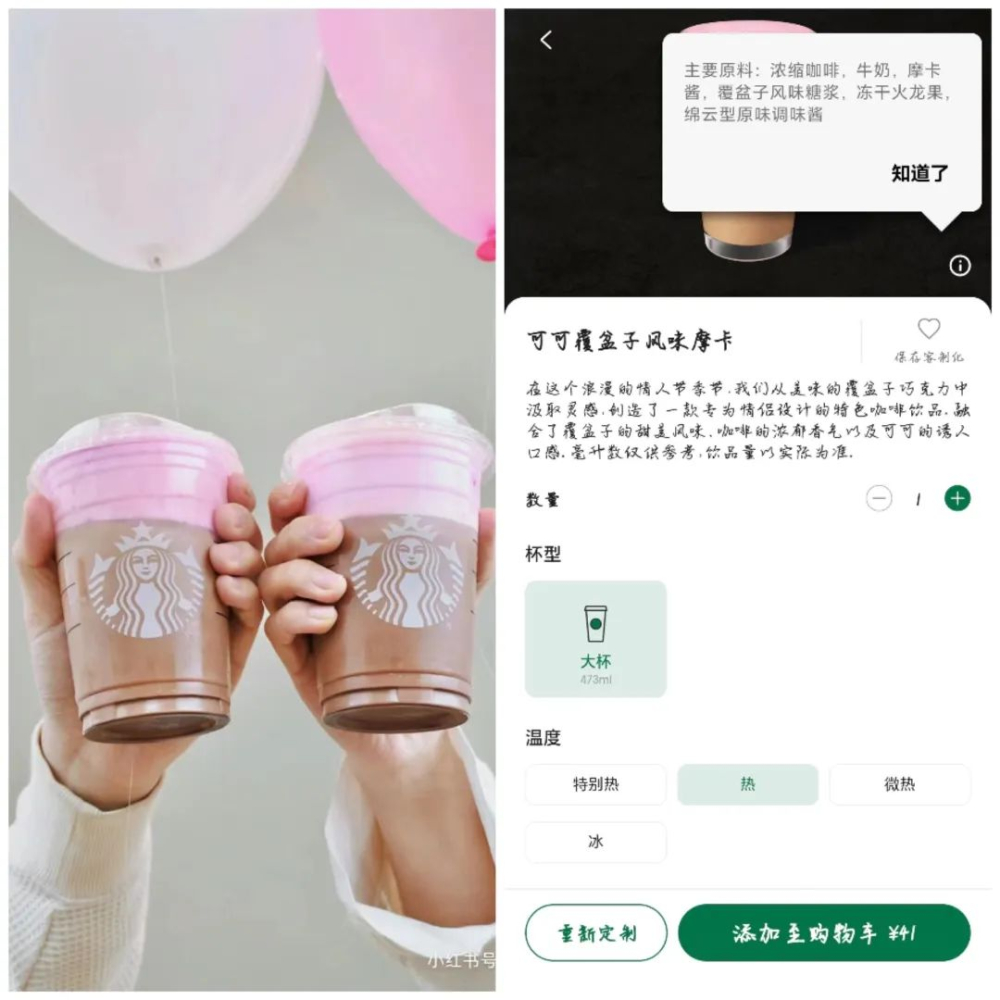
Some observers have pointed out that the appearance of this mocha bears similarities to another signature drink, the Mango Purple Cloud Latte, leading to speculation that it might be a marketing strategy to clear out inventory ingredients. Regardless of the truth, consumers have generally expressed disappointment with Starbucks’ recent innovation direction, feeling that its new products lack soul and fail to adequately consider local flavor preferences.
For coffee enthusiasts, this incident also offers an opportunity to reflect on flavor pairing. A good coffee beverage must balance appearance, texture, and flavor harmony—relying solely on eye-catching colors and festive packaging is not enough to make a great cup of coffee. When selecting limited-edition items in the future, it’s advisable to check real user reviews first to avoid unpleasant surprises.
The above content is compiled by CoffeeHunters, a coffee news website.


