








Introduction:Don’t have a grinder for home brewing? This article puts traditional mortar and pestle to the test by manually grinding washed Geisha beans, using 18g of coffee, a 1:15 coffee-to-water ratio, and 93°C water temperature for a full extraction process. We analyze how grind size and pouring rhythm affect flavor, and explore common issues like fine particle clogging and uneven extraction when grinding by hand—offering practical tips and reference data to help coffee lovers enjoy pour over even without professional equipment.
Imagine this: you’ve got your coffee beans, hot water, and even your pour over kettle, filter cone, and server all ready to go—but the one thing missing is the grinder needed to turn those beans into grounds. What do you do in this situation? This article will walk you through a “primitive” yet effective method—using the common kitchen mortar and pestle to manually crush Jade Mountain Estate’s washed Green Label Geisha beans—and document the entire process from grinding to brewing, analyzing the final extraction performance and flavor characteristics.

The inspiration for this experiment came from an unexpected household situation: planning to enjoy a pour over coffee during the holidays, only to find that the usual hand grinder wasn’t working, leaving the beans completely whole. Just as I was at a loss, my eyes fell on the mortar and pestle in the kitchen—tools usually used for crushing herbs or spices. Could they take on the task of grinding coffee beans?

The experiment was set up as follows: using 18g of Jade Mountain Estate’s washed Green Label Geisha, with a water temperature of 93°C and a 1:15 coffee-to-water ratio. The goal was to manually grind the beans into suitable coffee grounds over about 15 minutes. Key parameters included using a 60° V-shaped filter cone, and visually judging the grind size to be similar to white sugar. This bean is lightly roasted, with pronounced floral and fruity notes, typically requiring a finer grind and slightly higher water temperature to fully express its flavors.
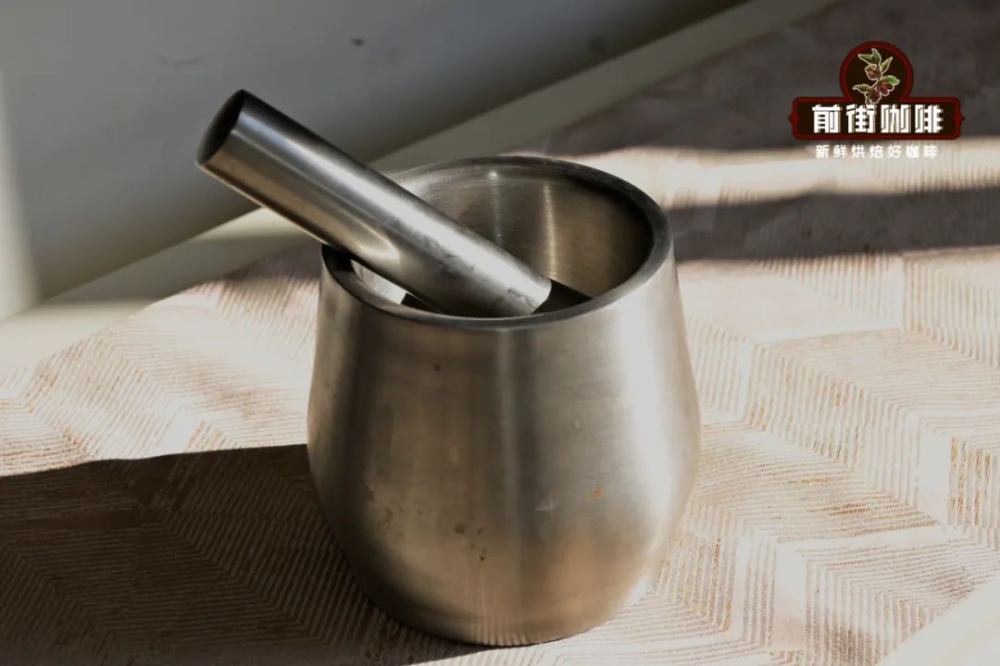
The grinding process began by placing the weighed beans into a dry, clean mortar. To prevent the beans from scattering, a round lid could be placed lightly on top. One hand steadied the base of the mortar while the other gripped the pestle, using repeated pounding and rolling motions to gradually crush the coffee beans into powder. Though it may seem simple, this step tests both patience and strength—requiring around 15 minutes of continuous effort until the beans were fully broken down and the grind size was uniform and close to the target.

Based on past pour over experience, lightly roasted floral and fruity beans are harder in texture and have less cell expansion, resulting in slower water absorption. It’s recommended to enhance flavor release by increasing water temperature (91–93°C) and adjusting grind size (e.g., to the size of fine sugar, roughly scale 10 on an EK43 grinder). Although this experiment lacked the precise settings of a professional grinder, by relying on visual observation and tactile judgment, the final grind size ended up close to that of white sugar—providing a basic level of brewing suitability.
After grinding, the next step was to implement the pouring technique. The first pour involved adding 35g of water for a 30-second bloom to initiate aroma release from the coffee grounds; the second pour added 110g of water (with the scale showing approximately 145g total), taking about 50 seconds to 1 minute; when the water level dropped to two-thirds of the coffee bed, a final pour of 125g of water (totaling about 270g) was added, completing the pour in approximately 1 minute and 35 seconds. The overall extraction time was around 2 minutes and 10 seconds, and the filter cone was removed after all the coffee liquid had dripped through.
In terms of flavor, this cup of coffee exhibited bright notes of honeyed orange, green tea, and lime, accompanied by white floral tones and a brown sugar-like sweetness. However, the overall mouthfeel was somewhat murky, with a subtle astringent and dry finish. Observing the coffee bed revealed a surface covered with variously shaped coarse chunks, and the coffee “puck walls” showed signs of being breached. There was almost no visible coffee residue on the filter paper, but a repeated buildup of muddy powder was noted. The suspected cause was the large amount of fine particles produced by manual grinding—these dust-like particles tended to clog the filter holes first during pouring, leading to localized over-extraction, while also mixing with insufficiently ground larger particles, resulting in uneven extraction.
It’s worth noting that the very nature of mortar grinding relies on applying physical pressure to crack the beans, a process that inevitably produces fine particles. These fine particles have poor fluidity and tend to get trapped in the pores of the filter paper, affecting water flow speed and extraction efficiency. Additionally, the randomness of manual operation makes it difficult to precisely control grind size—even experienced practitioners might miss some overly large particles, further exacerbating the issue of unstable extraction.
In summary, although mortar and pestle are not ideal coffee grinding tools, they can serve as a temporary alternative in emergencies when a grinder isn’t available. By adjusting grinding time, observing the grind state, and paying attention to pouring techniques and flavor changes, coffee enthusiasts can still explore the joy of pour over. For improved stability in the future, it’s recommended to gradually become familiar with the grinding rhythm or prepare simple backup solutions for unexpected situations.
The above content is compiled by CoffeeHunters, a coffee news website.


