







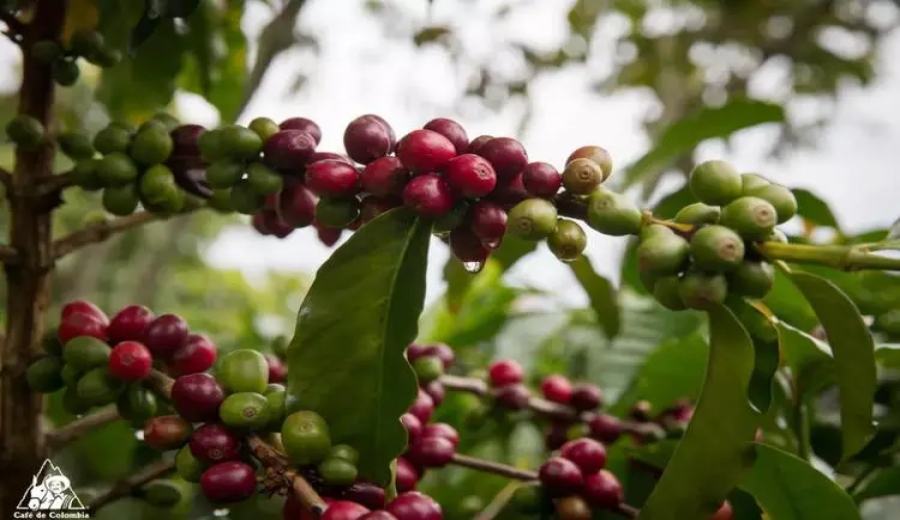
Introduction:The Rose Valley coffee beans produced by the Grand Tree Estate in the Santander region of Colombia, processed with anaerobic enzymatic washed method and medium roasted, showcase delicate floral notes and rich fruitiness. This article delves into the growing environment of this coffee, the characteristics of its variety, as well as practical pour over brewing parameters and flavor profiles to help you better understand this premium coffee bean worth trying.
Colombia is not only an important coffee-producing country in South America but also the world’s third-largest coffee producer. Its geographical conditions are uniquely advantageous, situated on the western side of the Andes Mountains, boasting volcanic soils, moderate rainfall, and distinct microclimates—especially in the northern mountainous areas where altitudes range between 1400 and 1700 meters, providing an ideal environment for cultivating high-quality coffee. Among these, the Santander Province is one of the country’s oldest coffee-growing regions, with coffee cultivation beginning as early as the late 18th century, introduced by Spanish missionaries and gradually developing into an important production area today.
Looking back at the history of coffee in Colombia, it was in the late 18th century that Jesuit missionaries first brought coffee seeds to Colombia and successfully trial-planted them in the provinces of Santander and Boyacá. However, the Thousand Days' War from 1899 to 1903 dealt a major blow to the coffee industry, with many plantations being abandoned. After the war, the government actively rebuilt the sector, distributing unused land to farmers and encouraging them to grow coffee, gradually reviving the industry. By 1912, coffee exports had become a major component of the country’s foreign trade. In the 1920s, to protect the interests of smallholder farmers, the Colombian Coffee Federation was established, which later evolved into the National Federation of Coffee Growers of Colombia (FNC) in 1927. This organization successfully enhanced the international reputation of Colombian coffee by setting quality standards, establishing research centers, and creating the iconic image of Juan Valdez and his mule.
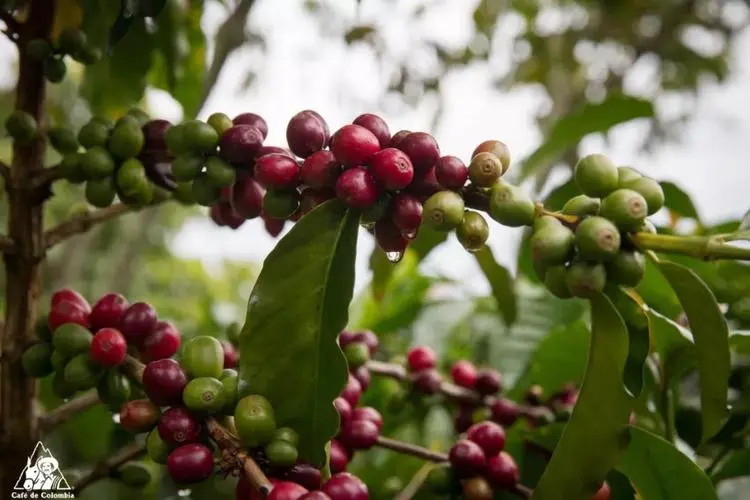
Colombia’s terrain is diverse, primarily divided into western mountainous regions and eastern plains. The Andes Mountains dominate the western landscape, which is also the main coffee-growing belt. The country enjoys a mild climate, with an average annual temperature ranging between 15.8°C and 20.5°C, coupled with annual rainfall between 1000 and 2500 millimeters. Together with varying altitudes and microclimates across regions, this has given rise to coffee beans with distinctly different flavor profiles. Well-known producing areas include Santander, Huila, Cauca, Nariño, and Lima, each possessing a unique flavor character due to their distinctive geography and processing methods.
The Santander region is located in northern Colombia. Although it may not enjoy as much international market exposure as Huila or Cauca, its historical significance is not to be underestimated, as it is one of the earliest regions in the country to cultivate coffee. With elevations of around 1400 to 1700 meters, the climate here is suitable for growing disease-resistant varieties such as Caturra and Castillo, which exhibit good resistance to leaf rust, making Santander a key area with low prevalence of coffee diseases. Coffee from this region typically showcases intense flavors, long-lasting aftertastes, and unique herbal aromas, favored by some coffee enthusiasts.
At the Grand Tree Estate (Finca El Arbol), we can witness another possibility of refined coffee from the Santander region. This estate, situated at an altitude of 1700 meters, is one of the few local coffee farms committed to cultivating a single variety. Managed by the owner, Mr. Vargas, for over 20 years, he has accumulated extensive experience in coffee cultivation and post-harvest processing through years of practice and experimentation. The Grand Tree Estate prioritizes quality over sheer yield, resulting in coffee beans with greater flavor consistency and complexity.
The “Colombia Rose Valley Coffee Beans” introduced here come from the Grand Tree Estate and are of the Caturra variety, a natural mutation of Bourbon first discovered between 1915 and 1918 in the state of Minas Gerais, Brazil. Compared to the original Bourbon, Caturra plants are shorter in stature, suitable for cultivation at altitudes between 700 and 1700 meters, and often exhibit richer flavors at higher altitudes, albeit with relatively lower yields. This variety is highly adaptable to various environments, making it a common choice for many specialty coffee farms.

The processing method used for these Rose Valley coffee beans is anaerobic enzymatic washed, which enhances the fruitiness and sweetness of the coffee while imparting unique aromatic layers by controlling the fermentation environment. With the support of medium roasting, the acidity of the coffee is bright yet not sharp, while maintaining good body. Based on actual pour over experience, using a V60 dripper, it is recommended to set the coffee-to-water ratio at 1:15, with water temperature controlled around 92°C, to fully bring out composite flavors such as rose, winey chocolate, berries, and peach. Additionally, a distinct cranberry note and soft fruity sweetness can be perceived, with an overall smooth mouthfeel and long-lasting aftertaste. It is an excellent choice for daily drinking or as an entry-level option for exploring the flavors of Central and South American coffees.
For coffee enthusiasts who enjoy experimenting with pour over brewing, this coffee not only exhibits distinct regional characteristics but also demonstrates the profound impact of processing methods on flavor. It is recommended to pay attention to stable water flow during brewing and adjust grind size appropriately to suit personal taste preferences. Whether you are a coffee connoisseur focused on flavor layers or a beginner just starting out, you can gain a unique tasting experience from these Rose Valley coffee beans produced at the Grand Tree Estate in Santander, Colombia.
The above content is compiled by CoffeeHunters, a coffee news website.


