







Introduction:Want to learn about the top-tier coffees from Ethiopia’s Sidamo region? This article delves into how the Santa Vini washing station crafts captivating beans through its unique microclimate and 96-hour anaerobic natural processing. It also highlights the background and characteristics of the JARC numbered variety 74158, paired with insights into the actual processing steps and parameters—giving you a full understanding of this African specialty coffee from origin to cup.
Ethiopia, widely recognized as the birthplace of coffee, is home to over ten thousand Arabica varieties, many of which remain unidentified. Among them, the Sidamo region stands out as one of the most iconic origins. Starting with the region’s geography and cultural backdrop, we explore its name evolution and natural advantages, then take a closer look at the distinctive environmental conditions of the Santa Vini washing station and their celebrated 96-hour anaerobic natural process. We’ll also break down the JARC numbered variety 74158, examining how this multi-talented coffee variety showcases its remarkable flavors through careful processing. With a complete origin-to-cup analysis, this piece unveils the diverse charm of Santa Vini coffee from Sidamo.
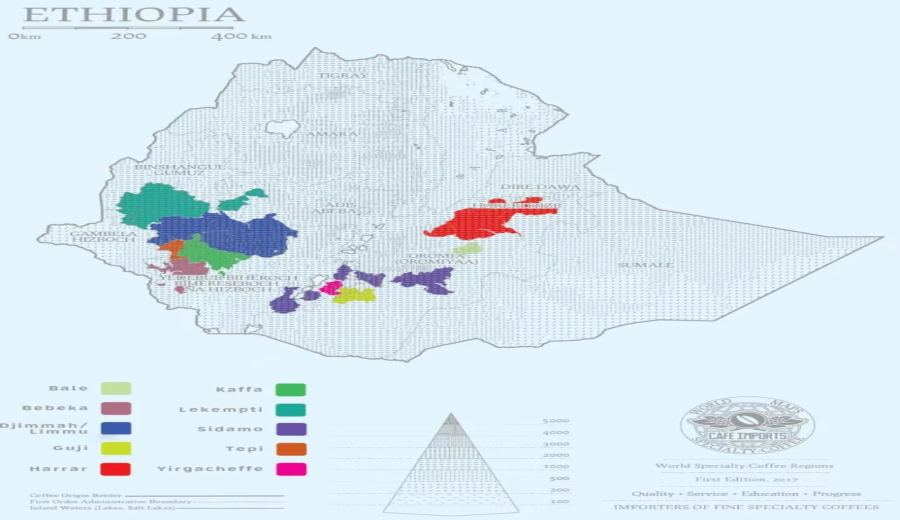
Ethiopia is not only Africa’s largest producer of Arabica coffee but also boasts a long cultivation history, regarded as the birthplace of coffee. It’s estimated that the country is home to between ten thousand and fifteen thousand coffee varieties, most of which have not undergone formal genetic identification. Notable regions include Sidamo, Guji, Yirgacheffe, Jimma, and Harrar—each producing distinct coffee profiles due to their unique geography and microclimates.
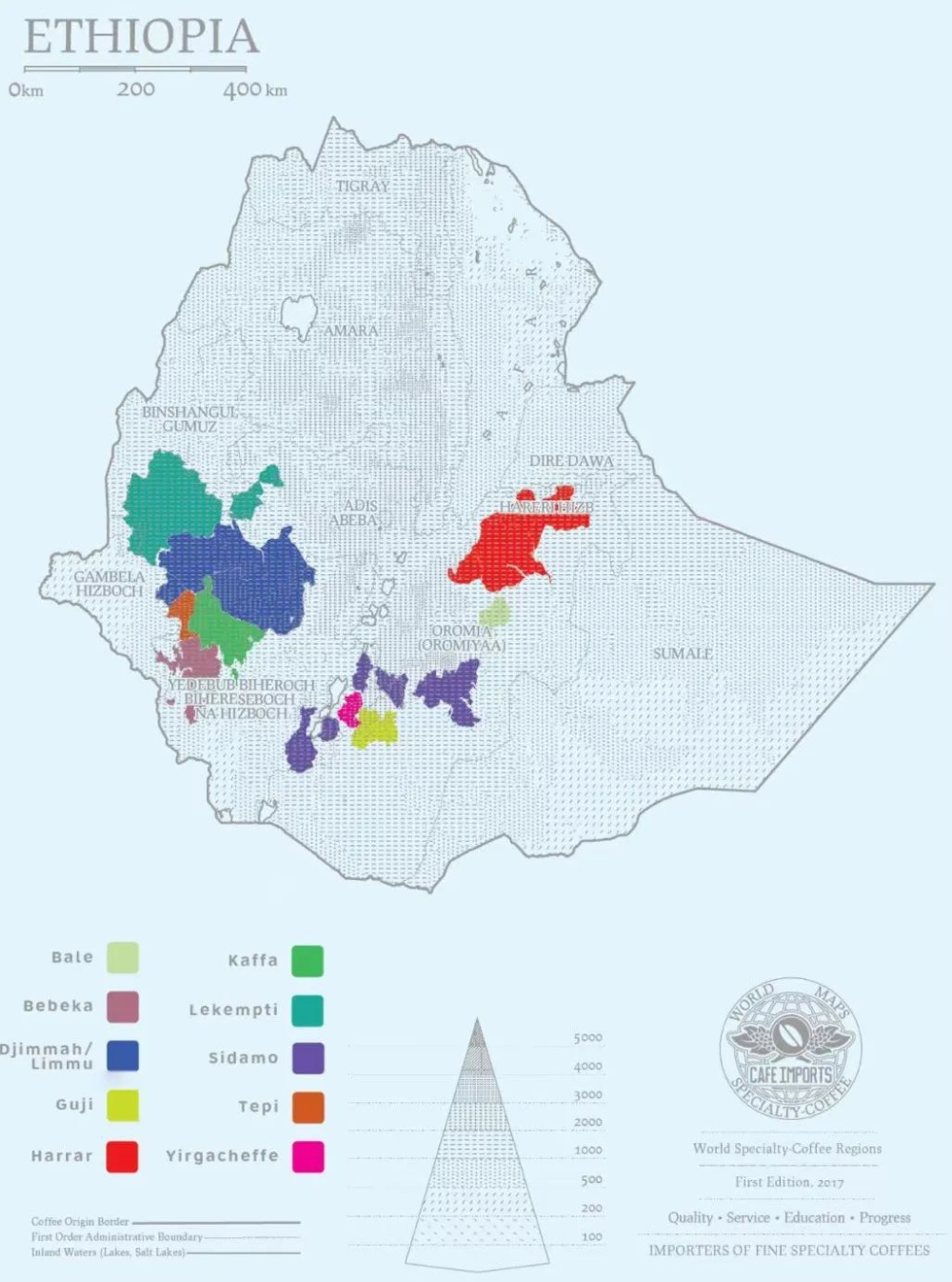
The Sidamo region is located in southern Ethiopia, bordering Kenya. After the implementation of the federal system in 1995, administrative divisions were redrawn based on ethnic and linguistic distribution, and Sidamo was incorporated into the newly established Southern Nations, Nationalities, and Peoples' Region, with its name reverting to the historical “Sidama.” However, to strengthen the branding of its coffee-producing region, the Ethiopian government patented the names of three regions—including Sidamo—in 2004, retaining the old name Sidamo® as a registered trademark. As a result, many consumers still commonly refer to the coffee from this area as “Sidamo.”
The Sidamo region features diverse terrain, including mountains, plateaus, valleys, and plains, along with fertile, well-drained volcanic soils—providing an ideal environment for coffee trees. The area’s varied climate gives rise to rich microclimates, a key factor behind the complex flavor profiles of its coffees. Beyond natural conditions, Sidamo is also home to several renowned washing stations, such as Santa Vini and Gorse, both key hubs for high-quality coffee production.
The Santa Vini washing station is situated within the Sidamo region, about a 40-minute drive from the town of Santa Vini. It is operated by DWD, a company that runs 17 washing stations locally, with Santa Vini being one of the higher-altitude ones. Compared to other DWD stations—such as Gorse—Santa Vini experiences a relatively drier climate and lower average temperatures. As a result, even when using similar processing techniques, adjustments to parameters are often necessary to accommodate the microclimate, and fermentation times tend to be longer.
Take the recently popular Ethiopian Santa Vini coffee beans as an example—they are processed using a 96-hour anaerobic natural method. The process begins with the selection of premium coffee cherries, which are handpicked and then placed into sealed fermentation tanks along with the highest-quality berries. Carbon dioxide is introduced to facilitate a 96-hour anaerobic fermentation. This method effectively controls the fermentation environment, enhancing the purity and complexity of the flavors. After fermentation, the coffee fruits are moved to raised beds for sun drying, with daily turning to ensure evenness. The entire drying process takes approximately 20 to 24 days until the moisture content stabilizes at 12%, marking the completion of processing.
When it comes to coffee varieties, Ethiopia’s can generally be divided into two main categories: JARC varieties and regional varieties. Regional varieties typically refer to wild coffee plants growing in local forests without artificial selection—often collectively referred to as “Heirloom” in the market, or translated as “原生种” (native variety) or “传家宝” (heirloom) in Chinese. Due to the vast number of varieties and their similar appearances, they are commonly grouped under the Heirloom label.
JARC varieties, on the other hand, are cultivated by Ethiopia’s Jimma Agricultural Research Center (JARC). Between 1973 and 1975, the center collected 639 coffee varieties from 15 regions across the country, conducting planting and trait analysis. Ultimately, 13 outstanding varieties were selected for their strong disease resistance, adaptability, yield potential, and flavor qualities. These were numbered and managed—forming the now-familiar series of numbered varieties, such as the well-known 74110 and 74158. The first two digits (74 or 75) indicate the year of discovery, while the following numbers are the variety sequence codes. The Santa Vini coffee beans featured in this article use the 74158 variety from this series, which is favored by many specialty coffee farms and washing stations for its stable yield and distinctive flavor profile.
The above content is compiled by CoffeeHunters, a coffee news website.


