








Introduction:Since 2024, Starbucks has implemented a policy in Malaysia to charge RM1 for filtered water, along with additional fees for both biodegradable and reusable straws. This move has sparked widespread discussion—Is it simply passing on environmental costs or genuinely promoting sustainable consumption? This article delves into the environmental rationale behind the policy, consumer feedback, and its practical impact, helping readers understand the balance between corporate and consumer responsibility in environmental stewardship.
Starbucks recently introduced a new environmental policy in Malaysia. Starting in 2024, filtered water served in its outlets will be charged at RM1 per cup, and both biodegradable and reusable straws will also incur separate fees. This measure quickly stirred heated debate. Some netizens accused Starbucks of using the guise of environmentalism to shift costs onto consumers, while others agreed with its goal of reducing single-use items.
According to information released by Starbucks, the policy is designed to encourage customers to bring their own cups and reduce the consumption of single-use plastic products. The policy explicitly states that filtered water service will no longer be free, and it promotes environmentally friendly alternatives for straws. Starbucks hopes to gradually fulfill its sustainability commitments through these nuanced adjustments.

However, the introduction of this policy immediately drew polarized reactions on social media. Some consumers criticized that the cost of a cup of tap water is extremely low, yet a fee is being charged—especially when purchasing high-priced drinks, which seemed inconsiderate. Others commented, "If you’re dining in, disposable cups shouldn’t be provided," believing that Starbucks hasn’t fully embraced its environmental ideals in some details.
On the other hand, some consumers offered different perspectives, arguing that compared to other brands like Cha Ba Dao, Starbucks is at least willing to adjust pricing for filtered water and straws—a step that could be seen as a tangible effort toward environmental protection. They acknowledged that although the charging policy may seem harsh, the underlying environmental intent is commendable.
From the perspective of internal staff, this policy is seen as necessary. A Starbucks partner revealed that there has long been misuse of free resources by customers in stores, such as frequently requesting free filtered water, taking public-use paper towels without permission, or even non-paying customers occupying seats for extended periods. Employees generally believe that the charging measures help alleviate operational pressures and reduce resource wastage.
Additionally, some staff members expressed that although customers might find these charges hard to accept, frontline employees better understand the importance of these policies for maintaining store operations. They believe that while these measures may cause some customer dissatisfaction, they are conducive to building a more sustainable consumption environment in the long run.
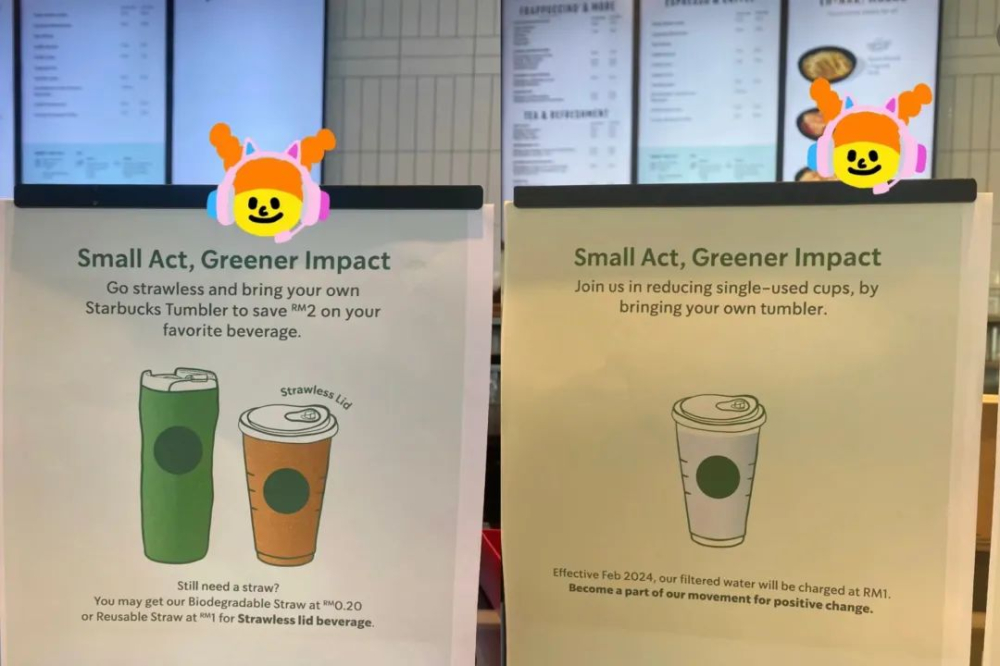
From an environmental standpoint, Starbucks’s policy does carry positive significance. Globally, the amount of plastic waste generated each year is staggering, posing serious threats to the ecosystem. By encouraging customers to bring their own cups and reduce plastic straw usage, Starbucks is gradually lessening its environmental footprint during operations. Though small, these steps—if widely adopted—can have a real impact on reducing plastic pollution.
However, the implementation of the policy must also take consumer experience into account. Excessively high charges or overly rigid enforcement may lead to customer resentment, ultimately undermining trust between the brand and its patrons. Therefore, finding a balance between environmental responsibility and customer satisfaction remains a key issue Starbucks needs to continually refine in the future.
In conclusion, Starbucks’s filtered water and straw charging policy in Malaysia, while controversial, reflects environmental intentions and practical challenges worth exploring. For consumers, understanding the rationale and implications of these policies can help make more informed purchasing decisions. For businesses, striking a balance between sustainable development and commercial interests will be crucial for future decision-making.
The above content is compiled by CoffeeHunters, a coffee news website.


