







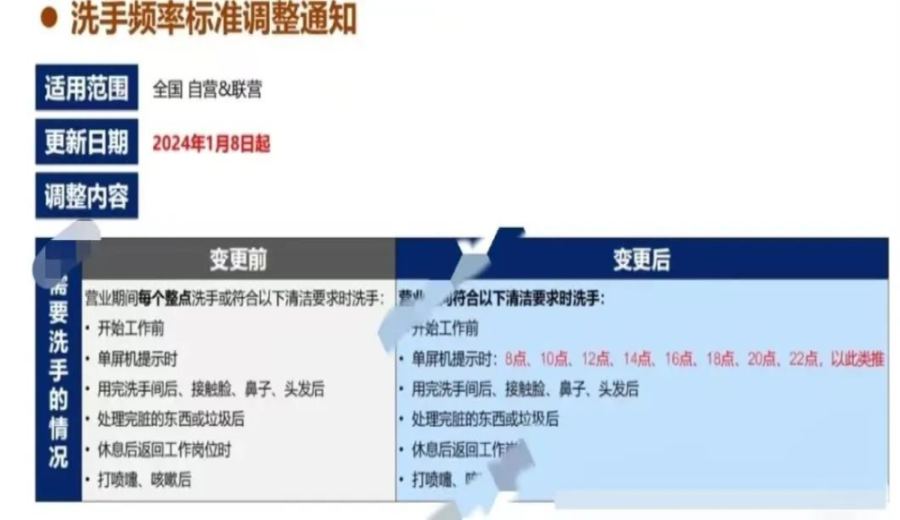
Introduction:Luckin Coffee recently adjusted the handwashing frequency for its employees, loosening the requirement from once every hour to once every two hours. This move is seen as an improvement to the working environment for frontline staff. In the past, the high-frequency handwashing led to many baristas experiencing skin allergies and other issues, even affecting their willingness to stay on the job. The new policy took effect on January 8th. While some employees still feel the change is limited, it nonetheless reflects the company’s efforts to strike a balance between food safety and employee welfare.
Luckin Coffee has recently revised its hygiene protocols for employees by relaxing the previous requirement of washing hands every hour to once every two hours. The new measure is expected to officially take effect on January 8. The change has sparked discussion internally, with many frontline workers expressing that this marks a tangible improvement—especially in addressing health concerns such as skin allergies caused by frequent handwashing.
Looking back at last year, the issue dubbed “the pain of Luckin baristas’ damaged hands” became a hot topic in public discourse. It is understood that under the original rules, employees working an 8-hour shift were required to wash their hands at least eight times, and with additional cleaning needs, the actual number was often higher. Long-term frequent handwashing not only caused skin cracking and allergic reactions, but also drove some employees to resign, with related complaints frequently appearing on social media platforms.
Reactions among employees to the adjustment have been mixed. Some are delighted, saying they “finally see the light at the end of the tunnel,” considering it the first happy thing to happen in the new year. Some have even reconsidered quitting their jobs. However, others feel the improvement is minimal, pointing out that in stores with customer service areas, they are still required to wash their hands after every half-point patrol, keeping the overall frequency relatively high. Comments include, “Once every two hours doesn’t really mean much,” and “It feels like they changed something, but also nothing at all.”
Notably, Luckin has long maintained strict standards for food safety and cleanliness, which is one of the reasons it has built a reputation as the “Luckin cleaners” in the market. While the original protocols ensured hygienic beverage preparation, they overlooked the practical operational burden on frontline employees, leading to “hand damage pain” becoming an underlying factor in staff turnover.
Industry insiders point out that while adjusting handwashing frequency may seem like a small change, it represents an important balance for the company between maintaining quality and caring for employee well-being. Moving forward, how to further optimize workflows and personal protective measures while ensuring food safety remains an ongoing topic of industry discussion.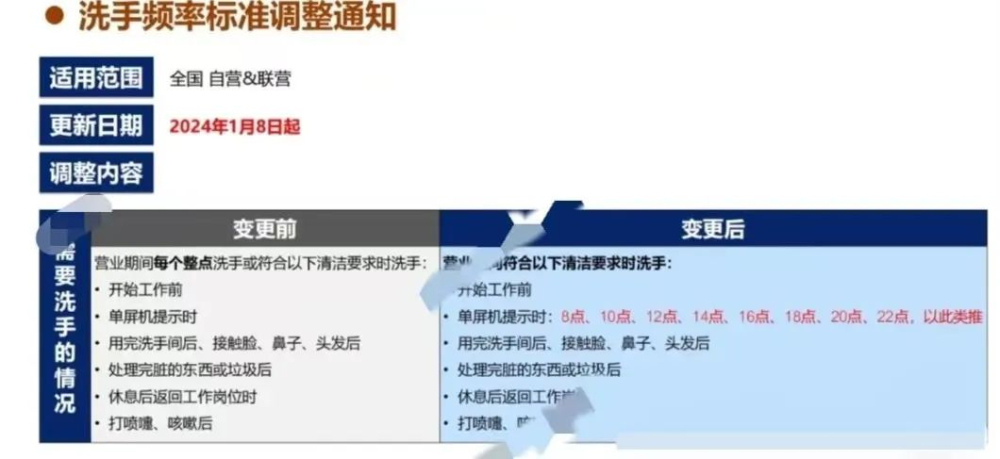
This policy adjustment may mark the first step for Luckin in enhancing employee care. For consumers, the impression that “you can say Luckin doesn’t taste good, but you can’t say it isn’t clean” will likely persist; for employees, reducing unnecessary handwashing is undoubtedly an important start toward improving workplace comfort.
The above content is compiled by CoffeeHunters, a coffee news website.


