







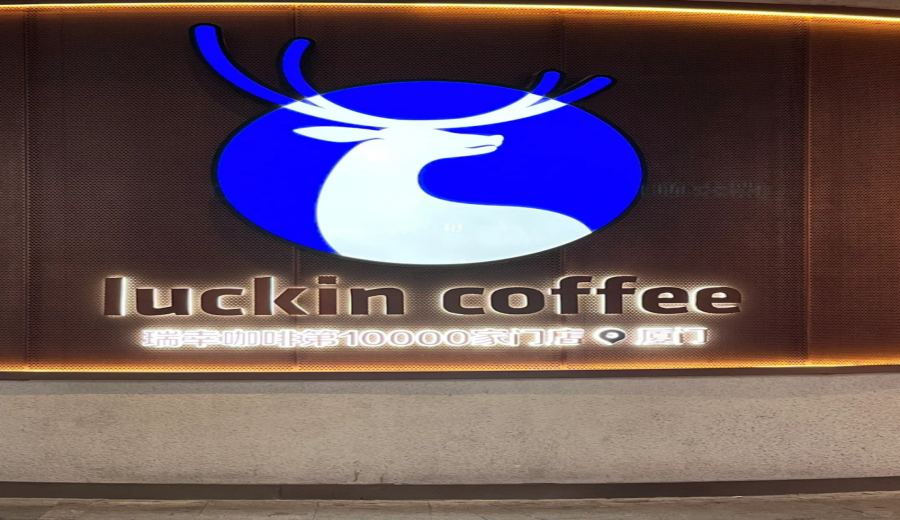
Introduction:Luckin Coffee’s first flagship store with ten thousand outlets experiments with pour over coffee, but the brewing process is executed by a machine simulating the techniques of a champion barista—sparking heated debate on whether “machines can replace humans.” This article breaks down the full process behind this 20-yuan pour over—from the 23-gram coffee dose, ten-step pouring sequence, to the 88°C water temperature setting—analyzing the reasons behind its lighter color and muted flavors, while exploring the challenges and possibilities of making specialty coffee more accessible.
When Luckin announced it had surpassed ten thousand stores, the debut of its first flagship store drew particular attention. Located in a strategic area, this outlet not only continues the brand’s core product offerings but also introduces pour over coffee service for the first time—making it a unique experiment among all its stores. However, a video of the brewing process filmed by netizens quickly turned this 20-yuan pour over into the center of discussion.
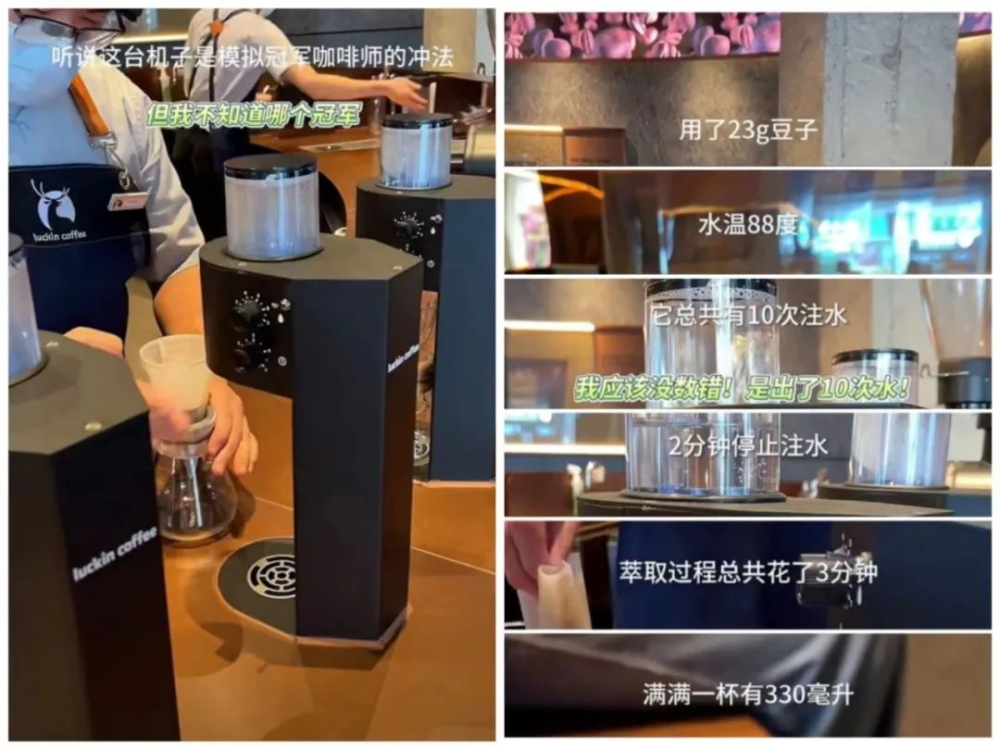
In the footage, after the barista pours 23 grams of ground coffee into the filter cone, they do not manually pour the water themselves. Instead, a specially designed machine takes over the operation. This device strictly replicates the brewing recipe of an international competition champion, usinga constant water temperature of 88°Cdispensed in ten separate pours, with the total extraction time lasting about three minutes, ultimately yielding 330 milliliters of brewed coffee. Notably, there were visible instances of coffee grounds clogging the filter, yet the machine continued its programmed operation without interruption, and the staff did not intervene promptly.

The resulting flavors have drawn polarized reactions: some consumers pointed out that the coffee had a lighter color compared to traditional pour overs, with a rather flat flavor profile, suspecting it might be related tothe characteristics of light roast beansas well as issues with extraction uniformity; others, however, argued that at the 20-yuan price point, the performance met expectations, especially for those who prefer milder-tasting coffee. In response to the criticism, on-site staff commented that “the flavors are less pronounced in hot drinks,” but this explanation failed to quell the controversy over whether machine-made coffee can truly be called pour over.
A deeper look into how this machine operates reveals that its design core is focused on recreating key parameters used by champion baristas: includinga stable flow rate of approximately 50 milliliters per minute,a golden ratio of 1:14 coffee-to-water, and specific intermittent rhythms during the segmented pouring process. However, the truly irreplaceable value of manual brewing lies in the experienced judgment of the barista—who adjusts in real-time based on variables such as bean variety conditions and ambient humidity—for example, when faced with blockages, professional pour over brewers would typically tap the filter or slightly adjust the pouring angle to resolve the issue.
Behind this experiment reflects Luckin’s strategic intent to expand into the specialty coffee market. For a long time, the brand has built its market position through mass-market pricing and frequent collaboration campaigns, but the “nine-yuan-nine affordable image” has also posed transformation challenges. Introducing pour over services at the ten-thousand-store milestone is both an attempt to upgrade its brand image and a test of consumers’ acceptance of a “high cost-performance specialty coffee experience.”
For beginner enthusiasts, this incident offers practical insight: when evaluating the quality of a pour over, in addition to considering the bean variety and roast level, it's also essential to observeextraction stability(such as whether the water flows in a spiral pattern for even infiltration), the expansion state of the coffee bed, and the overall color uniformity of the final brew. If the color is too light or off-flavors are noticeable, it is recommended to first check the grind size and water temperature control—these two factors account for over sixty percent of the success in pour over brewing.
Industry observers note that while machine automation can ensure accuracy in basic parameters, it struggles to replicate the flexibility of manual brewing. For consumers, when choosing pour over coffee, it’s worth clarifying your own needs: those seeking the ultimate flavor experience are still advised to visit professional coffee shops; if the goal is casual daily enjoyment, innovative attempts with transparent processes and reasonable pricing can also be an interesting option to explore.
The above content is compiled by CoffeeHunters, a coffee news website.


