








Introduction:The Vietnamese drip filter is not only the soul tool of local condensed milk coffee but also beloved by many coffee enthusiasts for its simplicity. This article delves into the structural principles, traditional usage, and practical brewing parameters of the Vietnamese drip filter, and through altering the pouring method, tests whether it can also serve as a pour over tool. Whether you’re a beginner or a seasoned brewer, you’ll find practical inspiration for using this tool and reference points for brewing.
In the coffee cultures around the world, each region often has its most representative brewing device—though not necessarily where it was invented, it is definitely a localized classic. Think of Ethiopia’s handmade clay pots, Turkey’s long-spouted copper cezves, and the often-discussed Italian moka pot. What we’re introducing today is the Vietnamese drip filter, full of Southeast Asian charm.
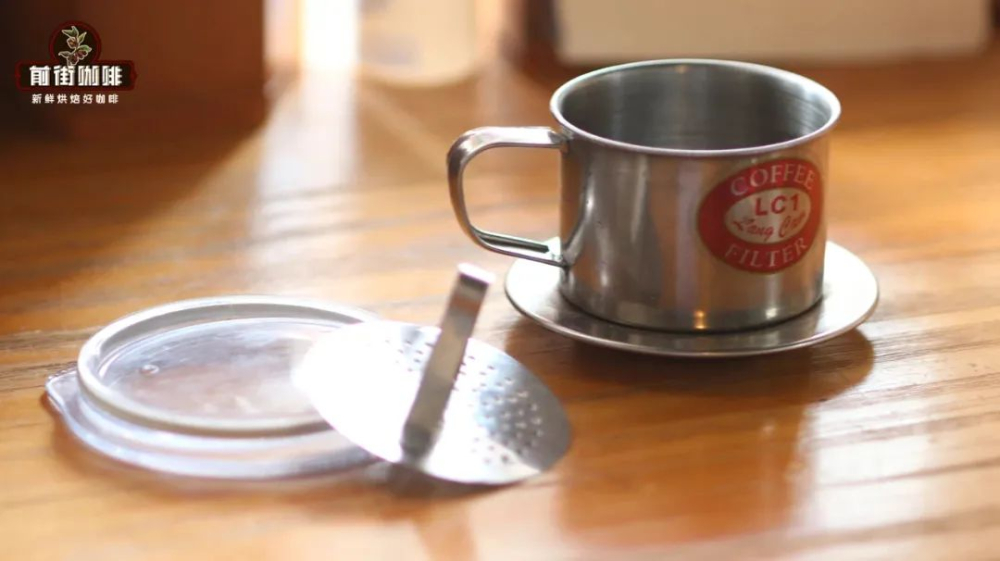
The Vietnamese drip filter, also known as the Vietnamese drip pot or Vietnamese dripper, is an essential tool for making the classic condensed milk coffee in Vietnam. Its overall structure is quite simple, mainly consisting of three parts: the main body that holds the coffee grounds and hot water, a pressing plate used to evenly compact the coffee grounds, and a lid structure that also serves as both a cover and a base support.
As for the origins of the Vietnamese drip filter, there are currently no completely definitive historical records. The more common belief is that it may have existed even before Vietnam began cultivating coffee. In fact, Vietnam’s coffee cultivation history can be traced back to the late 19th century during the French colonial period, which means that when the locals first encountered coffee, they likely already had similar dripping tools introduced. Based on various sources, it is speculated that although this tool bears the name of Vietnam, it is not an invention originating from Vietnam itself.

Vietnam is known as a major coffee-producing country, but its mainstream cultivated variety is Robusta, which is characterized by strong, bitter flavors, with less prominent floral and fruity notes compared to Arabica. Therefore, Vietnamese people commonly add condensed milk to their coffee to balance the bitterness, unexpectedly creating the widely loved Vietnamese condensed milk coffee, which has also become a classic representative of street beverages.
Next, we’ll explain the standard usage process of the Vietnamese drip filter. The following is based on a practical extraction recipe from a certain brand: using Indonesian Golden Mandheling, with a coffee dosage of 10 grams (a common capacity for small drip filters), grind size set to 11 on the Ek43 grinder, equivalent to about 65% passing through a #20 sieve. A 1:15 coffee-to-water ratio is used, with water temperature controlled at 90°C.
The traditional brewing steps are very simple: pour the coffee grounds into the main body, evenly press them flat with the pressing plate, then pour all the hot water in one go, cover with the lid, and let it sit. The whole process takes about 3 minutes, after which the coffee liquid will slowly drip through and complete the extraction. This method extracts coffee with balanced flavors and smooth mouthfeel, with almost no noticeable off-flavors.

However, the Vietnamese drip filter does have clear limitations, mainly due to its relatively large filter holes, which can allow fine coffee particles to drip along with the liquid, affecting the smoothness of the mouthfeel. To improve this, it is recommended to place a filter paper at the bottom of the dripper, which can effectively filter out fine particles and enhance the overall drinking experience. If you want to challenge the classic Vietnamese flavor, simply add an appropriate amount of condensed milk to your cup—generally, a ratio of about 8 ml of condensed milk per 100 ml of coffee liquid is recommended—to recreate the authentic rich sweetness.
After seeing the structure of the drip filter, you might have thought it bears some resemblance to a pour over dripper? This makes us wonder: if we use pour over techniques to operate it, could we also extract coffee with different flavors? To test this idea, we conducted an experiment.
The experiment used Kenyan Assaria beans, with the same coffee dosage of 10 grams, grind size slightly adjusted to 10 on the Ek43, about 70% passing through a #20 sieve, maintaining a 1:15 coffee-to-water ratio, and slightly increasing the water temperature to 92°C. A classic three-pour method was used: first, pour double the coffee dosage amount of water (about 20 ml) for a 30-second bloom; after the bloom, slowly pour the second pour of 80 ml of hot water in a wide circular motion; finally, when the water level is nearly gone, pour the remaining 50 ml of water in a circular motion again. The entire process completed the filtration in about 3 minutes and 5 seconds.
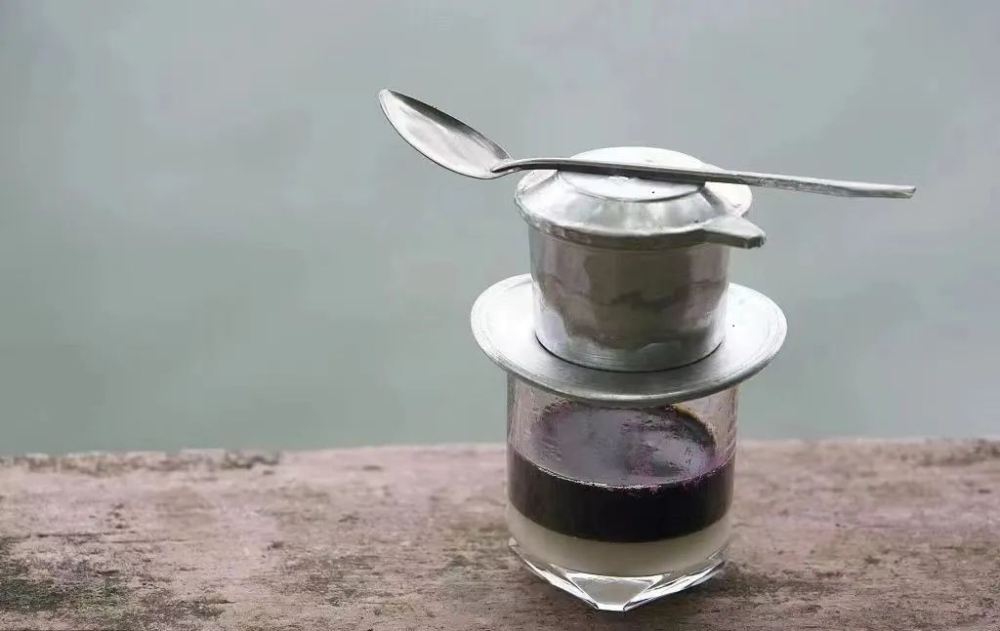
The results showed that although the overall extraction time was slightly longer, there was no obvious over-extraction bitterness. The unique black plum, tomato, and berry notes of the Kenyan beans were all moderately expressed. However, due to the structural limitations of the drip filter, the overall flavor complexity was slightly less layered compared to a pour over dripper, with the overall performance tending toward being ‘flat’. Nonetheless, this experiment still holds reference value, proving that the Vietnamese drip filter, when its usage method is adjusted, can also present different characteristics.
In summary, although the Vietnamese drip filter is designed simply, with proper operation and appropriate adjustments, it can not only produce authentic Vietnamese-style coffee but also allow exploration of more possibilities using pour over techniques. For coffee enthusiasts who enjoy experimenting with different tools and brewing methods, this classic dripping tool is definitely worth adding to your brewing options.
The above content is compiled by CoffeeHunters, a coffee news website.


