







Introduction:From acidity to bitterness, each flavor reveals the secrets of extraction. Based on science and practical experience, this article breaks down the origins of the Golden Cup extraction rate and teaches you how to determine whether your pour over or espresso is under-extracted or over-extracted by evaluating the strength and balance of sour, sweet, and bitter notes. It also provides practical adjustment tips to help you more precisely control grind size, water temperature, and brew time, crafting a balanced and layered cup of coffee.
During the coffee brewing process, if the flavors lack roundness or appear sharp and flat, it’s often related to "extraction." Under-extraction and over-extraction are the two most common and impactful issues affecting flavor. Understanding their causes and taste characteristics is essential knowledge for every coffee enthusiast.
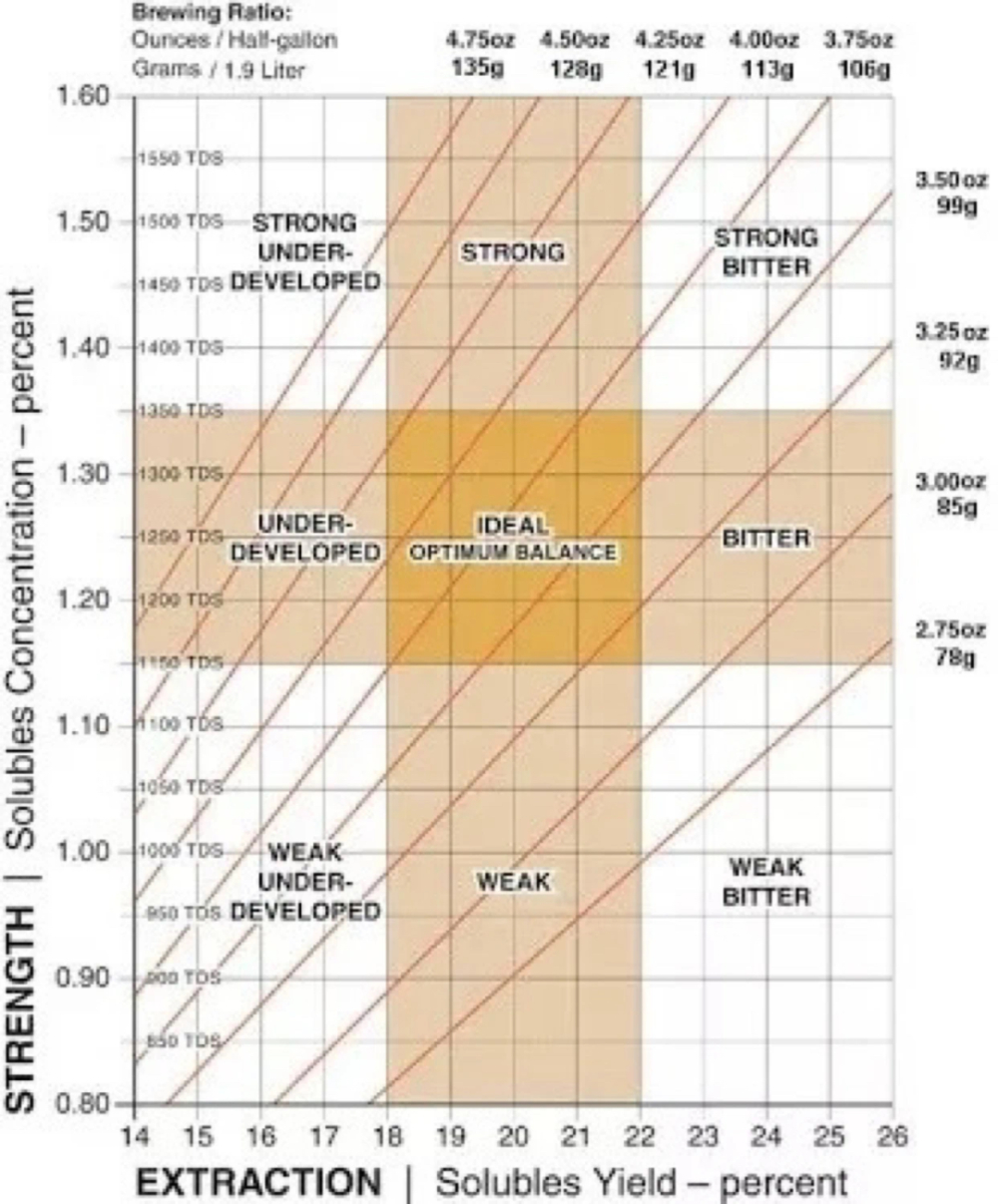
When discussing the ideal range of extraction, one must mention the "Golden Cup Extraction Theory." This research, originating in the 1950s, indicates that about 30% of coffee beans consist of water-soluble substances, and when the extraction rate falls between18% and 22%, the overall flavor of the coffee is most favored, with a well-balanced ratio of sour, sweet, and bitter notes—this is what is known as the "Golden Cup standard."
Simply put, an extraction rate below 18% is called "under-extraction," meaning many beneficial flavors in the coffee have not been fully dissolved; over 22% is "over-extraction," where excessive bitterness and undesirable off-flavors are released, ruining the overall taste. However, in practice, you don’t need to manually measure the extraction rate—it’s better to judge the extraction status based on the actual flavors you taste.
The flavors in coffee can generally be divided into three main categories: acidity, sweetness, and bitterness, and they are released at different stages and speeds during extraction.Acidic compounds are mostly released in the early stage, sweetness concentrates in the middle stage, while bitterness is mainly extracted in the later stage. The balance and proportion of these three elements create the diverse and ever-changing flavor profiles of coffee.
When a cup of coffee exhibits a noticeable sharp acidity, or even a vinegary-like piercing sourness, it usually indicates under-extraction. In such cases, the coffee lacks the support of sweetness, making the acidity seem thin or even unpleasant. Additionally, the aftertaste is often short-lived and may even carry an unripe, greenish astringency. Moreover, under-extracted coffee may also display a more pronounced saltiness, because the sweetness and acidity that normally neutralize saltiness are relatively insufficient, making the saltiness more detectable.
Conversely, if you perceive intense burnt bitterness, woody tones, or a rough, harsh bitterness in your coffee, this is typically a sign of "over-extraction." This extraction state means that the bitter compounds from the later stage have been excessively released, disrupting the balance among sour, sweet, and bitter, causing the overall flavor to tilt toward the bitter extreme.
In addition to pronounced bitterness, over-extracted coffee often comes with a dry, astringent sensation and a hollow mouthfeel. The dryness mainly stems from polyphenols binding with proteins in the mouth, creating a friction-like rough texture; the "hollowness" refers to the coffee tasting bland, with weak layering and lacking the nuanced details that leave a lasting impression.
To improve these extraction issues, the key lies in adjusting brewing parameters, including grind size, water temperature, and brew time. For example,under-extraction is usually caused by too short a brew time or too coarse a grind, resulting in the water’s inability to fully extract the desirable compounds from the coffee. In this case, you can make the grind slightly finer or extend the brew time a bit to allow the water more opportunity to dissolve the acidic and sweet substances.
On the other hand, if the coffee is over-extracted, it’s usually due toa grind that’s too fine, excessively high water temperature, or too long immersion/pouring time, causing excessive release of bitter and off-flavor compounds. It’s recommended to use a coarser grind, lower the water temperature, or shorten the total brew time to avoid over-extracting those undesirable substances.
In practice, observing the color changes of the coffee during extraction and the speed of flow rate are also important auxiliary indicators. A stable flow rate and even coffee bed contribute to balanced flavor release. If you notice the dripping speed is too fast, it may be due to a grind that’s too coarse or insufficient tamping; if it’s too slow, the grind may be too fine, and adjustments should be made accordingly.
In summary, whether it’s pour over or espresso extraction, flavor is the most direct feedback. By carefully tasting the expression and balance of sour, sweet, and bitter notes, you can more intuitively determine whether the coffee falls within the ideal extraction range. Coupled with fine-tuning of grind size, water temperature, and brew time, you can gradually approach a professionally satisfying cup.
Coffee extraction is an art that blends science and sensory perception. Once you’re familiar with these fundamental principles, you’ll be able to face each brewing challenge with greater confidence and craft satisfying coffee flavors.
The above content is compiled by CoffeeHunters, a coffee news website.


