







Introduction:The recent wave of store closures by Seesaw Coffee across multiple regions in China has drawn significant attention — from Chongqing and Wuhan to scaled-back operations in first-tier cities, the brand once renowned for its creative coffee offerings is now facing expansion bottlenecks. This article delves into the underlying reasons behind these closures, explores the competitive landscape of the specialty coffee market, and offers practical advice for consumers when choosing brands, helping readers understand the current state and challenges of the coffee industry.
The specialty coffee brand Seesaw Coffee has recently seen a string of store closure announcements across various parts of the country, including its Wanzhoubusiness district location in Chongqing, all outlets in Wuhan, as well as numerous branches in cities such as Shanghai and Beijing. This wave of closures signals a significant market adjustment for the brand, marking a stark contrast to its previously rapid expansion.
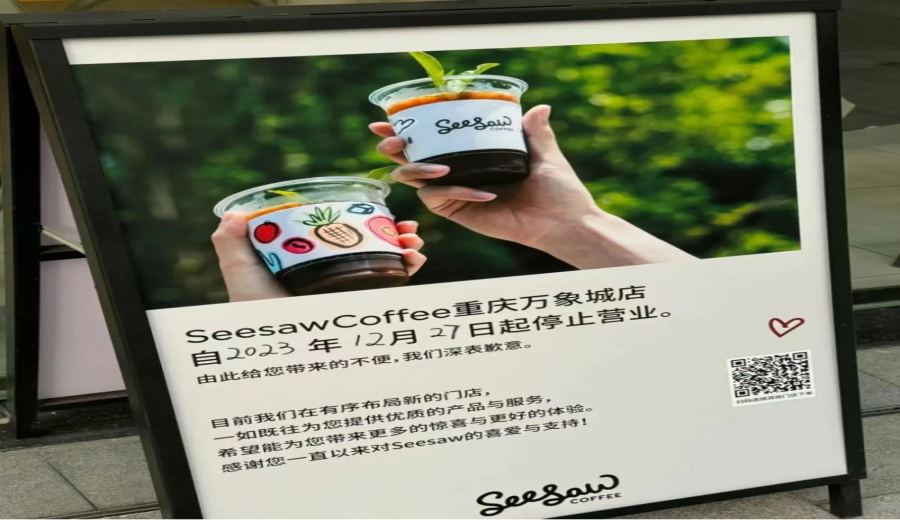
As early as the end of last year, the Wanzhoubusiness district store in Chongqing was the first to announce its closure, officially shutting down on December 27. Although the company did not elaborate on the reasons, it emphasized that it is still planning the layout for new stores. Subsequently, all Seesaw outlets in Wuhan also announced that they would cease operations after December 31, with some customers noting that stored value card balances or merchandise exchanges could be handled through the mini-program.
On social platforms like Xiaohongshu, many coffee enthusiasts have shared news about their local Seesaw stores closing — for instance, the Shanghai K11 Art Mall branch shut down on May 30, the Bailian Century branch closed on September 22, and locations such as Beijing’s Oriental Plaza also ceased operations one after another, with signs posted at the storefronts stating “Store Adjustment – Temporarily Closed.”
Consumer reactions to Seesaw’s closures have been mixed. Some patrons expressed regret over the departure of a beloved brand from their local markets, while others pointed out that in today’s highly competitive coffee industry, Seesaw’s coffee flavors lack standout characteristics, its pricing is relatively high, and it has failed to establish a clear market positioning — thus, the closures were “only to be expected.”
Looking back at Seesaw’s development, the brand was established in Shanghai in 2012 and was among the pioneers in China’s early specialty coffee scene, earning recognition from many coffee lovers for its rigorous pursuit of coffee flavor. In 2020, Seesaw began vigorously developing creative coffee products, successfully capturing market attention through a differentiation strategy, and was thus hailed as the “pioneer of creative coffee.”
In terms of funding, Seesaw completed three rounds of financing between 2017 and 2022, raising amounts ranging from 45 million to several hundred million yuan. These funds enabled the brand to expand rapidly between 2021 and 2022. However, actual store openings fell short of projected targets. According to data from Zhaomen Catering, as of December 4, Seesaw had only 135 stores nationwide, with 70 concentrated in Shanghai and the rest spread across first-tier cities such as Beijing, Hangzhou, and Shenzhen.
Since 2023, Seesaw’s expansion pace has noticeably slowed, with the most recent new store opening recorded in August, and no new stores added for over four months since then. Compared to the ambitious goals set by its founder — “reaching 200 stores by the end of 2022 and expanding to 500–1,000 stores within the next five years” — the current reality shows that the brand still has a considerable way to go to meet that “500-store” target.
Industry analysts believe that the challenges Seesaw faces reflect the intense competition in the quality coffee market. In an era where consumer tastes are becoming more refined and market options more diverse, relying solely on creative products or brand storytelling is no longer sufficient to sustain long-term growth. For coffee enthusiasts, when choosing a brand, it may be more worthwhile to focus on substantive quality indicators such as the origin flavor of the coffee beans, roast level, and extraction parameters, rather than simply depending on brand recognition.
Whether Seesaw can adjust its strategy and regain market confidence remains to be seen. This wave of store closures also provides an opportunity for reflection across the entire specialty coffee industry. How brands balance innovation with operational efficiency will be a key factor determining their long-term development.
The above content is compiled by CoffeeHunters, a coffee news website.


