







Introduction:Starbucks releases a large number of exquisite drinkware pieces every year, attracting many coffee enthusiasts to collect them. However, the way these items are displayed in stores has repeatedly sparked controversy. Some customers have accidentally knocked over fragile cups placed near walkways, only to end up having to purchase the damaged items at staff discount prices. Is the placement of cups on low shelves in high-traffic areas a design oversight, or are customers failing to exercise due care? This article delves into the differences in how such situations are handled inside and outside Starbucks, common issues with cup displays, and precautions consumers should take.
For years, Starbucks has been hailed as the "cup king" of the coffee world. Each year, it not only launches a variety of seasonal coffee beverages but also designs numerous limited-edition or themed cups, attracting countless collectors. These cups are often displayed prominently in stores, including fragile glass and ceramic items as well as metal tumblers. Recently, however, an incident where a customer accidentally knocked over some cups in-store has sparked widespread discussion about display safety and liability for accidents.
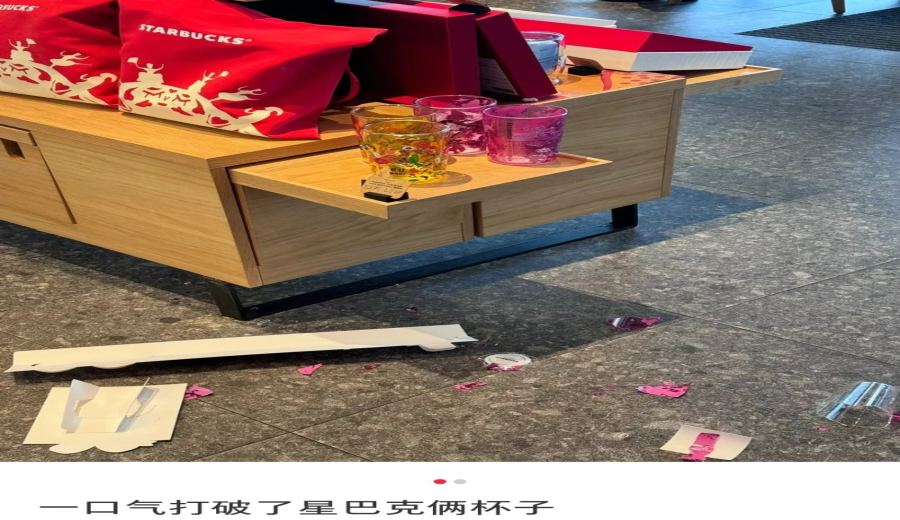
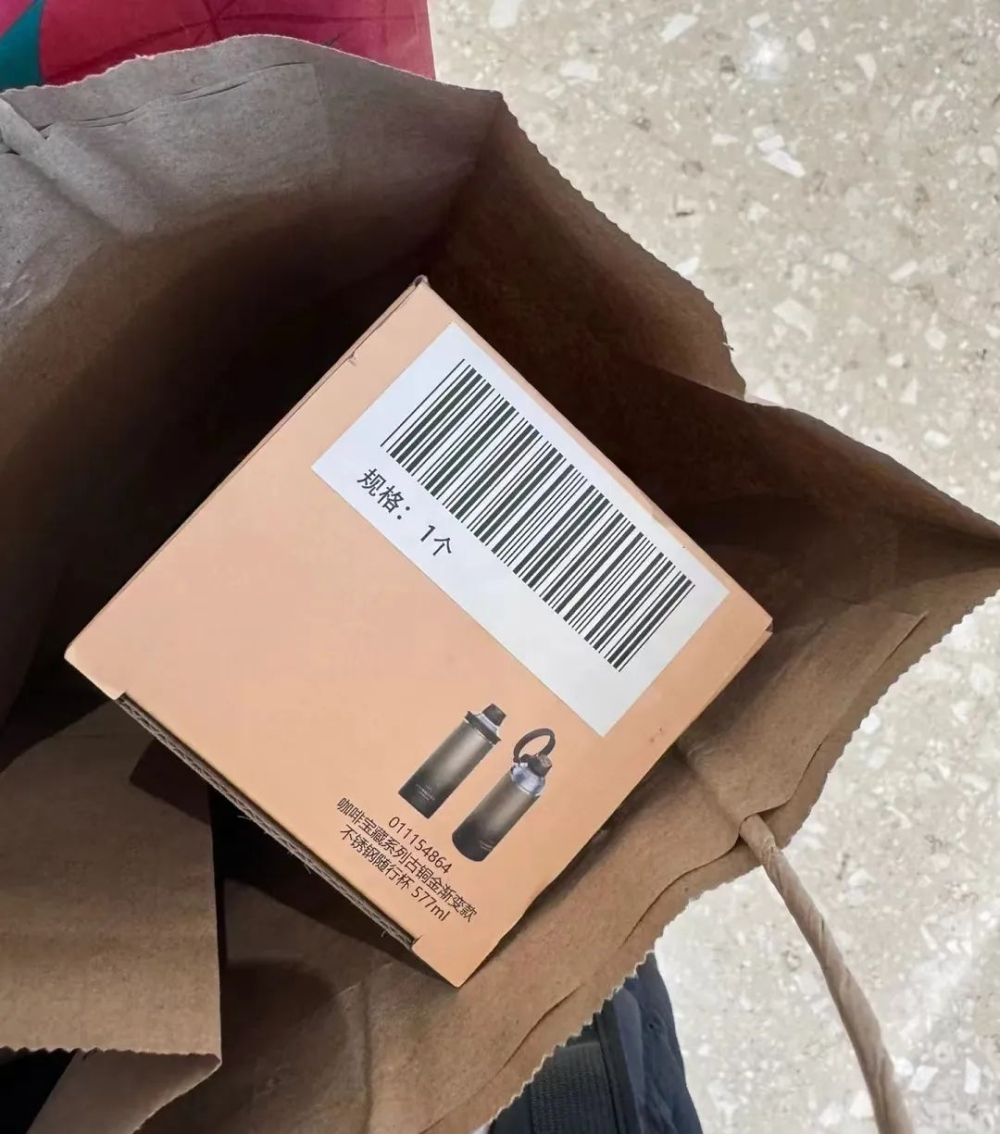
According to an online post, while waiting for his drink, the customer accidentally knocked over a top-heavy stainless steel tumbler. As he bent down to pick it up, the hem of his clothing brushed against a nearby glass cup, causing the tumbler to dent and the glass cup to shatter. In the end, he had to buy the damaged items at the staff price (about 30% off). The incident triggered extensive discussions on social media: is placing fragile cups on low shelves near walkways a convenience for customers to choose from, or does it introduce unnecessary risks?
Judging by handling practices both domestically and internationally, Starbucks’ response to customers accidentally damaging cups is inconsistent. Consumers who have experienced similar incidents at overseas branches have reported that staff usually do not aggressively demand compensation—especially if the damage was not intentional—and often treat it as “normal wear and tear.” Some even inquire whether the customer was injured or startled. However, there are also many cases where customers ultimately had to purchase the damaged cups at full price or a discounted rate, particularly at stores in Asia.
The display method used in this incident has raised many questions.The display shelf is not only located on a walkway frequently used by customers, but the display tray is also designed to be extendable, meaning the cups are actually positioned almost at the edge of the aisle.Even if a customer is wearing loose clothing or carrying a bag, an unintentional turn or gesture could easily result in contact with these fragile items. In fact, similar situations are occasionally mentioned by consumers online, with some even describing this type of placement as having a “scam-like” quality.
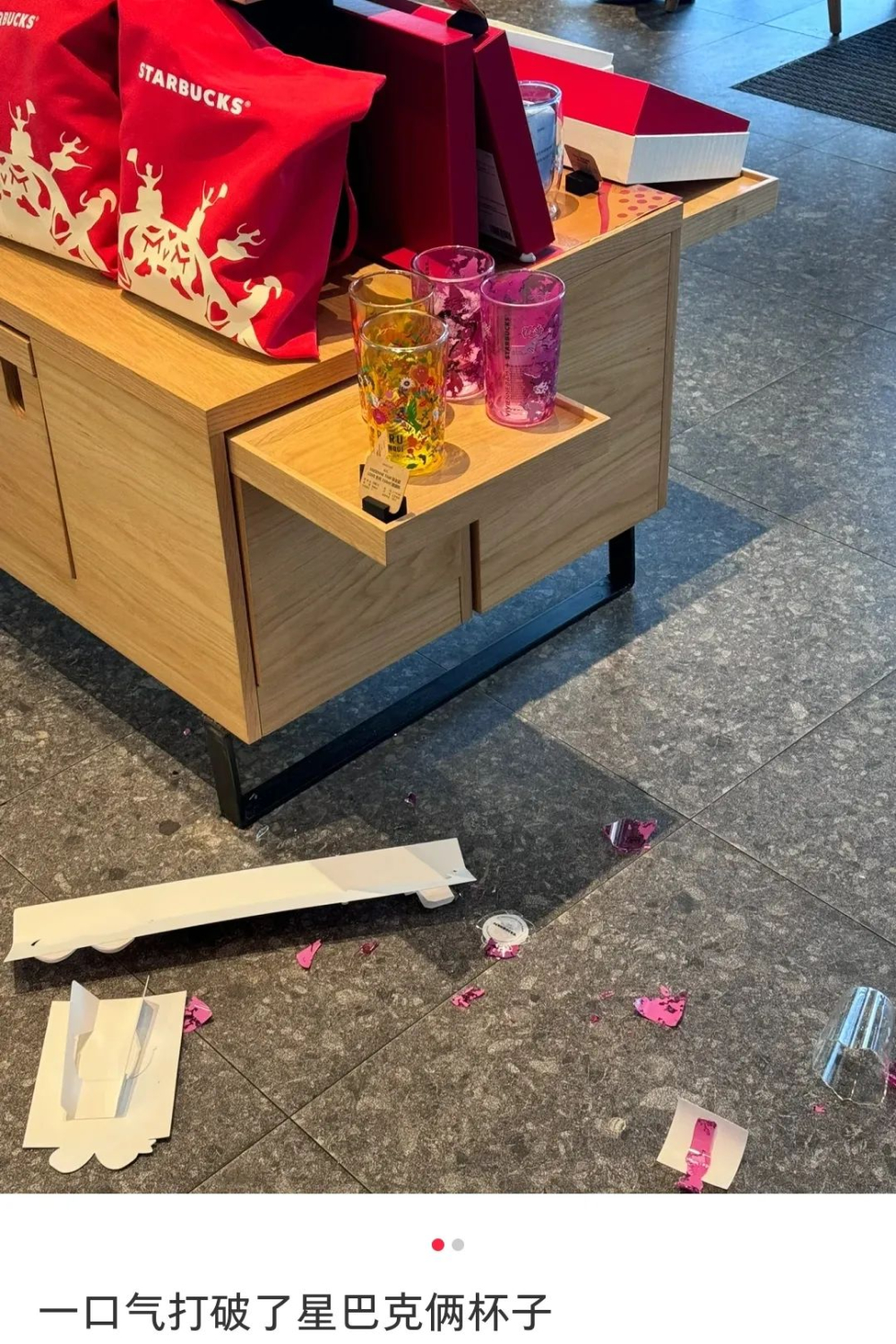
Observing photos provided by netizens, one can see transparent glass fragments scattered on the floor. It turns out that these cups were placed on the extended platform of an island-style display shelf, exhibited alongside other products in the same series. While this tray design makes it easy to showcase multiple cups, in high-traffic store environments, it can easily create safety hazards. Especially during busy periods, when customers are constantly moving through, and the cups are located near the edge of the pathway, the likelihood of accidents naturally increases.
It is understood that most Starbucks stores are typically equipped with one large and one small island-style display shelf. The larger shelf primarily showcases seasonal or promotional items, while the smaller one is used for regular product displays. In terms of layout, the front display area prioritizes seasonal themes and color coordination, while the back is organized by color groups and arranged in a pyramid-like, stacked formation. Although this arrangement is aesthetically pleasing and convenient for customers to browse, it can also place fragile items in high-risk areas.
In response to external criticism that Starbucks intentionally places cups in easily bump-into locations, an insider revealed that stores usually position new and featured products in areas visible upon entry to enhance exposure and sales opportunities. However, he also admitted that while there are occasional instances of customers accidentally knocking over cups, unless the items are high-value limited editions, stores generally do not force compensation but handle the situation based on circumstances. He also pointed out that many customer-friendly stores proactively place fragile cups toward the back of the shelves to reduce collision risks, but the placement in this particular incident may have overlooked these details.
For consumers, when entering a Starbucks store, in addition to admiring the various beautifully designed cups, it’s also wise to pay more attention to the surrounding environment—especially near display shelves or walkways. It’s recommended to slow down and avoid sleeves, backpacks, or other items accidentally touching the cups. If an accident unfortunately occurs, staying calm and communicating sincerely usually leads to a more satisfactory resolution. Store staff typically assess responsibility based on the actual situation and handle compensation accordingly.
In summary, the controversy surrounding Starbucks’ cup displays not only involves the issue of compensation for individual accidents but also reflects a broader balance between store space planning and customer experience. Moving forward, how to achieve a better balance between showcasing products and ensuring customer safety will be a shared concern for both the brand and its customers.
The above content is compiled by CoffeeHunters, a coffee news website.


