







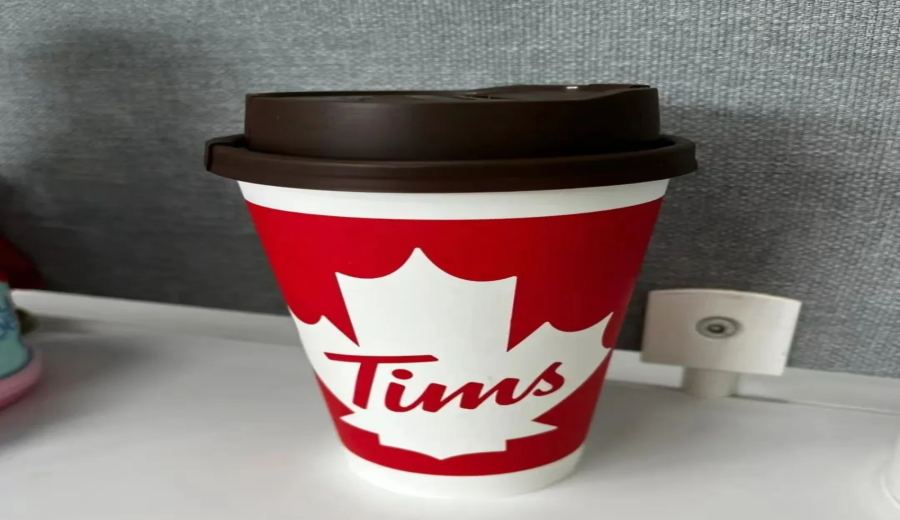
Introduction:Tims’ freshly brewed coffee has attracted many consumers with its refreshing taste, but recently, multiple customers have reported finding a large amount of coffee grounds at the bottom of their cups. The customer service response — “sediment is normal” — has sparked discussion. Is a small amount of coffee sediment reasonable? What possible flaws in the brewing process could lead to visibly noticeable grounds? This article delves into the principles of drip coffee extraction and offers tips on identification and improvement to help readers avoid drinking pitfalls.
Each chain coffee brand has its own unique appeal, and Tims has built its reputation with bagels and freshly brewed coffee. Its freshly brewed coffee is made using a method similar to pour over, with lower oil content than espresso, resulting in a cleaner taste that is favored by consumers who prefer lighter flavors. Many customers are accustomed to pairing freshly brewed coffee with a bagel for breakfast, enjoying a light and energizing start to the day.
However, recently, some consumers have shared photos on social media platforms, pointing out that when drinking Tims’ freshly brewed coffee, they found a large accumulation of black coffee grounds at the bottom of the cup. The images show fine particles adhering to the inner wall of the disposable paper cup, with particularly noticeable sediment at the bottom, even affecting the overall visual impression.
After contacting Tims customer service to report the issue, the customer received the reply: “Coffee ground sediment is a normal phenomenon and can be consumed safely.” This response surprised the individual, who emphasized, “It was the first time I drank coffee full of grit,” and although they later received a compensation coupon, they remained dissatisfied with the handling.
In the comments section, many users with similar experiences also posted photos, stating that they had encountered situations where “the last sip felt like eating coal cinders.” Some users speculated that the problem might stem from the brewing process, such as baristas improperly placing the filter paper, causing too many coffee grounds to mix into the drink.
In fact, it is common to find a small amount of fine powder sediment at the bottom of a coffee cup after drinking. These ultra-fine particles flow down with the coffee liquid, similar to the natural sediment of soybean residue in soy milk or pulp in fruit juice, and generally do not affect flavor or health. However, as in the Tims case, a visibly large amount of residue, while proving that it is freshly ground and brewed rather than instant coffee, clearly disrupts the drinking experience.

This incident is not the first of its kind. As early as November last year, consumers complained about the same issue, stating, “By the last sip, you can’t even see the white bottom of the cup,” and emphasized that it was not the first time they had encountered it. Most netizens responded with negative feedback such as “giving a bad review for takeout,” “the amount of sediment is outrageous,” and “I’ll never order it again,” showing that this issue has affected brand trust.
Possible reasons for analysis include baristas not properly installing the filter paper during operation, causing coffee grounds to fall directly into the cup; or the drip coffee machine’s filter being clogged or the pressure uneven, preventing fine particles from being effectively filtered. Regardless of the scenario, when consumers publicly raise concerns, brands should actively review their processes to prevent similar incidents from recurring.
For consumers, when ordering drip coffee, it’s advisable to observe the state of the cup’s bottom. If noticeable sediment is found, it’s recommended to provide feedback to the shop to encourage improvement. At the same time, understanding common issues in coffee extraction can help judge what is within a reasonable range, ensuring an ideal flavor experience with every cup.
The above content is compiled by CoffeeHunters, a coffee news website.


