








Introduction:Global coffee futures prices continue to rise, with supply shortages for both Arabica and Robusta. Vietnam’s exports have dropped sharply, while Brazil’s production has been affected by weather conditions. Against this backdrop, the once-overlooked Liberica and its variant Excelsa are gradually gaining attention. This article explores the potential, challenges, and market prospects of these alternative varieties.
Recently, international coffee futures market prices have risen markedly, with the main Arabica contract price surpassing 200 US cents per pound, while the nearby Robusta futures contract has approached the high of $3,000 per ton. This indicates that global coffee supply is facing unprecedented pressure.
According to the latest statistics released by Vietnam’s General Department of Customs, Vietnam’s coffee exports in November 2023 amounted to 119,297 metric tons, a year-on-year decline of 7.4%. From the beginning of the year up to November, the cumulative export volume was approximately 1.4 million tons, a year-on-year decrease of 10.4%. The Vietnam Coffee Association further estimates that the national coffee production for the 2023/24 season will be revised downward from the previously projected 1.78 million tons to between 1.6 million and 1.7 million tons, and predicts that this year’s exports may decrease by about 15%, to around 1.411 million tons. Currently, 75% of the new season’s fresh coffee cherries have been harvested, but many farmers are choosing to delay sales, hoping for further price increases.
Meanwhile, Brazil, the world’s largest producer of Robusta, is also facing the threat of declining output. Cooabriel, Brazil’s largest Robusta coffee cooperative, pointed out that due to the El Niño phenomenon, Robusta production in the state of Espírito Santo is expected to decrease by 15% to 25% in 2024. This state is Brazil’s largest Robusta-producing region, with a total output of 10.155 million bags (each bag weighing 60 kilograms) in 2023. The region is currently experiencing persistent high temperatures and insufficient rainfall, and coffee cherries are at a critical stage of development, which is particularly sensitive to high temperatures, exacerbating yield uncertainty. In addition, pest and disease issues in some areas are also showing signs of worsening, further affecting harvests.
For a long time, the global coffee market has been dominated almost entirely by the two major varieties, Arabica and Robusta. But as supply for these two mainstays tightens and prices remain high, the industry is beginning to seek alternatives. A study published in the journal Nature Plants points out that climate change is gradually altering the regions suitable for commercial coffee cultivation, particularly impacting Arabica, which has relatively demanding growing conditions, high quality, but also high sensitivity. The study suggests that rather than large-scale relocation or transformation of existing farms, expanding the coffee crop portfolio—such as incorporating new varieties, hybrids, or even previously overlooked types—may be a more resilient strategy.
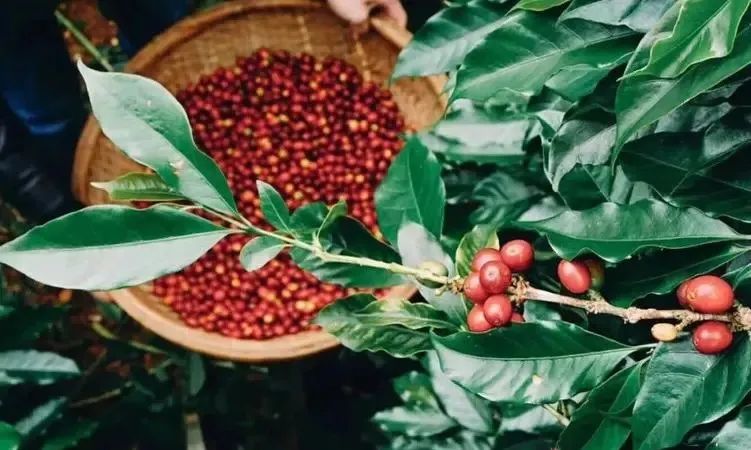
Among the many overlooked varieties, Liberica has drawn attention for its ability to produce relatively larger fruits and beans, but its flavor profile is generally considered rather ordinary, limiting its market acceptance. As a result, research and industry attention have gradually shifted to a variant of Liberica—Excelsa. This variety not only offers superior flavor and overall quality compared to traditional Liberica, but also inherits Liberica’s strong resistance to pests and diseases, along with relatively favorable growing conditions, making it one of the potential alternative choices.
The industry’s long-discussed “2050 problem”—the challenge of potential significant declines in Arabica and Robusta production due to climate change—is accelerating interest in alternative varieties. Against this backdrop, Liberica (especially Excelsa) is seen as a key variety with potential for a resurgence, and may play a more important role in the global coffee supply chain.
Whether the market will truly embrace Liberica and Excelsa in the future still depends on their actual performance in terms of flavor, yield stability, and consumer acceptance. But one thing is certain: as global coffee supply tightens, these once-marginalized varieties are gradually moving to center stage, and their future development is worth continued attention.
The above content is compiled by CoffeeHunters, a coffee news website.


