








Introduction:When pouring over coffee, encountering slow drainage or severe water pooling can be quite unexpected, especially with lightly roasted beans where such issues are more prone to occur. This article introduces three practical indicators—bloom expansion, foam distribution, and water level descent rate—to help you detect early signs of potential clogging. By adjusting your pouring technique, you can reduce over-extraction and off-flavors, improving brewing stability and overall flavor expression.
During the pour over process, fine particle clogging and poor water flow are among the most common issues. Many people can only resort to “stopping the flow” as an emergency measure when water pooling occurs. However, if not addressed promptly, it can easily lead to over-extracted bitter and astringent flavors, ruining the taste of the entire cup. In fact, rather than reacting passively after clogging happens, it’s better to observe key signals early in the brewing process, make adjustments in advance, and effectively reduce the risk of water pooling.
This article focuses on lightly roasted coffee beans and explores how, during the brewing process, you can assess the likelihood of water pooling by observing three specific indicators: bloom expansion, foam distribution, and water level descent rate. It also provides corresponding prevention and adjustment suggestions to help you complete the pour over more smoothly while achieving a purer coffee flavor.
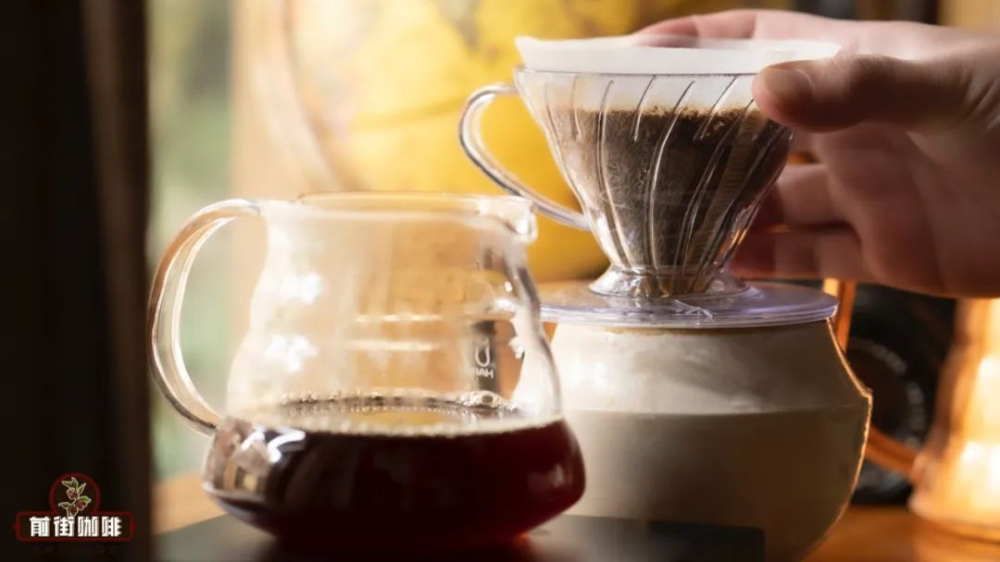
Lightly roasted beans, due to their lower roast level, retain more carbon dioxide and intact fiber structure inside the bean. This makes them more likely to release fine particles after grinding, and their overall particle density is relatively higher. To achieve sufficient extraction, the grind size usually needs to be finer, which further increases the risk of fine particles and clogging. Therefore, extra attention should be paid to these potential issues when brewing light roasts.
1. Bloom Expansion
When coffee beans are fresh, a noticeable expansion can usually be observed during the bloom, indicating that the beans still contain a significant amount of carbon dioxide. This gas can provide some support at the beginning of the pour, preventing water from quickly penetrating and pressing down the coffee grounds. If the expansion is minimal, it means the beans may no longer be very fresh, lacking sufficient internal gases. Hot water can then rapidly fill the internal spaces of the particles, making the coffee grounds heavier and causing them to sink to the bottom of the filter, increasing the likelihood of clogging.
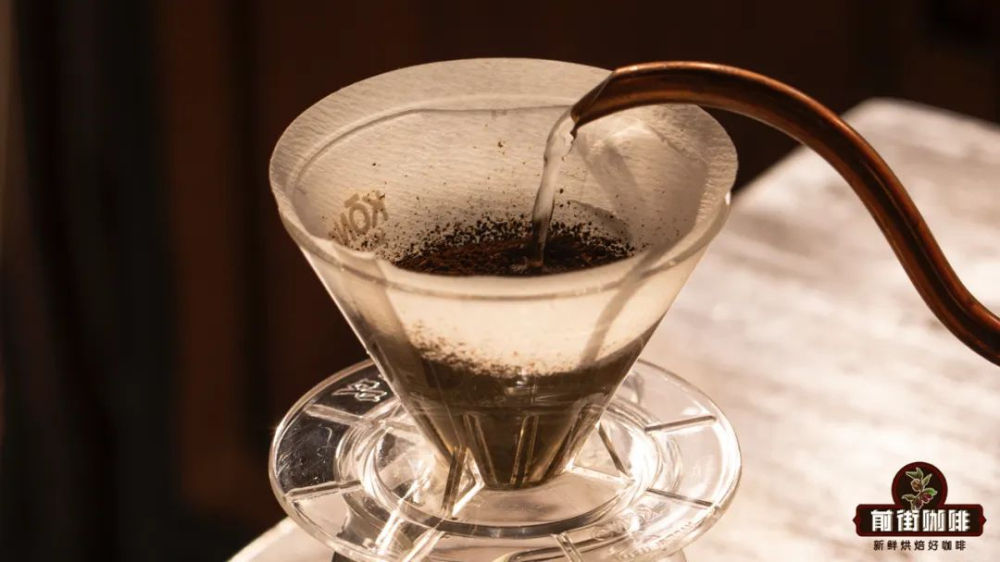
It is recommended to moderately reduce the circular pouring range after the bloom to avoid washing down coffee grounds from the edge of the filter, which can cause localized accumulation. Additionally, slightly increasing the pouring height allows the water to penetrate more gently, helping to reduce bottom pressure and lower the chances of water pooling and clogging.
2. Foam Performance After Bloom
Under normal circumstances, continuous pouring after the bloom is accompanied by abundant foam, which can help prevent coffee grounds from sinking too quickly. However, if the foam is sparse or even partially absent (i.e., certain areas have no foam coverage at all), this is usually a sign that the coffee grounds have already sunk to the bottom, indicating insufficient pouring strength or uneven distribution.
In this case, it is recommended to use a stronger stream of water and focus on small circular stirring in the next pouring stage, especially around the center of the filter. This helps to redistribute the sunken coffee grounds, reducing accumulation pressure. While it may not completely prevent clogging, it can effectively lessen its severity.
3. Observing Water Level Descent Rate
Using a three-stage pouring method not only helps enhance flavor layers but also allows you to better monitor changes in flow rate throughout the extraction process. When you reach the second stage of pouring, if you notice that the water level is clearly descending more slowly, this is usually a sign that clogging has begun.
In such cases, it is recommended to let the current water level fully descend to the bottom before proceeding with the final stage of pouring. This directly applies pressure to the accumulated coffee grounds at the bottom of the filter, which can help slightly clear the blockage and restore smooth water flow. However, it should be noted that these methods can only mitigate the immediate negative effects and cannot completely eliminate clogging.
In summary, to effectively prevent water pooling and clogging during the pour over process, the key lies in proactively observing the three major signals: bloom expansion, foam distribution, and water level descent rate, and adjusting your pouring strategy accordingly. This not only improves the quality of the current brew but also helps you gradually identify the root causes of clogging, further optimizing your overall pour over process and enjoying a smoother, more flavorful coffee experience.

The above content is compiled by CoffeeHunters, a coffee news website.


