







Introduction:Want to understand how this South Pacific island nation of Papua New Guinea cultivates specialty coffee that rivals Blue Mountain? This article delves into the country’s five major high-altitude producing regions, the unique evolution of the Typica variety, its grading system based on cupping and appearance, and how washed processing shapes its bright acidity, sweetness, and full body — an essential guide for selecting or brewing PNG coffee beans.
Papua New Guinea (abbreviated as PNG) is not only the largest island country in the South Pacific, but also an important producing region on the global specialty coffee map. Situated on the world’s second-largest island, it borders Indonesia to the west and occupies the main landmass to the east. The area features a typical tropical maritime climate with high temperatures and humidity year-round. However, thanks to its high-altitude regions, which generally range from 1,200 to 2,500 meters above sea level, along with fertile volcanic soils and dense tropical rainforests, it provides an ideal natural environment for growing Arabica coffee.
Dating back to the 19th century, when British and German colonial powers established a presence, coffee cultivation was introduced, primarily as an export crop for the Australian market. Then, in the 1920s, colonial ships brought in the classic Typica variety from Jamaica. This move significantly improved the yield and quality of locally produced commercial coffee and laid the foundation for its later reputation as the “Little Blue Mountain.”
It’s worth noting that Typica is one of the most original coffee varieties from Ethiopia and is still considered the ancestor of many modern Arabica lineages. It grows slowly but produces delicate flavors, especially showcasing unique citrus notes and nutty undertones in high-altitude environments.
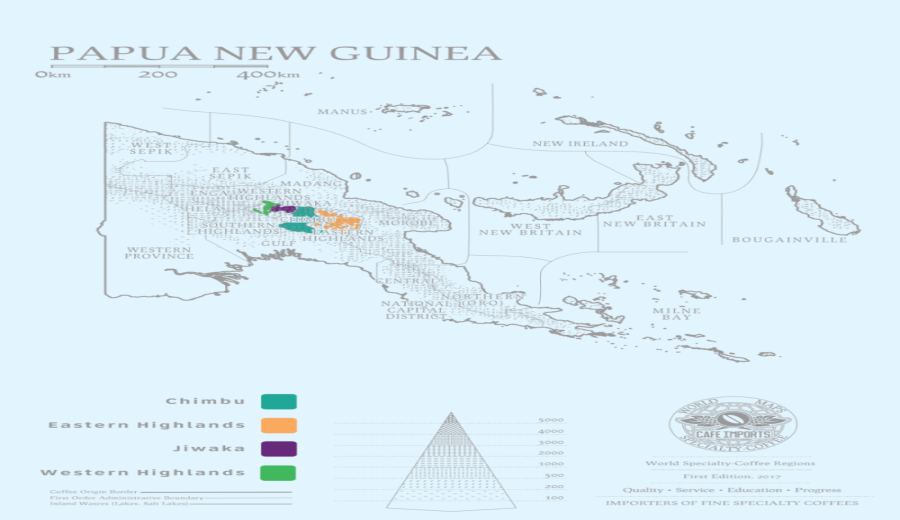
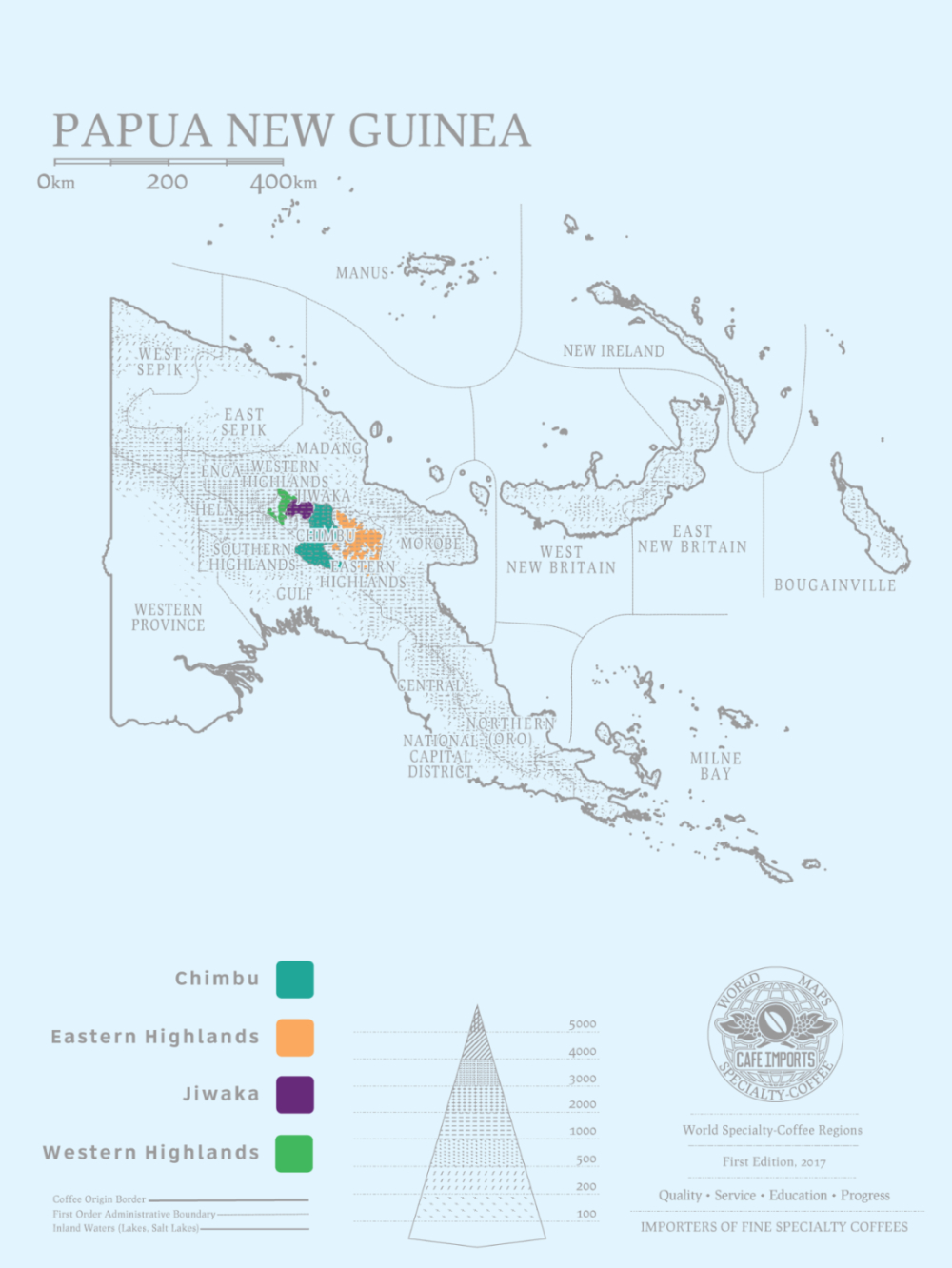
PNG’s coffee-growing regions are mainly concentrated in five high-altitude provinces: Western Highlands, Eastern Highlands, Chimbu, Morobe, and East Sepik. Among them, the Arona and Purosa estates in the Eastern Highlands are known for cultivation at elevations ranging from 400 to 1,900 meters. In the western region, around Mount Hagen—especially in the Wahgi Valley at approximately 1,000 to 1,800 meters—the mineral-rich volcanic soils are renowned. This is also where the famous Sigri estate is located.
Aside from these two major Typica-focused regions, coffee is grown in other parts of PNG as well, but it is mostly Robusta, typically cultivated at lower altitudes. These beans often have pronounced bitterness and heaviness, mainly used for instant coffee or bulk commercial purposes, and are noticeably inferior compared to specialty-grade Arabica beans.
About 85% of PNG’s coffee production comes from smallholder farmers, who often share processing facilities and technical resources through local cooperatives. Although it shares high altitudes and active volcanic geology with neighboring Sumatra in Indonesia, differences in variety and processing methods give PNG coffee a distinctly different flavor profile. In particular, the widely adopted washed processing method effectively enhances the beans’ cleanliness and acidity structure. As a result, the brewed coffee offers both bright lemon or berry acidity and a syrupy, full-bodied finish — sharing similarities with many South American specialty coffees.
In terms of harvest season, PNG’s coffee is mainly picked between April and September. During this period, ripe red cherries are carefully selected and sent to the estates’ own washed processing facilities. After going through steps such as pulp removal, fermentation, washing, and drying, the green beans are sorted according to strict grading standards. Unlike regions that classify beans solely by size, PNG’s grading system is more comprehensive. In addition to bean size, it also takes into account factors such as shape, color, cupping results, and defect ratios, ensuring consistent quality in exported beans.
The country’s coffee grades, from highest to lowest, are: AA, A, X, PSC, and Y. Among them, AA grade represents the top-tier washed beans, typically featuring the most complete appearance and outstanding cupping performance. A and X are slightly lower but still fall within the high-quality commercial category. PSC (Premium Smallholder Coffee) represents batches from high-quality smallholders. Though not produced by large estates, they still possess excellent potential, making them highly suitable for coffee enthusiasts seeking uniqueness and regional terroir.
The above content is compiled by CoffeeHunters, a coffee news website.


