







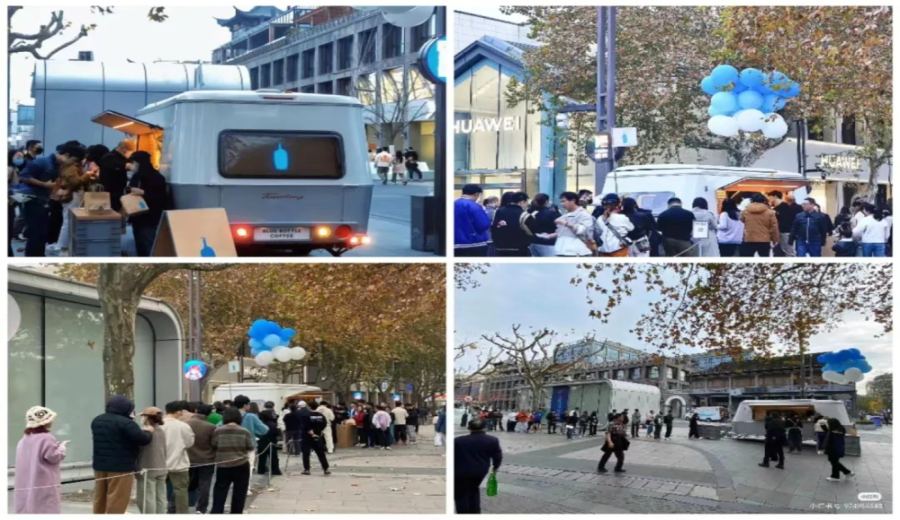
Introduction:Blue Bottle Coffee has, for the first time, introduced a classic European retro coffee truck to the shores of West Lake in Hangzhou as part of a three-month pop-up trial. On the first day, long queues lasting up to an hour formed for limited-edition giveaways, but the enthusiasm sharply declined the following day. With pricing between 28 and 58 yuan—on par with their regular stores—yet no seating area provided, consumers have raised concerns about value for money. This article analyzes the key factors behind the success or failure of pop-up models, from the Beijing collaboration controversy to the successful Shenzhen experience, exploring the consumer psychology and brand strategy behind the market response in Hangzhou.
The specialty coffee brand Blue Bottle Coffee recently launched an innovative experiment by placing a gray-toned European ERIBA Touring Series 60th Anniversary Edition coffee truck—emblazoned with the brand logo—by West Lake. It is scheduled to stay for three months. The debut of this classic retro model in a high-footfall area by West Lake was initially seen as a gentle foray into expanding the brand’s presence in East China, but the actual response showed noticeable fluctuations.
On the first day of operation, despite the chilly weather, many coffee enthusiasts bundled up in down jackets and queued for about an hour not only to try the limited menu but also to collect small giveaways and take photos with the distinctive coffee truck. The event took place on a Sunday during an off-peak period, and the scene remained relatively orderly. However, just a day later, the queue at the same location rapidly dwindled. Even during peak hours, wait times were significantly shorter, indicating a clear drop in consumer enthusiasm.
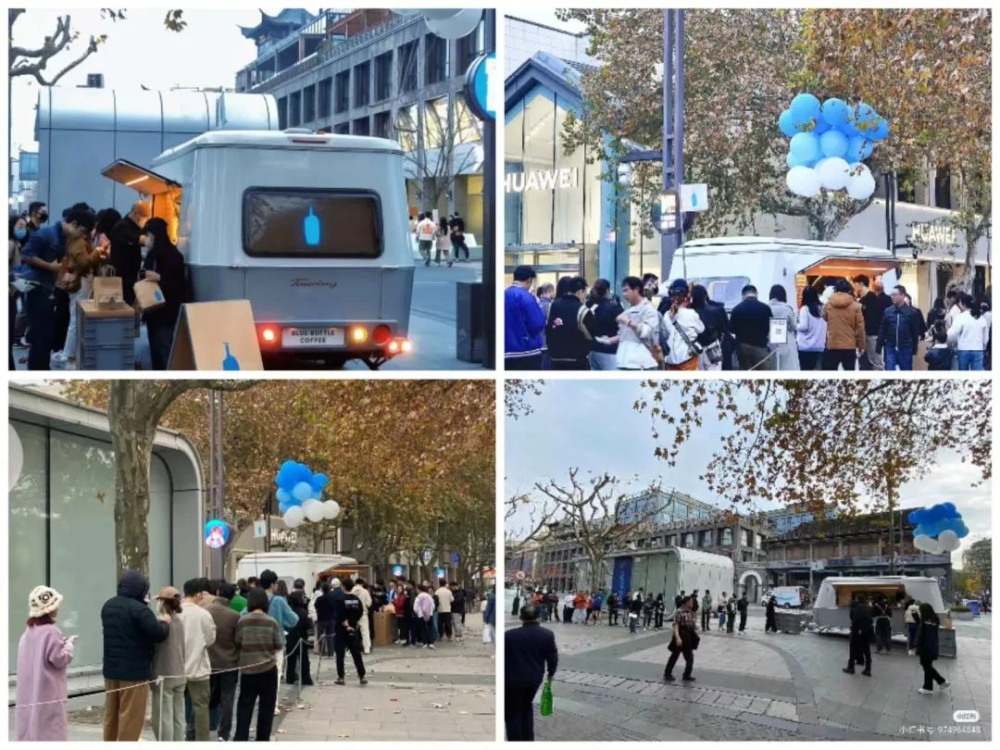
A closer look at Blue Bottle’s limited-time menu reveals that drink prices range from 28 to 58 yuan, nearly identical to those at their regular outlets. The key difference, however, is that this temporary coffee truck only offers a standing service area, lacking the comfortable seating found in their standard stores. For customers willing to spend over 40 yuan per person, the experience of standing in the cold to enjoy coffee certainly sparked considerable discussion about cost-effectiveness.
Local consumer feedback has been polarized: some comments bluntly stated, “Putting up a shabby truck to sell coffee at these prices—it’s not selling coffee, it’s robbery,” arguing that paying high prices for standing coffee outdoors lacks justification. Others pointed out that the long waits in freezing weather did not match the so-called “premium-priced pop-up experience.” Such sentiments reflect a shift in consumer expectations toward specialty coffee brands—from simply chasing trends to making more rational value judgments.
Looking back at Blue Bottle’s pop-up history in the Chinese market, a two-day collaboration event in Beijing once sparked controversy over the “limited instant coffee” incident, while the Shenzhen pop-up store received positive reviews thanks to its well-planned layout and space design. The coffee truck model in Hangzhou falls somewhere in between—not replicating Shenzhen’s physical space advantages while also failing to avoid the negative impressions left by the Beijing event—resulting in a noticeable disparity in consumer acceptance.
Notably, the location of the Blue Bottle coffee truck by West Lake—a high-traffic landmark—should have been a natural advantage. However, practical operations revealed typical challenges of the pop-up model: it is inherently difficult to simultaneously achieve brand exposure, product experience, and commercial returns within a short timeframe. Moreover, as Hangzhou consumers’ enthusiasm for international coffee brands becomes more rational, the previous mindset of “lining up for viral hits” has gradually shifted.
The market generally speculates that the coffee truck’s stay may be paving the way for a future physical store in Hangzhou, though the brand has yet to announce any concrete plans. Observers note that through pop-up experiments in Beijing, Shenzhen, and now Hangzhou, Blue Bottle Coffee is testing the acceptance of its premium positioning across different city markets. The performance of the West Lake coffee truck will serve as an important reference for evaluating the potential of the East China market.
For consumers eager to experience the Blue Bottle style but finding the current offering underwhelming, it is recommended to follow the brand’s official social media channels. Future plans for a physical store in Hangzhou will likely be hinted at in advance. Additionally, comparing local specialty coffee shops that also use European equipment often provides a more affordable option with comparable coffee quality—an increasingly diverse choice available in Hangzhou’s coffee market today.
The above content is compiled by CoffeeHunters, a coffee news website.


