







Introduction:Want to understand what makes authentic Jamaican Blue Mountain coffee truly unique? This article delves into its historical background, regulated growing regions, flavor characteristics, and cultivation environment to explore how Blue Mountain coffee became a global benchmark for specialty coffee. Readers will gain insights on how to select high-quality Blue Mountain coffee, as well as learn about its distinctive barrel packaging and washed processing methods.
Jamaica is the third-largest island in the Caribbean, located north of Haiti and separated from the surrounding islands by the Jamaica Channel. The island features diverse terrain, with flat plains along the coast, hills and limestone plateaus in the central and western parts, and predominantly mountainous regions in the east, characterized by a typical tropical rainforest climate. The year is mainly divided into two rainy seasons: May to June and September to November, while the dry season falls between December and March of the following year. The central-northern region receives abundant rainfall, with stable temperatures ranging between 22 to 32 degrees Celsius, averaging around 27 degrees year-round, providing ideal growing conditions for coffee trees.
Jamaica’s coffee cultivation history began in 1728, when the then Governor, Sir Nicholas Lawes, introduced the first coffee seedlings—reportedly a gift from the Governor of the French colony of Martinique. Although Lawes had previously attempted to introduce various cash crops, it was coffee that eventually took root and began small-scale cultivation in the Saint Andrew parish. It wasn’t until 1752 that Jamaica recorded its first export of 27 tons of coffee, marking the initial formation of the coffee industry.
Entering the late 18th century, with improved cultivation techniques and regional expansion, coffee plantations gradually extended into the Blue Mountain area. By the year 1800, there were over 686 coffee estates across the island, marking a golden age for coffee production. However, the abolition of slavery in Britain in 1807, fully implemented by 1838, led to a sharp decline in labor. Coupled with the cancellation of colonial trade preferences and poor management, Jamaica’s coffee industry rapidly declined, with only about 180 plantations remaining by the mid-19th century. During this period, coffee quality was generally poor, prompting the government to enact legislation in 1891 to strengthen cultivation technique education and improve the infrastructure for coffee processing and grading.
To revitalize the industry, the Central Coffee Clearing House was established in Jamaica in 1944, requiring all exported coffee to be inspected and certified by the entity. Subsequently, in 1950, the Jamaica Coffee Industry Board (abbreviated as CIB) was officially formed to set industry standards and oversee export quality. In 2018, this organization merged with other agricultural institutions and was restructured into JACRA (Jamaica Agricultural Commodities Regulatory Authority). Today, all Blue Mountain coffee must pass JACRA’s rigorous certification to ensure consistent quality.
The reason Blue Mountain coffee stands out is inseparable from the strict delineation of its regulated growing region. According to the Coffee Industry Regulation Act, only coffee of the Typica variety grown at elevations between 915 meters and 1700 meters within the four administrative regions of Saint Andrew, Saint Thomas, Portland, and Saint Mary can be called ‘Jamaica Blue Mountain Coffee.’
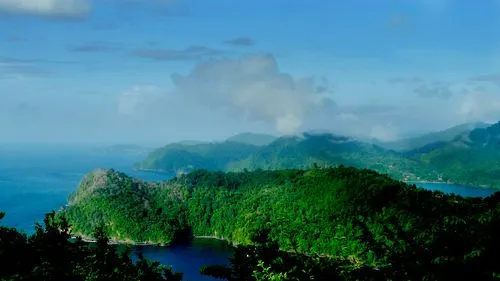
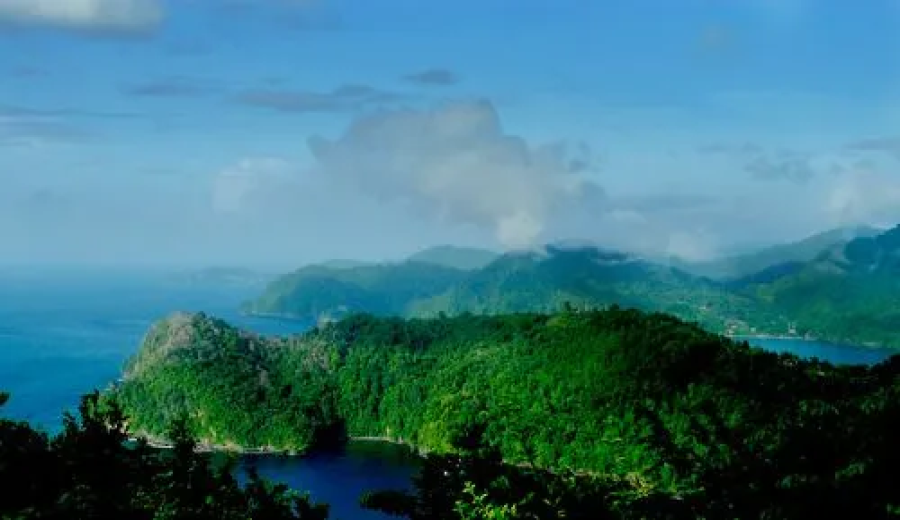
The Blue Mountains are located on the eastern coast of Jamaica, with main peaks ranging in elevation from 1000 to 1700 meters, surrounded by the azure Caribbean Sea. When sunlight shines on the sea, the mountaintops reflect a faint blue glow, hence the name ‘Blue Mountain.’ This coffee-growing region boasts an exceptionally favorable natural environment, including fertile volcanic soil, high humidity, frequent fog, moderate rainfall, and fresh air—all of which together nurture Blue Mountain coffee with an exceptionally balanced flavor. It is worth mentioning that the local Typica variety has evolved over more than 200 years in this region, developing stronger disease resistance, which is also one of the key reasons why Blue Mountain coffee can maintain its high quality over the long term.
Another unique aspect of Blue Mountain coffee is its packaging method. It is one of the few—if not the only—coffee products in the world that insists on using wooden barrels for shipment. These barrels resemble small wine barrels, with a standard capacity of 70 kilograms of green beans, and also come in smaller sizes of 30 kilograms and 15 kilograms, though these are limited to use for Jamaica Blue Mountain (including No.1, No.2, No.3, and PB grades) and Jamaica High Mountain coffees (such as High Mountain Supreme and High Mountain PB). Other grades of coffee can only be packaged in common burlap sacks, which also makes the Blue Mountain wooden barrel a symbol of quality.
When it comes to flavor, Blue Mountain coffee is world-renowned for its unparalleled balance. With gentle acidity, rich body, and delicate aroma, the three elements achieve excellent harmony. Take the commonly available washed Blue Mountain from the Clifton Estate, for example—it enters the palate smoothly and finely, with a mild and soft fruity acidity, and a lingering finish that emits a mellow cocoa aroma. The overall performance is very stable and layered. This flavor profile has made it a ‘dream coffee’ in the eyes of many coffee enthusiasts and professional tasters.
The above content is compiled by CoffeeHunters, a coffee news website.


