







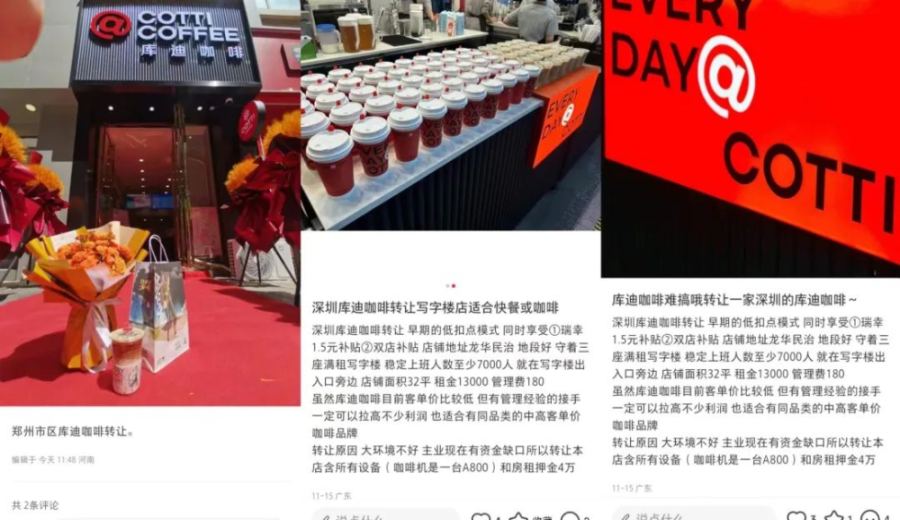
Introduction:Recently, the number of transfer listings for Luckin Coffee (库迪咖啡) stores has surged. While some locations report impressive monthly net profits, the high transfer fees and long payback periods are deterring many potential franchisees. This article delves into the real operational challenges behind Luckin’s franchise model — from subsidy policies and commission structures to market competition — helping readers fully understand the risks and opportunities of this business.
As temperatures drop, social media platforms have seen an increasing number of announcements about Luckin Coffee store transfers, including some outlets with monthly net profits reaching tens of thousands of yuan. However, these seemingly ideal investment opportunities often come with transfer fees as high as hundreds of thousands of yuan and lengthy payback periods.
Take a managed express store in Shenzhen as an example. The store’s monthly rent is about 25,500 yuan, selling around 450 cups on regular days, with sales doubling during peak weekend seasons. Coupled with a 3.5-yuan subsidy per cup, the owner states that the average monthly net profit falls between 20,000 and 30,000 yuan. Despite the decent earnings, the 680,000-yuan transfer fee makes many interested buyers hesitate. Calculating based on a 30,000-yuan monthly profit, it would take at least 23 months to recoup the investment — a risk that shouldn’t be overlooked.
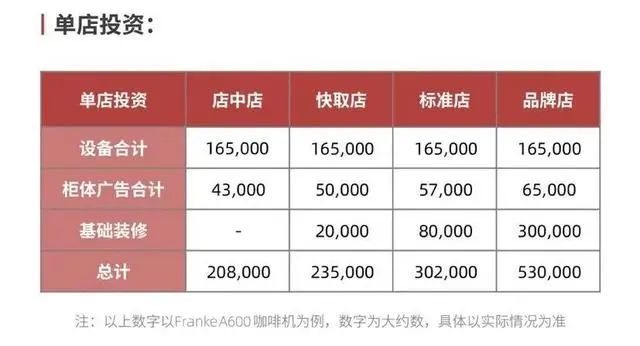
Thanks to its low barrier to entry and attractive subsidy policy, Luckin Coffee has expanded rapidly in the market, surpassing 6,000 stores. Compared to other new-style tea beverage brands, Luckin requires a relatively lower initial investment. Official data shows that the minimum initial investment for opening a store is about 200,000 yuan, with no franchise fee charged, and relatively flexible requirements on store size.
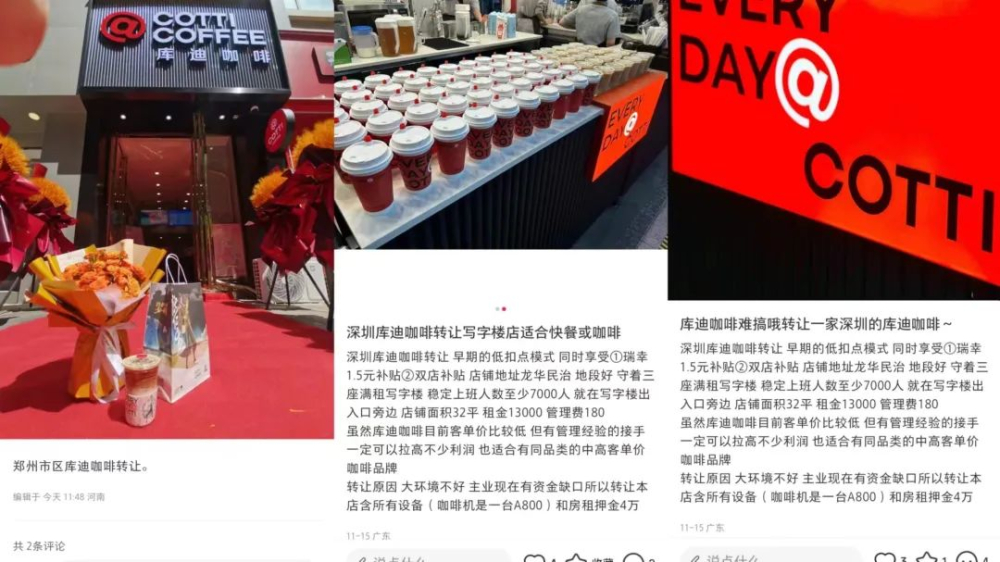
To attract franchisees, Luckin has introduced a series of subsidy measures, including settling all orders priced below 9.5 yuan at a flat rate of 9.5 yuan, offering subsidies ranging from 1.5 yuan to 0.5 yuan depending on the proximity to its competitor Luckin (瑞幸), as well as additional support for multi-store operators and those facing high rents. These policies can lead to differences of up to 4.5 yuan in actual settlement prices among different stores.
However, as the brand has scaled up, many franchisees have gradually realized that although they initially benefit from strong foot traffic thanks to subsidies, they face a dilemma of “high customer volume but low profitability” in the long run. In its bid to quickly build brand awareness, Luckin engaged in fierce price competition with Luckin (瑞幸), with product prices once dropping to as low as 8.8 yuan, and even available for less than 7 yuan on certain platforms. This has significantly squeezed the gross profit margin per cup.
Generally, franchisees can assess their profitability using the formula “corresponding fixed daily sales volume = monthly fixed expenses ÷ average per-cup gross profit ÷ 30 days.” But under Luckin’s model, due to relatively high raw material costs — with per-cup gross profit only around 45%–50% — and expenses such as rent and labor deducted, the actual profit margin is quite limited.
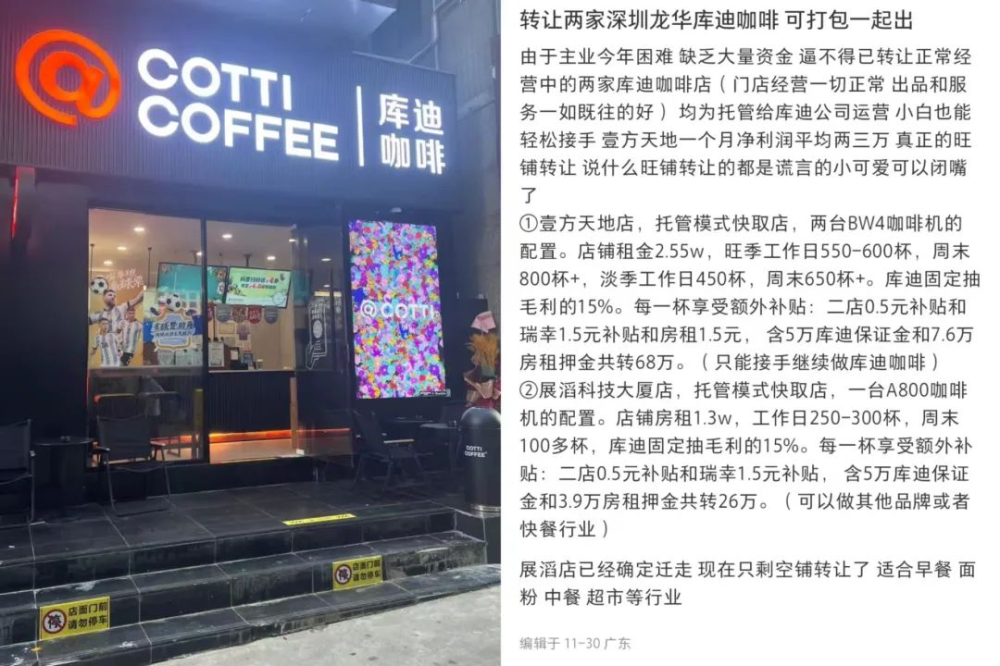
In addition, franchisees are required to pay a certain percentage of service fees each month, the calculation of which varies based on different brackets of store gross profit. For example, no service fee is charged if gross profit is below 20,000 yuan; for gross profit between 20,000 and 30,000 yuan, 10% is charged; between 30,000 and 40,000 yuan, 15%; between 40,000 and 80,000 yuan, 25%; and once gross profit exceeds 80,000 yuan, the service fee rate increases to 30%. This places even more operational pressure on stores that are already operating on thin margins.
Regarding subsidy policies, currently only partners who joined before December 31, 2023, are eligible for subsidies until the end of 2024. However, according to a Luckin recruitment manager, only the 9.5-yuan settlement subsidy is clearly supported by official documents, while other subsidy items have not yet been formally regulated. This has led to uncertainty among many franchisees about the continuity of future policies.
Overall, although Luckin Coffee’s franchise model initially offers the allure of low barriers and high subsidies, as market competition intensifies and subsidy policies adjust, challenges such as high transfer fees, low gross profit, and long payback periods become increasingly apparent. For investors looking to enter the market, gaining a deep understanding of these actual operational metrics and potential risks is key to making informed decisions.
The above content is compiled by CoffeeHunters, a coffee news website.


