








Introduction:The Tarrazú region of Costa Rica is not only the country’s first officially recognized origin-certified coffee appellation, but also the cradle of specialty beans in the hearts of many coffee enthusiasts. This article delves into the geography, microclimate, main cultivars, and the significance of the official origin registration in 2019, while exploring the aroma and complexity of a washed Tarrazú coffee through a single origin offering—whether you're a beginner or a seasoned connoisseur, you’ll uncover the unique charm of this high-altitude producing area.
When it comes to high-quality coffee from Costa Rica, many people’s first thought is the Tarrazú region. It is not only the country’s earliest origin-certified coffee hub, but also a flavor journey that has moved from the Valley of the Saints to the global stage. This article will break down step by step—from geographical environment, climatic conditions, and main cultivars to the background of the 2019 official origin registration—how Tarrazú has developed its distinctive coffee flavors, and will use a washed Tarrazú bean as an example to guide you through its nuanced details.
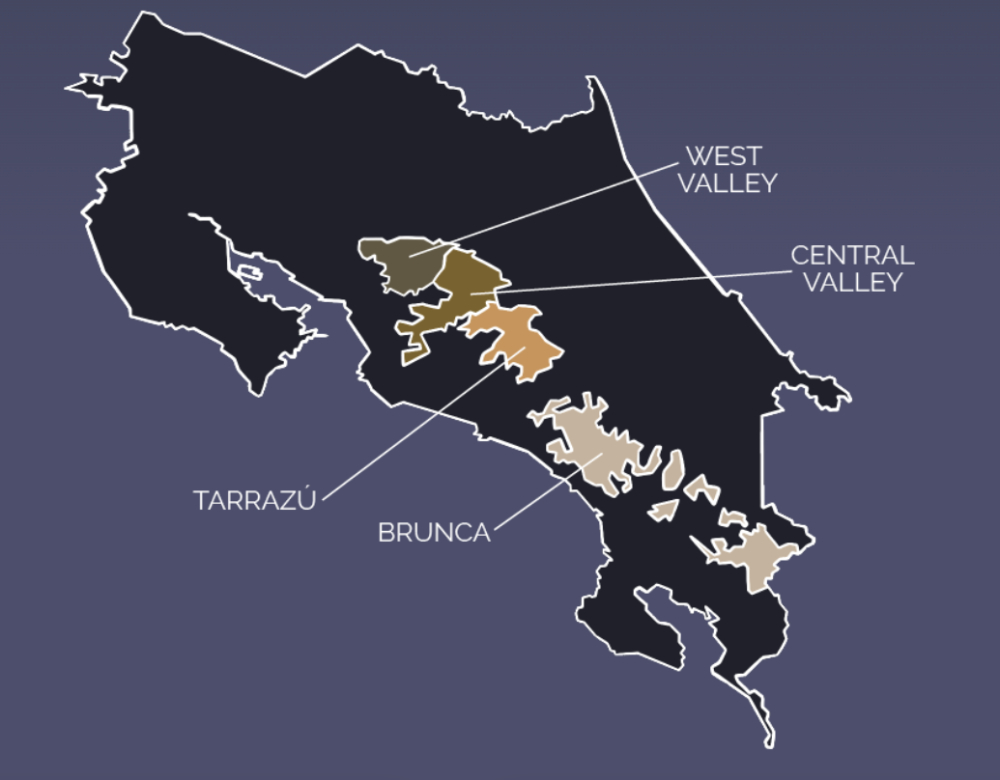
Among the many coffee-producing regions in Costa Rica, Tarrazú (Tarrazu) is arguably the most well-known. In fact, it is also the country’s first officially certified origin coffee region. However, to truly understand its appeal, we must start with a place called Los Santos—translated into Chinese as either “圣徒山谷” or “洛斯桑託斯.”
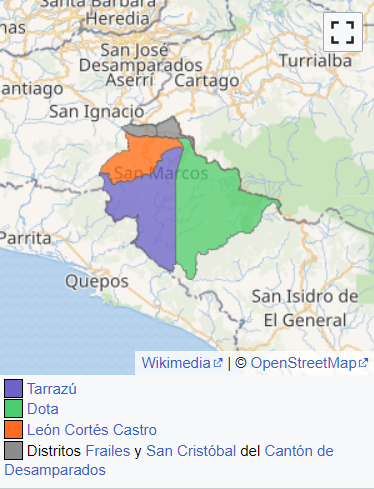
Los Santos is located in central Costa Rica, within the jurisdiction of San José Province, and encompasses administrative regions such as Tarrazú (Tarrazú), Dota, and León Cortés Castro. This land, close to the Pacific Ocean, benefits year-round from warm, moist air currents from the sea, creating a pleasant environment with annual rainfall reaching up to 2400 mm and an average temperature stable at around 19°C. Coffee-growing areas are mainly distributed at elevations between 1500 and 2100 meters—altitudes that represent the golden zone for cultivating Strictly Hard Beans (SHB).
Thanks to fertile volcanic soils, abundant and evenly distributed rainfall, along with natural shade provided by surrounding mountain forests, the growing conditions for coffee trees in this region are truly first-class. The resulting coffee beans are generally known for their high density and intense flavors, bright acidity, and often feature layered notes of chocolate, floral, and various fruit tones, making them highly favored in the global coffee market. Over time, the name “Tarrazú (Tarrazu)” has become synonymous with the coffee of the entire Los Santos region.
As the fame of Tarrazú grew, so did attempts to misuse the name in the market. To protect the authenticity of the region and the quality of its coffee, the Costa Rican government officially applied for and registered the origin denomination “Café de Tarrazú” with the European Union and the World Intellectual Property Organization (WIPO) in 2019. This move not only effectively prevents the name and logo from being misappropriated in the global market, but also provides legal protection for local farmers and brands, ensuring consumers can purchase coffee that genuinely originates from the Tarrazú region.
Through this official registration, only coffee produced within the Los Santos area—that is, from Tarrazú (Tarrazú), Dota, and León Cortés Castro—can rightfully bear the origin designation of “Tarrazú.” Additionally, the Arabica varieties grown in these regions are quite diverse, including Caturra, Catuai, Geisha, Bourbon, Typica, and others, all of which can express their unique characteristics under suitable altitudes and microclimates.
It’s worth mentioning that up to 95% of the coffee produced in the Tarrazú region falls under the SHB (Strictly Hard Bean) grade. These coffee beans typically grow at elevations above 1500 meters, possessing firmer bean structure and richer flavor potential. Take a well-known washed Tarrazú coffee on the market as an example—it uses the Caturra and Catuai varieties, with uniformly plump beans. After undergoing the washed processing method, it retains a clear and bright acidity. Upon tasting, one can immediately perceive the aromas of sweet orange, chocolate, and nuts, with a mellow caramel-like sweetness lingering in the aftertaste. It’s an excellent choice for those new to specialty coffee and is also commonly found on the lists of many coffee lovers’ everyday beans.
In summary, Tarrazú is more than just a regional name—it represents a guarantee of Costa Rican coffee quality and symbolizes a model of flavor crafted by high altitude, carefully selected varieties, and refined processing methods. Whether you’re a newcomer to the world of specialty coffee or an experienced explorer, gaining a deeper understanding of Tarrazú’s terroir and processing characteristics will allow you to taste more of the land’s story in every cup.
Disclaimer: Some images in this article are sourced from the internet. While we respect the copyrights of original creators and will credit them as much as possible, due to the large volume of content, some images or texts may have been inadvertently left uncredited. We apologize for any oversight. If any original author has concerns, please feel free to contact us for resolution. Once verified, we will make corrections immediately. This article aims to promote coffee culture—if there is any infringement, please inform us for removal. Thank you~!
The above content is compiled by CoffeeHunters, a coffee news website.


