








Introduction:An increasing number of overseas returnees are choosing to join chain coffee brands such as Starbucks and Luckin after returning to China, starting out as part-time baristas or even management trainees. Behind this trend lies not only a pursuit of experience but also practical career planning considerations. This article delves into the real motivations behind the influx of highly educated talents into the coffee industry, and shares insights on entry barriers, job characteristics, and potential career transitions, helping you understand this emerging career path.
In recent years, an interesting social phenomenon has gradually emerged: many overseas returnees with degrees from prestigious universities have not returned to their original fields of study, but have instead chosen to work at well-known chain coffee brands like Starbucks and Luckin as baristas or part-timers. This group of highly educated individuals, dubbed “returnees” (留子), is actively challenging the public’s stereotypical perception of the barista profession.
According to online posts, many have shared their experiences working at Starbucks or Luckin, even describing these chains as the “first stop for overseas returnees seeking employment.” Moreover, professionals from a wide range of backgrounds—such as foreign languages, design, nursing, and early childhood education—are also turning to the coffee beverage industry, showing that this trend is no longer limited to any specific field.
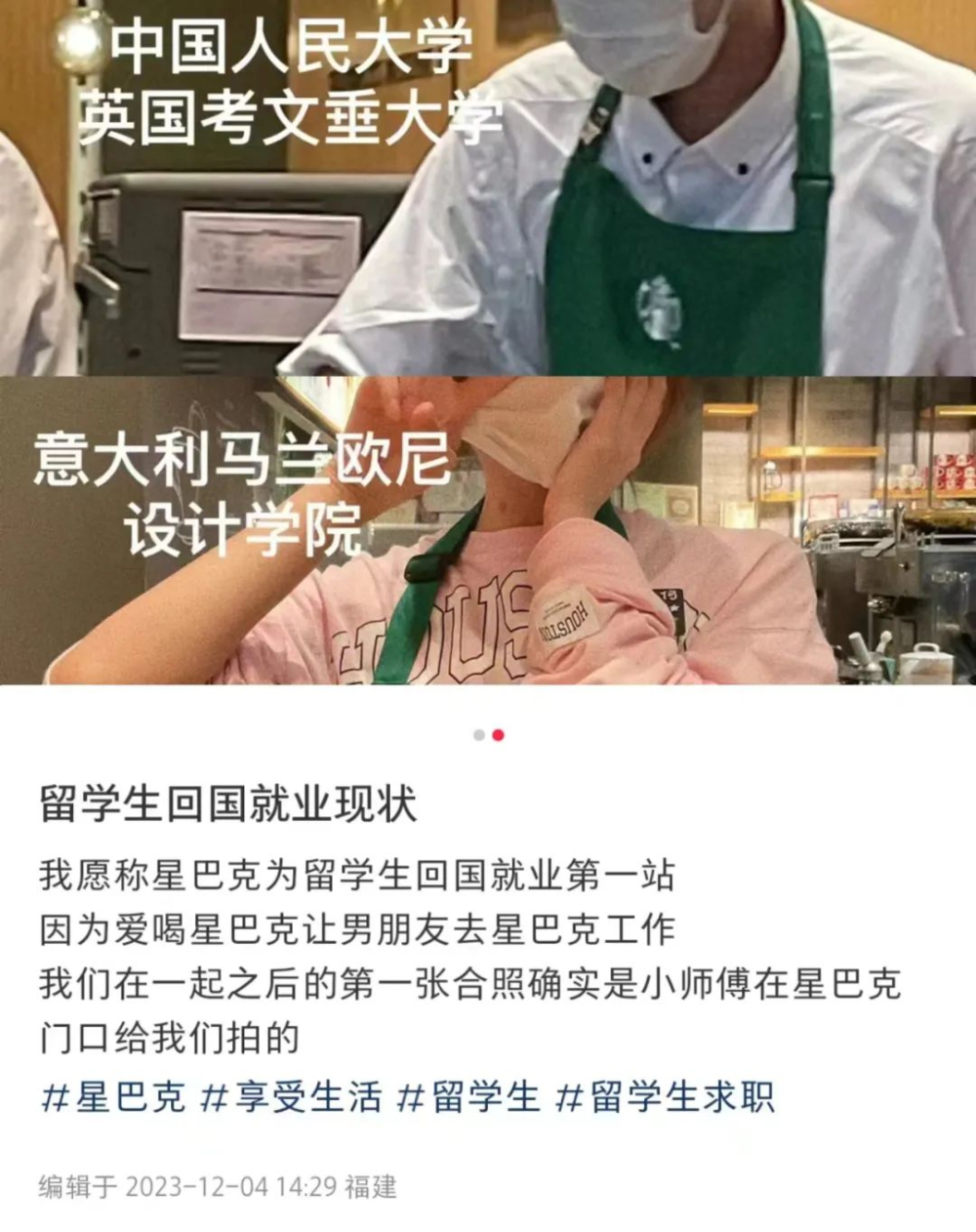
Exploring the reasons behind this, one key factor is the relatively accessible entry barrier of chain coffee brands. Take Starbucks and Luckin, for example: these mass-market-oriented brands generally do not require extensive prior experience for baristas. Even without relevant backgrounds, anyone willing to learn can undergo comprehensive training from scratch. Job listings on recruitment platforms for part-time roles at Starbucks and full-time positions at Luckin further confirm this, showing that the entry threshold is not as high as commonly perceived.
Beyond the accessibility factor, the motivations of these “returnees” choosing barista jobs are also worth examining. Many are not solely motivated by money, but place greater value on the “sense of experience” during the work process. They feel that the strong contrast between brewing coffee in a café and their overseas educational background brings a unique sense of fulfillment. This “sense of contrast” makes them more willing to engage in the role and personally experience a different pace of life.
Additionally, compared to traditional 9-to-5 jobs, the flexible working hours of part-time barista roles are a major draw. Many practitioners note that they can freely arrange their schedules and take time off when they don’t feel like working—a level of autonomy rarely found in other professions. Although the job often involves long periods of standing, most find the overall experience to be relaxing and pleasant, especially working in air-conditioned environments filled with the aroma of coffee.
More importantly, interactions with customers often bring positive energy. Many baristas mention that communicating with customers is far more relaxed and enjoyable than dealing with corporate clients. Customers are usually polite and easy to satisfy, and the sense of accomplishment from completing a drink is immediate—there’s no need for repeated revisions, nor the stress and burnout associated with copywriting tasks.

However, it’s important to note that the true identity of some highly educated practitioners might actually be management trainees (管培生). At these chain brands, brewing coffee is just one part of a rotational training program, with future career paths potentially leading to store management, supply chain, or brand operations. This rotation system makes the barista role a transitional choice within career planning, rather than an endpoint.
Overall, the high flexibility, low barriers, and diverse development opportunities offered by chain coffee brands are attracting more and more overseas returnees. Whether seen as a short-term experience, a career transition, or the starting point for long-term development, this path presents new possibilities beyond traditional career planning.
The above content is compiled by CoffeeHunters, a coffee news website.


