







Introduction:Many coffee beginners, when selecting brewing equipment, are easily drawn in by high aesthetics or "must-have gadget" labels—only to find that they barely use these items after bringing them home. So, how many tools does it really take to brew a great cup of coffee? This article takes an in-depth look at eight common auxiliary tools—such as portafilter cleaning brushes, handle auto-cleaners, and drip bag auto-brewers—analyzing their pros and cons from real-world usage scenarios to help you make rational purchasing decisions and avoid unnecessary spending.
The saying “To do a good job, an artisan needs the best tools” holds true in the coffee world as well. However, faced with a dazzling array of coffee accessories, many enthusiasts often make impulse purchases based on looks or marketing copy—only to find that most of these tools end up as “beautiful junk” around the house. So, how many tools are actually needed to brew a delicious cup? Does more professional equipment guarantee better-tasting coffee?
This article will review eight types of commonly seen but often underused coffee auxiliary tools, including portafilter cleaning brushes, handle auto-cleaners, portafilter storage racks, portafilter locking tools, handle scale stands, drip bag auto-brewers, stainless steel bean hoppers, and filter paper pressers. We’ll analyze their functions and limitations based on actual usage scenarios to help you avoid unnecessary expenses and choose truly practical coffee tools more wisely.
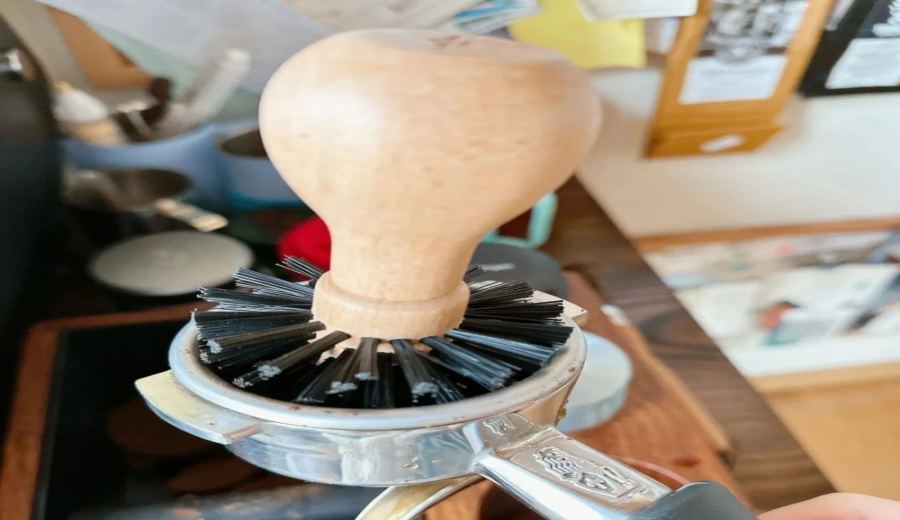
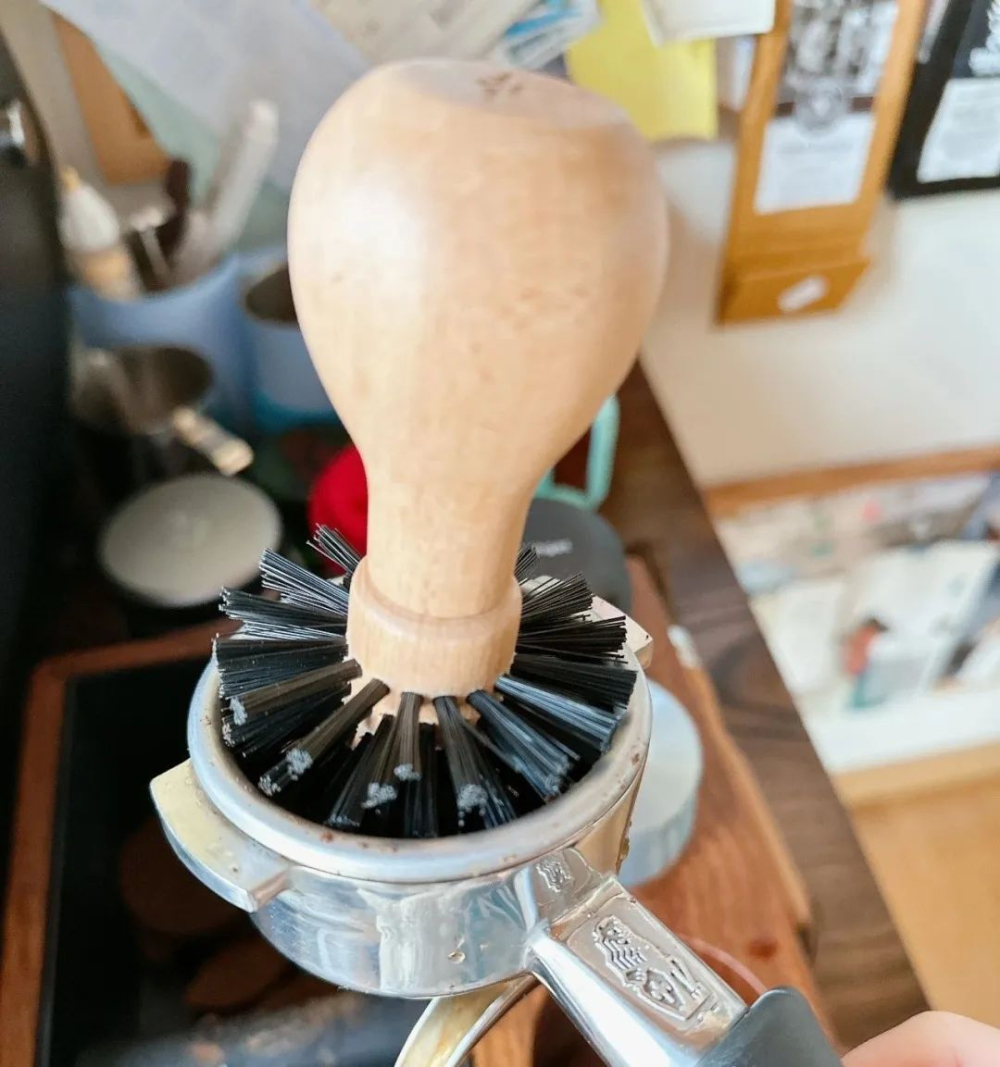
First up is the portafilter cleaning brush. After extracting espresso, the coffee puck usually needs to be knocked out, and coffee grounds often remain stuck to the bottom. Some users opt to wipe it with a cloth, others rinse it directly with water, and many purchase specialized portafilter cleaning brushes. For example, some brands offer nylon-bristle brushes with bristles that resist deformation and a spherical design that fits the inner wall of the portafilter well. However, when the bottom of the portafilter is semi-damp, the cleaning effect of such brushes is not particularly noticeable—and residual moisture may even encourage mold growth.
Next is the handle auto-cleaner. Many baristas follow strict cleaning procedures for their portafilters during daily operations. Traditional methods include inverting and tapping, wiping with a dry cloth, or washing and air-drying—but these steps can be time-consuming, sometimes noisy, or wasteful of water. As a result, products have emerged on the market claiming to clean portafilters intelligently and efficiently, touting features like no-water washing and time-saving convenience. However, for most home users or amateur enthusiasts, these products are often less straightforward and more costly than traditional methods.
Then there’s the portafilter storage rack. In homes or small coffee workspaces, the number of portafilters is usually limited—typically no more than two or three. Although many kitchens are equipped with bowls or dish racks, a dedicated rack for portafilters seems somewhat excessive. Unless you own a large variety of different portafilter models, the practicality of this tool is fairly low.
The portafilter locking tool is also frequently mentioned. During daily end-of-shift cleaning of the espresso machine, it’s often necessary to replace the blind portafilter for internal cleaning. Since regular portafilters tend to get stuck firmly, the conventional method is to pry one out using another. To address this, a small tool has been introduced on the market that claims to easily remove portafilters—highlighting ease of use and protection of the portafilter shape. In reality, however, the practicality of this tool is not strong, and some users have even said it works better for opening beer bottles.
The handle scale stand is designed to solve stability issues when weighing coffee grounds. Because handles are relatively large, placing them on a regular electronic scale can cause slipping, leading to spilled coffee grounds. To address this, some brands have created dedicated stands to secure the handle, improving weighing accuracy and operational convenience. However, for most users, a simple non-slip mat might achieve a similar effect at a lower cost.
The drip bag auto-brewer is touted as a “miracle tool” for offices or busy lifestyles. These machines claim to evenly distribute a target amount of water through the coffee grounds in a drip bag to achieve better extraction. However, it’s important to note that users still need to pour the water themselves, and the overall process isn’t significantly simplified. For those already accustomed to pour over or simple brewing methods, the actual advantages of such devices are not particularly obvious.
The stainless steel bean hopper is mainly aimed at home users who brew relatively small quantities. When there are fewer coffee beans, traditional bean hoppers may fail to apply enough pressure, leading to bean skipping or inconsistent grind size. This small hopper allows users to weigh the desired amount of beans first and then grind them—thus avoiding the aforementioned issues. But considering its price, many consumers, after understanding its actual functionality, feel that the cost-performance ratio is not as high as expected.
Finally, there’s the filter paper presser. During pour over brewing, how well the filter paper adheres to the filter cup can affect extraction. To ensure the filter paper sits tightly against the cup wall, some brands have introduced specialized pressers, especially for cone-shaped filter cups. These require the use of specific round filter papers to prevent water from seeping through the edges. However, it’s worth noting that such accessories often require the purchase of compatible filter papers, and for regular pour over enthusiasts, manually adjusting the fit of the filter paper can be just as effective.
In addition to the eight tools mentioned above, there are other auxiliary items on the market—such as pour over stands and drip bag holders—whose actual usefulness often varies from person to person. If budget is not a concern, adding these stylish little gadgets to your shopping cart might be tempting—but it’s advisable to carefully assess your own needs before purchasing, to avoid ending up with unused items bought on impulse.
The above content is compiled by CoffeeHunters, a coffee news website.


