








Introduction:The Nepalese government has recently raised the minimum purchase prices for both coffee cherry and parchment beans, setting the price for Grade A cherry at 100 Nepalese rupees per kilogram and providing approximately a 20% profit guarantee to help stabilize farmers’ incomes. With planted area surpassing 3,600 hectares and annual exports growing by over 10%, this Himalayan nation is gradually carving out a place on the specialty coffee map. This article delves into the details of the pricing policy, the characteristics of key producing regions, as well as the current state of Nepal’s coffee production, sales, and its international market potential.
The National Tea and Coffee Development Board (NTCDB) of Nepal recently announced an adjustment to the minimum purchase prices for coffee cherry and parchment beans, with increases ranging from 5 to 30 rupees per kilogram, equivalent to approximately 0.0375 to 0.225 US dollars. The move aims to improve the income structure for coffee farmers. Under the new pricing, Grade A cherry is set at 100 rupees per kilogram (around 0.75 USD), provided it is grown at elevations above 800 meters and certified organic; Grade B cherry is priced at 90 rupees per kilogram without the organic certification requirement. Officials emphasize that the new pricing system ensures growers can achieve arounda 20% profit margin, which plays a critical role in stabilizing the downstream industry chain.

As a landlocked country nestled in the southern foothills of the Himalayas, Nepal is better known for its tea and rice, but its commercial coffee cultivation history spans only about 40 years. Dating back to the late 1980s, the local government established the Nepal Coffee Company (NeCCo) to guide farmers in centralizing the processing of cherry and drying, significantly lowering export barriers. Entering the 21st century, with technical subsidies and low-interest loan schemes introduced by the Ministry of Agriculture, more high-altitude farmers have shifted to cultivating disease-resistant Arabica varieties, gradually forming a sizable industry cluster.
Currently, Nepal’s coffee-growing regions are mainly concentrated in the easternKavrepalanchok Districtand the westernGulmi District. The former covers 273 hectares under cultivation, with an annual output exceeding 32 tons, making it the country’s largest production base; the latter ranks second with 231 hectares and 27 tons of production. These areas, generally situated at altitudes above 1,000 meters and characterized by foggy, humid microclimates, are particularly suited for growing flavorful Arabica varieties, including classicBourbon, Pacamara, and Typica. Notably, while most local farmers still employ traditional washed processing methods, sun-drying and honey processing techniques have gradually gained popularity in recent years, and some micro-farms have even begun experimenting with anaerobic fermentation to enhance the fruitiness and sweetness profiles of their coffee.
According to the latest NTCDB statistics, Nepal’s total coffee production in the 2021/22 harvest season was 354.9 tons, a decline from the historical peak of 530 tons in 2018/19, but it rebounded to 394 tons in the 2022/23 season, marking an increase of nearly 40 tons in a single year. Meanwhile, the national planted area continues to expand, now reaching3,655 hectares, an increase of over 300 hectares compared to the previous year, indicating a significant rise in farmer participation. In terms of exports, this year’s outbound shipments reached 77.86 tons, with an annual growth rate of 11.4%, generating foreign exchange earnings of 130.44 million rupees (approximately 978,300 USD). The main export destinations include Japan, South Korea, and select European specialty coffee buyers.
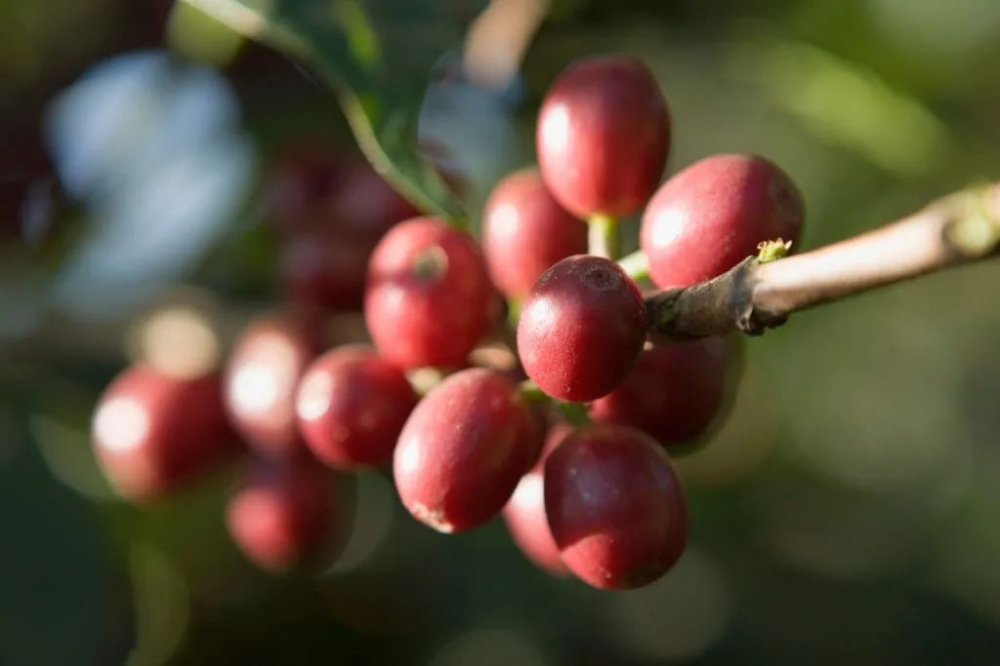
Industry observers note that Nepal’s coffee is steadily gaining international competitiveness. Beyond its naturally advantageous environment, government policies such as price guarantees and infrastructure investments have effectively reduced risks for coffee farmers. For consumers, although Nepalese coffee remains a niche origin, its distinctive “high-mountain cool-toned” profile — featuring bright citrus acidity, delicate floral notes, and a caramel-like sweetness in the aftertaste — has made it a choice for certain specialty roasters. As global demand for diverse origins rises, Nepal is poised to expand its global market share in the coming years, emerging as a hidden specialty coffee gem in the Himalayas.
The above content is compiled by CoffeeHunters, a coffee news website.


