








Introduction:Exclusive custom recipes are the soul of a coffee shop, but when employees leave and take the formulas with them, it often becomes a headache for owners. This article compiles practical industry experience, offering specific preventive measures—from signing non-disclosure agreements and creating key ingredients in-house to adjusting business mindsets—and analyzes current market perspectives on recipe transparency, helping operators establish more robust protection mechanisms.
Many independent cafés, in addition to standard espresso drinks, also offer carefully tested specialty beverages, whose recipes often take the owners significant time to perfect in terms of proportions and flavor layers. However, when skilled employees leave and take the recipes to competing shops, how can owners effectively prevent this? There are two distinctly different views in the market: one believes that in today’s highly connected information age, recipes are inherently becoming more transparent; the other insists that protective measures must be taken.
In practice, most private coffee shops teach their recipes to employees to maintain service efficiency, but potential risks arise as a result. One anonymous shop owner shared: “To reduce daily preparation pressure, I shared the full proportions of my self-created drinks with the team, but I worry these hard-earned creations might become profit tools for competitors.” This conflicting mentality highlights a common dilemma in the industry—relying on employee skills while needing to guard against the outflow of intellectual property.

Industry experts point out that there is something unique about protecting beverage recipes in today’s food and beverage sector. With the prevalence of social media, consumers can guess drink ingredients through coaster labels or online reviews, and some shops even proactively disclose recipes to attract customers. Notably, some innovative drinks use special syrups or infusions, and making these key ingredients in-house can effectively enhance protection.Practical suggestions include making your own syrups or blending bases, and only providing standardized ratios for employees to follow.That way, even if the recipe leaks, competitors will still find it difficult to fully replicate the original flavor.
Legal preventive measures include having employees sign non-disclosure agreements that clearly define usage restrictions during and after employment. Although enforcement may be challenging, complete written records can still provide crucial evidence in case of disputes. Some owners adopt a phased authorization strategy, allowing only essential personnel access to complete recipes, and regularly rotating key steps in the production process.
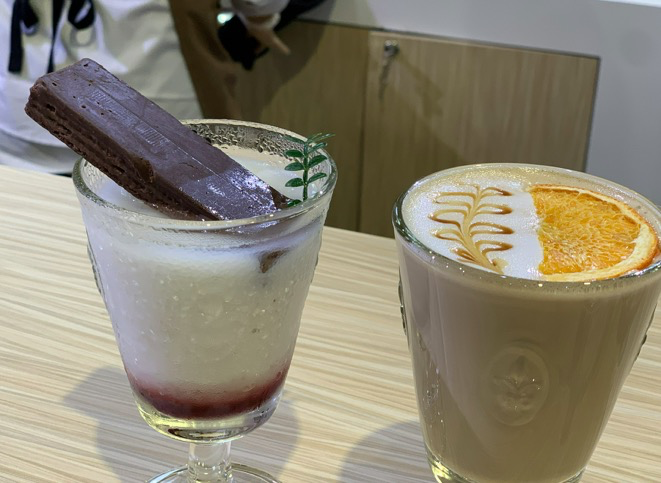
Market observations show that some practitioners choose to adopt a more relaxed mindset, believing that progress in the coffee industry fundamentally relies on shared experience. Supporters of this view emphasize: “Truly innovative teams will continuously develop new recipes to maintain a competitive edge.” This mindset suggests that instead of excessively worrying about imitation, it’s better to focus energy on product iteration, establishing dynamic competitive barriers by regularly updating the menu. A practical suggestion is to set up a quarterly specialty rotation plan, incorporating seasonal ingredients or trending flavors to create differentiation.
Drawing from various experiences, the most pragmatic protection strategy combines institutional measures with adjustments in business mindset. **Making key ingredients in-house, breaking down core processes for segmented authorization, and regularly updating products**—these three measures can effectively reduce the real impact of recipe leakage. At the same time, owners should rationally assess the commercial value of each drink, investing deep protection resources only in truly core products, and avoiding over-diverting management energy.
The above content is compiled by CoffeeHunters, a coffee news website.


