







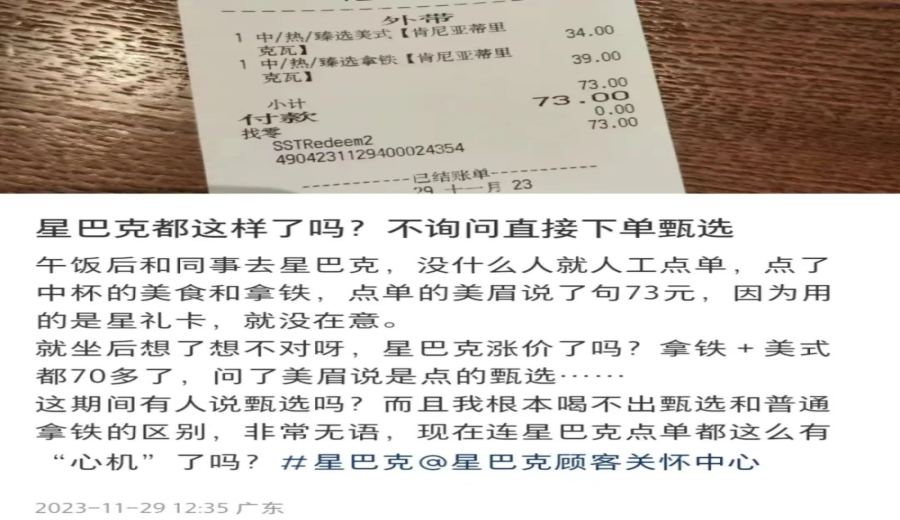
Introduction:Recently, some consumers encountered an incident at Starbucks Reserve stores where their drinks were “automatically upgraded” to Reserve coffee without their knowledge. They only discovered the significantly higher price at checkout. This controversy has sparked discussions about customers’ right to know and choose, while also drawing attention to the service differences between Reserve stores and regular outlets. This article details the incident, analyzes the positioning and pricing of Starbucks Reserve coffee, and offers tips for ordering to help consumers avoid similar issues.
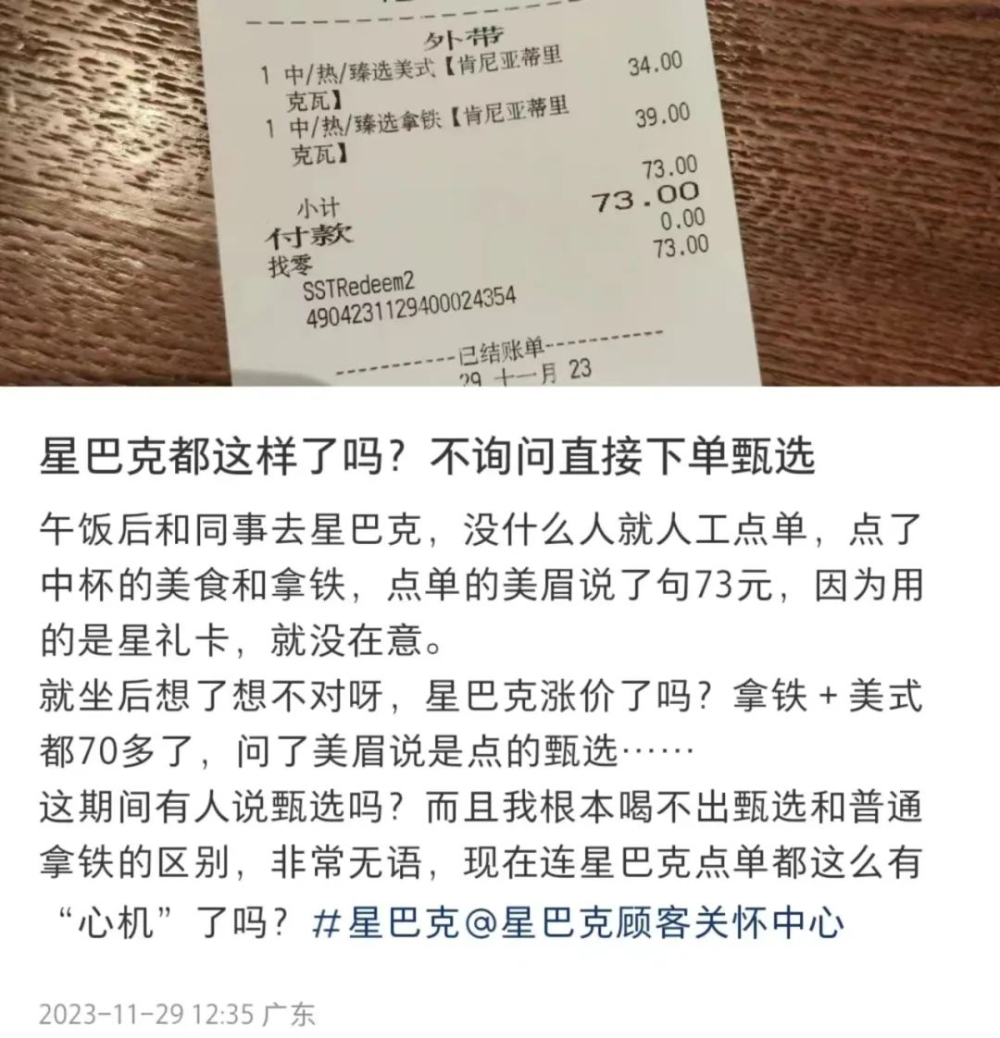
One customer, while paying with a Starbucks card at a Reserve store, was shocked to find that their order of regular coffee had been “automatically” upgraded to a pricier Reserve option—yet the word “Reserve” was never mentioned by the staff during the entire ordering process. The incident quickly went viral online, with many users sharing similar experiences. Former Starbucks employees also revealed that such occurrences might be linked to in-store KPI targets.
Starbucks’ initial customer service response was vague and failed to clarify the issue. Eventually, the involved store admitted the mistake and promised a refund. The core of this controversy is not just the price difference, but also consumers’ rights to information and choice. It raises the question: where exactly should the line be drawn when ordering between Reserve and regular stores?
According to available information, Starbucks Reserve™ is positioned in the premium coffee market, exclusively selling the top 3% of coffee beans carefully selected by Starbucks worldwide, with seasonal offerings. Beyond the beans, Reserve stores also differ markedly from regular Starbucks outlets in terms of store design and dedicated staff, which naturally leads to higher prices.
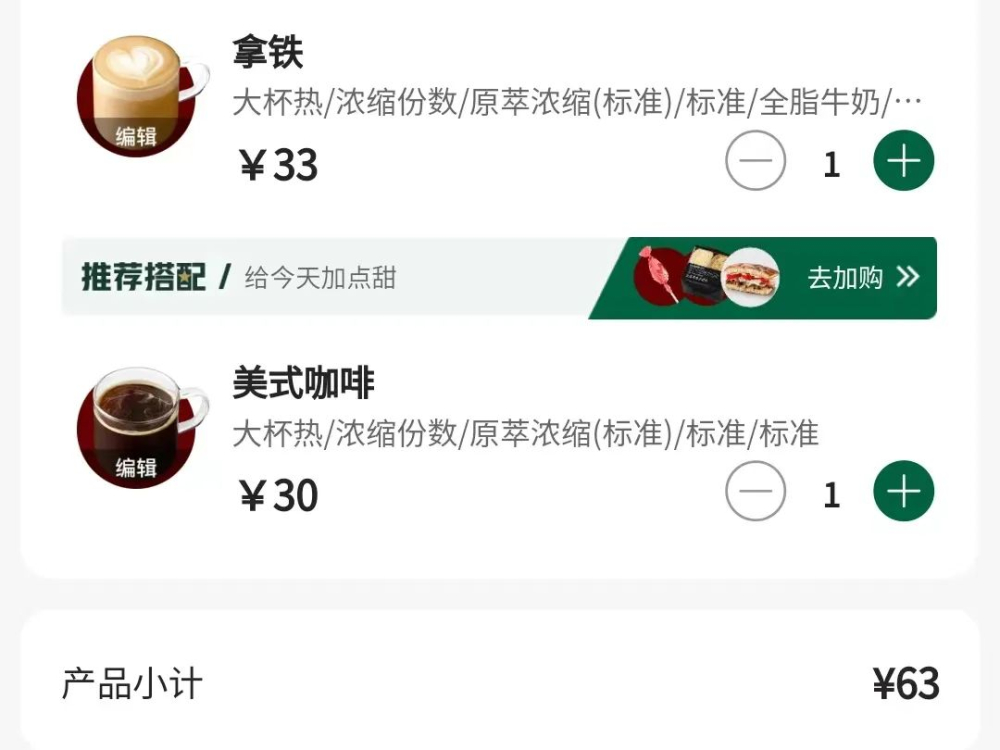
Taking actual prices as an example, according to data from the Starbucks mini-program, a regular latte costs 33 yuan and a regular Americano 30 yuan, totaling 63 yuan for both. However, the customer in question ended up paying 73 yuan due to the automatic upgrade to Reserve coffee, a difference of 10 yuan. Such a price gap, if not disclosed, can easily lead to customer dissatisfaction.
Is this “automatic Reserve upgrade” just an isolated case? In fact, many users reported similar experiences. For instance, when ordering pour over coffee at certain Starbucks outlets, staff would directly recommend or default to Reserve pour over, priced at 49 yuan—and this seems more common among customers using Starbucks cards. Since payment is deducted directly from the balance, customers who aren’t paying close attention may easily overspend without realizing it.
The controversy also extends to the debate of whether “entering a Reserve store means you have to order Reserve coffee.” Some users questioned whether customers might have mistakenly approached the Reserve bar and thus been recommended Reserve products. However, many others countered that Reserve stores also offer regular coffee beans—for example, the store’s mini-program menu lists both Reserve and regular Americanos for selection. More importantly, even if a customer does order at the Reserve bar, staff should actively confirm the bean choice with the customer rather than defaulting to an upgrade.
The incident also prompted many current and former Starbucks employees to share internal insights. A former employee revealed that, to meet KPIs related to increasing average spending and Reserve sales, some staff might automatically recommend Reserve beans without explicit customer requests—but such practices often vary depending on the customer. The employee emphasized: “Customers have the right to choose whether to drink Reserve coffee. Staff should provide a better consumer experience, not make customers feel deceived.”
After the incident, Starbucks’ Customer Care Center called the affected customer and explained that “the best beans were matched to the beverage.” However, when the customer further asked, “Are the best beans for an Americano really Kenyan beans?” the customer service representative replied, “I’m not sure,” only saying they would follow up with the store. Regarding this response, the customer felt that Starbucks staff had infringed upon their right to choose and be informed, and ultimately insisted on a refund.
After multiple communications, the involved store finally contacted the customer proactively, admitted the mistake, and promised to process a refund, bringing the controversy to a close. This incident not only reminds consumers to carefully confirm their chosen products when ordering, but also highlights potential ambiguities in Starbucks’ service processes between Reserve and regular stores—areas the brand should further optimize and clarify.
For consumers, it is recommended to proactively ask about the type and price of the coffee beans when ordering, especially in Reserve stores, where one should be extra cautious about potential automatic upgrades. If there are any doubts about the product, customers can ask the staff to show the price list or receipt to ensure their rights are protected.
Image source: Internet
The above content is compiled by CoffeeHunters, a coffee news website.


