








Introduction:Although both instant and freeze-dried coffee only require water to dissolve, the processes behind them and their flavor profiles are worlds apart. This article starts with the challenges of military coffee in the 18th century, explores how these two technologies were born and evolved, details the key differences between spray drying and vacuum freeze drying, and reveals why freeze-dried coffee has shaken off its low-end image to become the new favorite among flavor seekers.
When it comes to convenient coffee, instant and freeze-dried are often seen as the "same category," but once you delve into the production principles, you’ll find they are actually two completely different technical approaches. From the coffee needs of 18th-century American soldiers to modern consumers pursuing flavor, how have these two products evolved? And why is freeze-dried gradually regaining market favor? We break it down from history, craftsmanship, to ingredients.
The birth of instant coffee actually stems from the "energy boost demand" in war. During the American Revolutionary War in the 18th century, soldiers were highly dependent on coffee, but the rations issued were unground coffee beans. Each brew required fresh grinding and brewing, which was time-consuming and troublesome. To allow soldiers to quickly get caffeine, the U.S. Congress funded the development of "easy-to-carry coffee." The "coffee essence" launched at the end of 1861 was a product made by concentrating coffee, milk, and sugar, which could be consumed by adding a spoonful to water. However, this product quickly exited the market due to its poor flavor and suspected use of spoiled milk causing diarrhea.
The first true instant coffee was "Strang’s Coffee," made in 1890 by David Strang in the South Island of New Zealand through hot air jet extraction of coffee liquid. In 1899, Japanese chemist Sartori Kato used vacuum drying technology to extract coffee solution and obtained a patent in 1903, but it was not commercialized. It wasn’t until 1906 that George Washington in the United States launched "Red E Coffee," but it failed to gain popularity due to its poor taste.

The turning point came in 1929 when Brazil, facing an economic crisis, stockpiled large amounts of coffee beans and commissioned Swiss Nestlé to develop a more soluble product with clear flavor. After eight years of research, Nestlé invented the "spray drying method" in 1937—first extracting substances from coffee beans, then evaporating the moisture with hot air to turn the liquid into powder, adding soluble carbohydrates during the process to improve flavor. But this process required continuous high temperatures, causing a large amount of aromatic compounds to volatilize, leaving mostly bitter components. Therefore, weaker-flavored Robusta beans were mostly used, along with large amounts of non-dairy creamer and sugar for flavoring, which long branded instant coffee as "low-end."

Unlike instant coffee, the turning point for freeze-dried coffee lies in the invention of vacuum freeze-drying technology (Freeze Drying) in 1935. This technology, originally used for food preservation, was applied to the coffee production process and significantly changed the flavor profile. Between 1966 and 1971, Hills Brothers secured 47 patents using this technology, ushering in a new chapter for freeze-dried coffee.
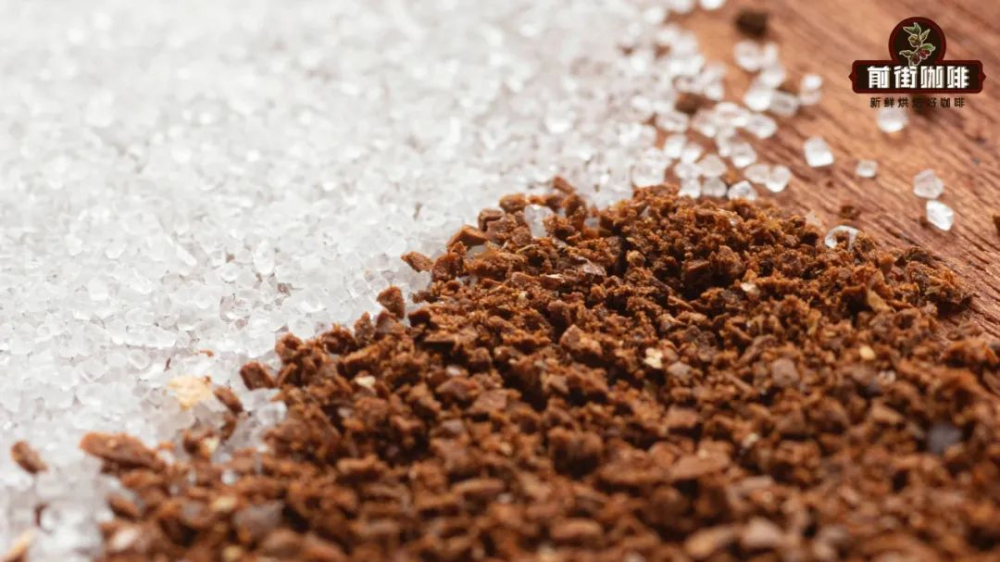
The production process of freeze-dried coffee shares a similar starting point with instant coffee—both require first extracting substances from coffee beans—but the key difference lies in the concentration of the extracted liquid and subsequent processing. The coffee liquid used in freeze-drying is thicker, close to the texture of chocolate paste. After extraction, the liquid is immediately cooled to -5°C to solidify into a paste, then sent to a freezing chamber below -40°C to be completely frozen, after which it is crushed into small chunks of 2–3mm. Finally, these ice-like coffee chunks enter a vacuum drying chamber where the moisture sublimates directly (rather than liquefying), leaving behind coffee particles that retain the original flavors.
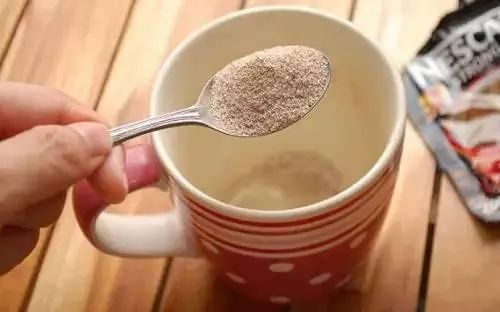
Because the liquid is rapidly cooled after extraction and the entire process is handled in a low-temperature, vacuum environment, freeze-dried coffee can lock in more aromatic compounds, allowing for the use of more elegantly flavored Arabica beans rather than relying solely on Robusta. Of course, the complex process and high material costs are also reflected in the price, which is an important reason why it can shed its "low-end" image.
In summary, although both instant and freeze-dried coffee fall under the category of "soluble coffee," there are significant differences in historical origins, production principles, and final flavor profiles. Understanding these details will help you choose the cup that best suits your needs next time you shop.

The above content is compiled by CoffeeHunters, a coffee news website.


