







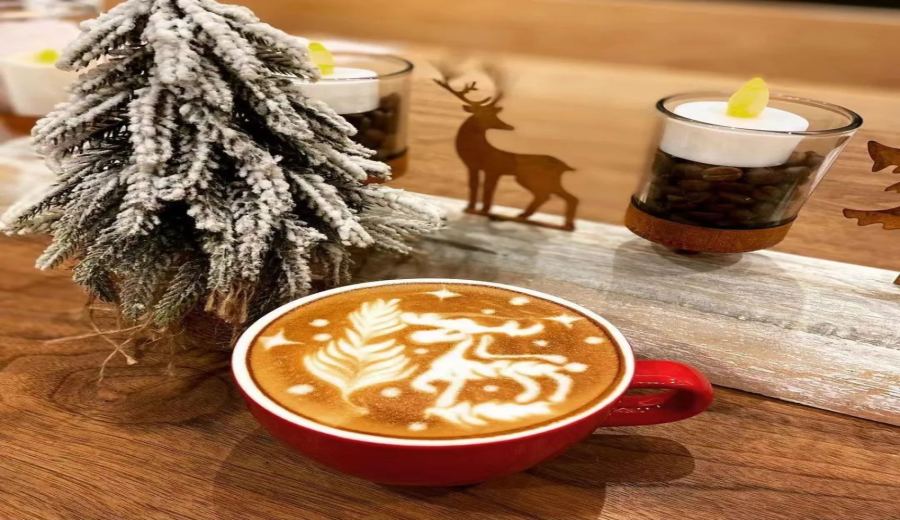
Introduction:As the Christmas season approaches, the minimalist yet photogenic Christmas tree latte art has become a new favorite among coffee enthusiasts. This article reveals how Manner baristas respond to customer requests, practice this technique from scratch, and shares practical latte art tips to help you understand the details and challenges behind coffee art.
As Christmas draws near, discussions related to the holiday quickly heat up on social media, and a new trend has emerged in the coffee community—Christmas tree latte art. This design, simple to learn and visually appealing, has rapidly become a popular customization request among many customers, especially favored by younger audiences.
Among many chain brands, Manner stands out for allowing baristas to express their creativity. The Christmas tree latte art produced in their stores has sparked heated online discussions, becoming one of the motivations for many to visit and take photos. Numerous netizens have shared their “wish granted” experiences on social platforms and even compiled a set of tips to improve success rates, such as avoiding peak hours, bringing their own cups, or even directly communicating their desired designs with the baristas.
However, although the Christmas tree latte art may seem simple, not all baristas can master it effortlessly. For those who haven’t specifically trained in this design, the first attempt is often full of challenges. Even just outlining the tree shape with milk foam requires precise control over flow rate, pitcher angle, and milk foam texture—otherwise, the result can easily turn out as something that’s “tree-like but not quite.”
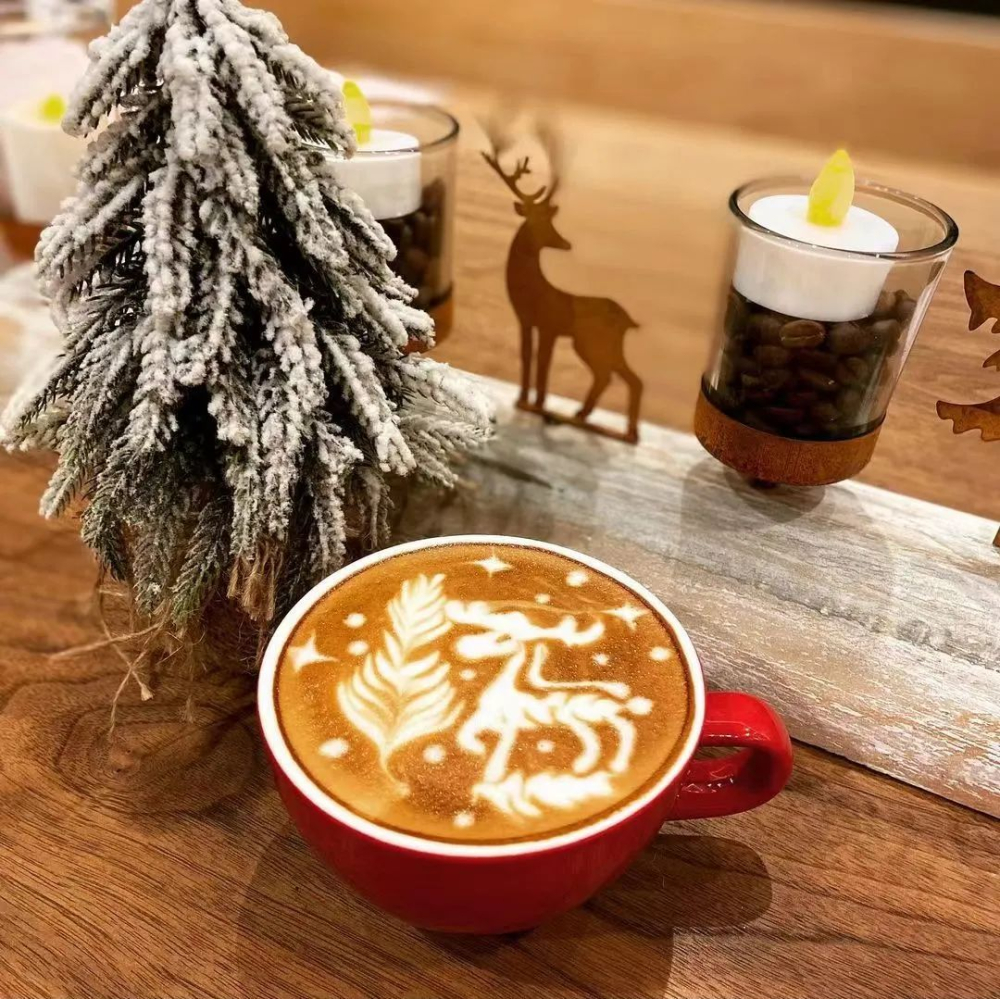
Some baristas who receive such requests for the first time may decline due to lack of practice, or produce a somewhat amateurish “first draft” version. While these latte art pieces may roughly resemble a tree, the details are often vague—sometimes even the baristas themselves jokingly refer to them as the “customer’s version.” Nevertheless, many customers show understanding and are happy to support the baristas’ improvised creations.
To better meet customer expectations, many Manner baristas have started using their spare time for extra practice. They not only repeatedly watch example videos online, but also quietly use milk foam and thermometers as tools during slow periods in-store to practice stabilizing the details and layers of their designs. The thermometer here isn’t used to measure temperature, but rather serves as a small aid to stabilize hand movements and composition during practice, helping baristas get familiar with latte art trajectories and flow rhythms.
In reality, making a cup of coffee with Christmas tree latte art requires not only proficient basic pouring skills, but also crucially depends on the quality of the milk foam.The ideal milk foam should be fine and uniform, without large bubbles, and maintained at a temperature between 55°C and 60°C, ensuring that the pattern remains clear and doesn’t dissipate easily during pouring. Additionally, the angle of the pouring pitcher, the stability of the barista’s wrist, and the speed at which the milk is poured are all key factors influencing the final formation of the design.
For customers, if you want to increase your chances of getting a satisfying Christmas tree latte art, besides choosing an appropriate time and clearly expressing your request, you can also prepare some clear reference images in advance for the barista. Instead of simply asking for a “Christmas tree,” describing the desired style in detail—such as “a simple green base with a white tree shape” or “hoping to have a star decoration on the tree”—can often help the barista better understand your needs and improve the success rate.
Overall, this Christmas tree latte art trend not only showcases the fun interaction between baristas and customers, but also gives the public a deeper appreciation for the delicacy and effort behind the art of latte pouring. Whether for social media photos or everyday enjoyment, a cup of coffee with carefully crafted latte art can bring a touch of warmth and surprise to the cold winter days.
The above content is compiled by CoffeeHunters, a coffee news website.


