







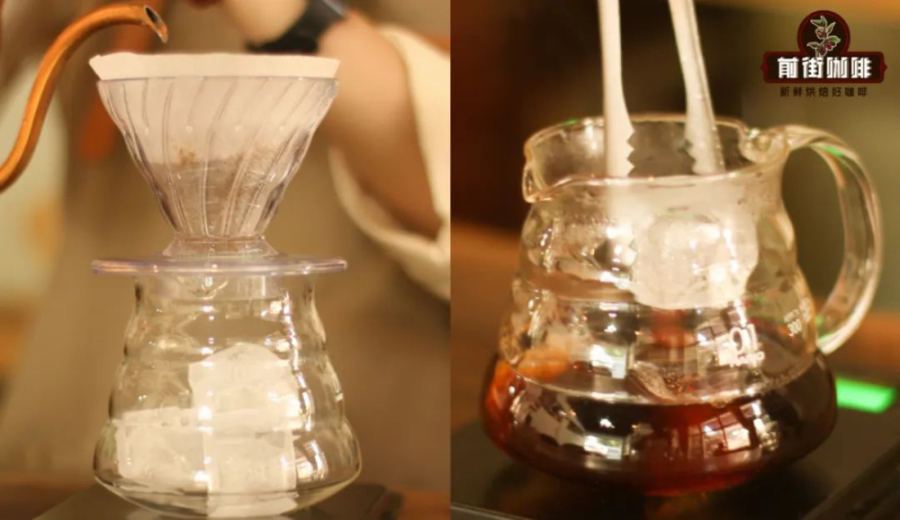
Introduction:When making iced pour over coffee, should you add the ice to the bottom carafe at the beginning of the brew or only after the extraction is complete? This isn’t just a difference in procedure—it can directly affect the final temperature, aroma expression, and overall concentration of the coffee. In this experiment, we used washed Geisha beans from Colombia’s La Línea Estate as the sample, applying the same coffee-to-water-to-ice ratio and a three-stage brewing method to compare the actual differences between the “add ice first” and “add ice later” approaches. From temperature curves to flavor layers, this will help you master more precise iced pour over techniques.
In the world of iced pour over coffee, a seemingly simple choice—when to add the ice—actually holds many subtle details that can influence flavor. Many coffee enthusiasts have wondered: should you put the ice in the bottom carafe from the start, letting the hot coffee drip directly onto it for cooling, or wait until after the extraction is done to add the ice? This question isn’t just about the order of operations—it could also affect the final coffee’s aroma, concentration, and overall mouthfeel.
To explore this further, this experiment used washed Geisha beans from Colombia’s La Línea Estate. These beans feature distinctly recognizable aromas of honeysuckle and citrus, making them ideal for observing how different ice-adding methods impact flavor. The experimental conditions were standardized: 15 grams of coffee, using a 1:10:6 coffee-to-water-to-ice ratio—that is, 150 ml of hot water paired with 90 grams of ice. The grind size was adjusted to the 9.5 setting on an Ek43 grinder, with approximately 65% extraction through a 20-mesh sieve after sieving. The water temperature was set to 92°C, and extraction was performed using a three-stage method.
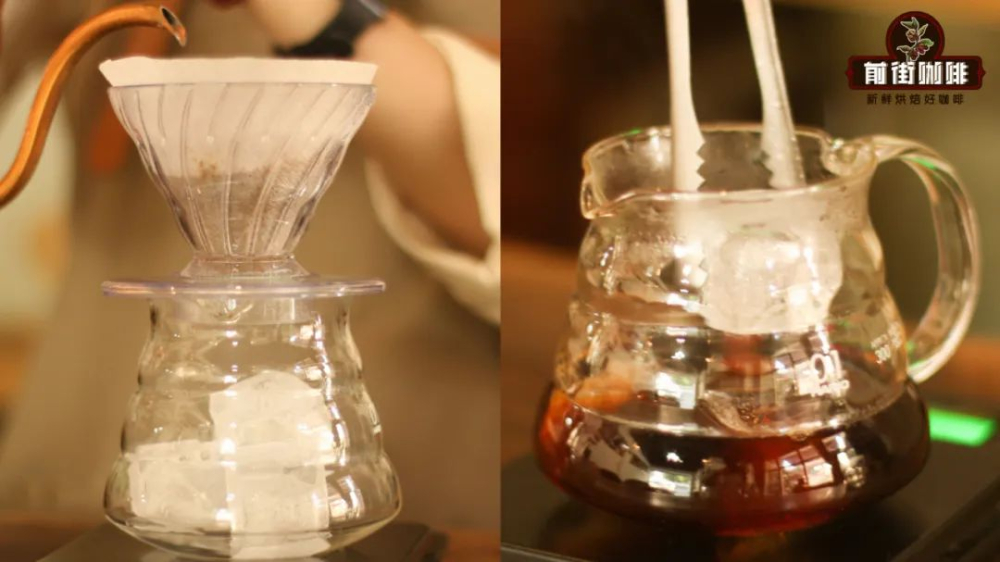
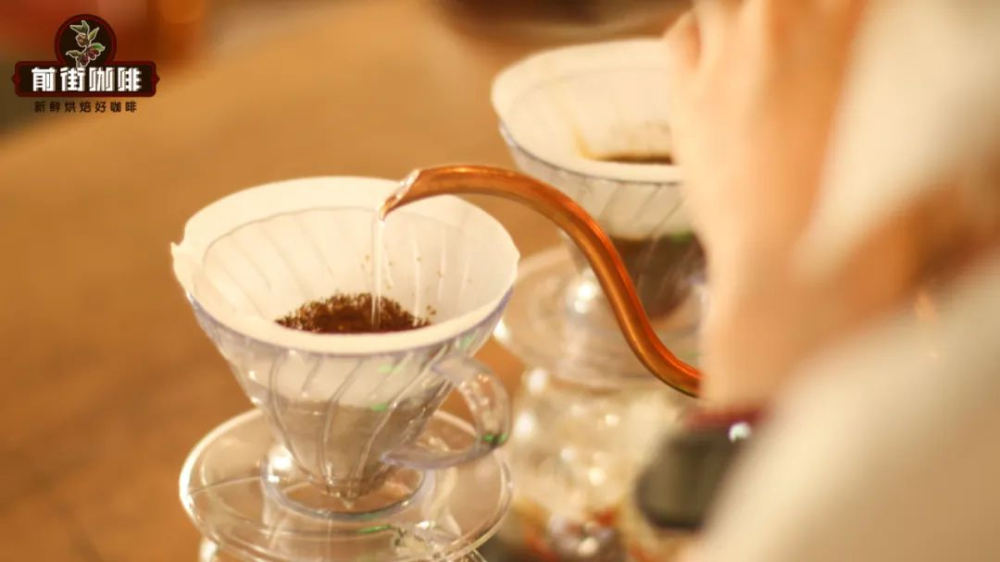
The so-called three-stage iced pour over: the first stage is similar to traditional hot pour over, where you begin with a 30-second bloom using double the coffee’s weight in water (about 30 ml); then, in the second stage, you pour 70 ml of hot water in a slow, wide circular motion with a finer stream. As the dripping nears completion, you reduce the stream and pour the remaining 50 ml in a tighter, smaller circle until the extraction finishes. The total brew time is maintained at around 1 minute and 30 seconds.
In the experiment, the “add ice first” method involved placing 90 grams of ice in the bottom carafe before starting the extraction, so that the hot coffee drips directly onto the ice for immediate cooling. The “add ice later” method, on the other hand, involved adding the ice only after the entire extraction process was completed. Although both methods ultimately used the same amount of ice for cooling, the difference in timing of the cooling could still significantly affect the coffee’s aroma volatility, temperature curve, and overall mouthfeel.

To minimize misjudgments caused by differences in tasting times, the experiment specifically adjusted the start times and tasting sequences for both groups: the “add ice first” group began brewing about 20 seconds earlier than the “add ice later” group, and tastings were conducted starting with the “add ice first” cup to balance the time factor. Additionally, both cups were thoroughly shaken after extraction to ensure even mixing of the ice and coffee liquid, accelerating the cooling process and making the flavors more consistent.
The actual test results showed that at the 2-minute mark after shaking, the temperature of the “add ice first” coffee had dropped to about 7°C, while the “add ice later” coffee was around 13°C, demonstrating that adding ice early indeed cools the coffee more quickly. In terms of aroma, the “add ice later” coffee at the 2-minute mark exhibited slightly richer honeysuckle and citrus notes. Upon tasting, it also displayed the Geisha bean’s characteristic bright floral notes, vibrant citrus acidity, and soft honey-like sweetness. In comparison, the “add ice first” coffee had slightly more restrained aromas at the same time point, though the difference was not significant. Some tasters noted that the “add ice later” coffee felt slightly rounder in mouthfeel, possibly due to the slower melting of the ice and a slower dilution rate.
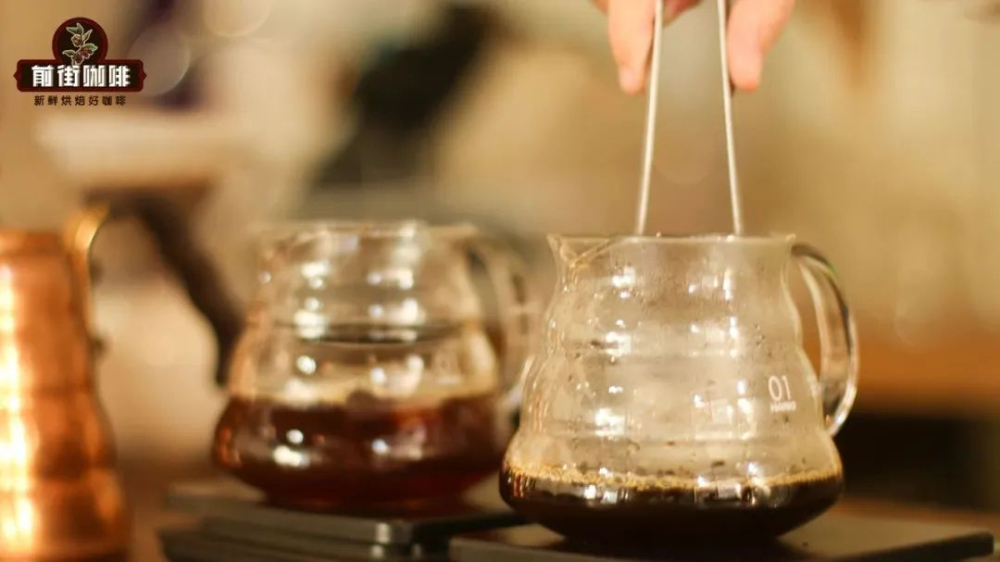
However, when both cups were left to sit for about five minutes and tasted again, it was surprising to find their performances becoming more similar. The differences in concentration and aroma caused by the varying rates of ice melt had almost disappeared by this point, with both cups showing high similarity in flavor layers, acid-sweet balance, and overall mouthfeel. From this, we can infer that the difference between adding ice first and adding ice later mainly manifests in the initial cooling speed and aroma volatility rhythm right after extraction, rather than in the final intrinsic flavor profile of the coffee.
Here’s a practical tip: if you prefer an iced pour over with more concentrated flavors and brighter acidity, try the “add ice first” method—letting the coffee cool quickly helps preserve more volatile aromatic compounds. If you’d rather let the flavors unfold over time, or are concerned that rapid cooling might suppress aroma release, the “add ice later” method is also a good choice, especially suitable for savoring the evolving changes in the coffee.
In summary, while the order of adding ice in iced pour over coffee does affect initial temperature and aroma release, as long as you control the brewing parameters well and choose an appropriate cooling time, you can still achieve high-quality iced pour over flavors. No matter which method you choose, the key lies in maintaining a stable grind size, precise water temperature control, and consistent technique—these are the true factors that determine the success of your iced pour over.

The washed Geisha beans from Colombia’s La Línea Estate used in this experiment not only showcase the variety’s inherently high aromatic qualities but also prove that, under strictly controlled variables, the differences between the “add ice first” and “add ice later” iced pour over methods are actually quite limited. For coffee enthusiasts, understanding these details can help you make more suitable choices in different scenarios—whether you’re aiming for an immediate burst of aroma or seeking to prolong the layered evolution of flavor—you’ll be able to handle it all with ease.
The above content is compiled by CoffeeHunters, a coffee news website.


