







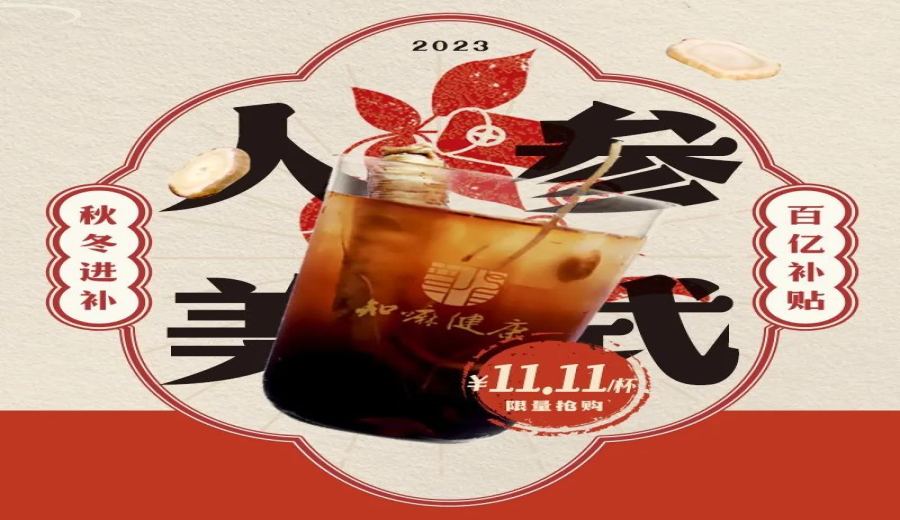
Introduction:What kind of innovative beverages can emerge when a century-old pharmaceutical company teams up with an e-commerce platform? Tmall and Zhi Ma Health, a health brand under Tongrentang, have collaborated to launch a limited-edition "Ginseng Americano," sold at a subsidized price of 11.11 RMB per cup. Each cup contains a whole fresh ginseng root, along with traditional Chinese medicinal ingredients such as licorice and longan. This "punk wellness" drink that combines traditional Chinese medicine with coffee has not only sparked market discussions but also raised questions about its health impacts and industry regulations. This article takes an in-depth look at the composition of the Ginseng Americano, its recommended benefits, and potential risks.
During the "Double Eleven" shopping festival, Tmall and Zhi Ma Health, a health-focused brand under Tongrentang Group, jointly launched a highly talked-about co-branded coffee — the "Ginseng Americano." This beverage was sold at a special subsidized price of 11.11 RMB per cup, and each cup came with a whole fresh ginseng root, surprising many consumers and successfully reigniting a revival trend for “medicine coffee.”
This specialty coffee not only features ginseng but is also blended with other traditional Chinese herbs such as licorice and longan, aiming to create a drinking experience that is both “nourishing and aromatic.” According to the brand, the ginseng used in each cup is cultivated artificially and is no more than five years old, ensuring controllable quality and sourcing. However, detailed information about the specific ginseng variety has not been disclosed.
Regarding the "healthcare" function of this innovative drink, the official channels have also issued gentle reminders: it is advised that adults consume no more than one cup per day. If choosing to chew the ginseng directly, the daily intake should be limited to 10–12 grams. Special caution is needed for pregnant women, as well as those with a hot or inflamed constitution prone to excessive internal heat, who are advised to avoid consumption to prevent discomfort such as nosebleeds.
Although the Ginseng Americano has successfully captured consumer attention with its playful marketing copy and low pricing strategy, it also highlights many challenges in the current "medicine coffee" market. As the industry has yet to establish unified standards for adding traditional Chinese medicinal ingredients to beverages, consumers should remain vigilant when trying these innovative coffees to avoid overconsumption or improper intake.
In fact, this is not the first instance of a crossover between traditional Chinese medicine and coffee. Prior to this, several brands had already experimented with incorporating traditional wellness ingredients such as angelica, goji berries, and ginseng into coffee, giving rise to the so-called "punk wellness" trend. This collaboration between Tmall and Tongrentang, backed by brand credibility and promotional pricing, has once again ignited public curiosity about "medicine coffee."
Notably, there are now many imitations on the market, with some cafes even directly brewing coffee with dried ginseng roots still attached, claiming it has "life-extending wellness" effects. However, such practices often lack scientific basis or dosage guidance and may pose certain health risks.
Professionals with a background in traditional Chinese medicine point out that different types of ginseng vary greatly in their medicinal properties and suitability for different individuals. For example, red ginseng is more warming and nourishing, suitable for those who are physically weak or sensitive to cold, while white ginseng or American ginseng tends to be more cooling and moistening, making them more appropriate for people prone to internal heat. Therefore, if the specific type of ginseng used in a beverage is not clearly labeled, it is difficult for consumers to determine its suitability for their own constitution, and blind consumption may lead to adverse effects.
As for the actual taste of this Ginseng Americano, public opinion is divided. Some find the sweet aroma of ginseng balancing oddly well with the bitterness of coffee, while others describe the flavor as akin to “drinking a bowl of black medicinal soup with a ginseng root dropped in,” indicating low acceptance. Regardless of preference, many first-time tasters have stated they would not repurchase, suggesting a low “repurchase index.”
As more traditional Chinese medicine brands venture into the coffee market, similar creative beverages will continue to emerge. However, while enjoying these novel experiences, consumers should also understand their own constitutions and approach these East-meets-West drinks rationally, avoiding the pursuit of trends at the expense of health risks.
The above content is compiled by CoffeeHunters, a coffee news website.


