








Introduction:In running a coffee shop, customer reviews serve both as a mirror of service quality and as a challenge that can leave baristas caught between laughter and tears. From complaints about doors being too heavy or demands to be called "princess," to being late for meetings due to overly energizing coffee and even getting fired—these exasperating negative reviews reflect not only consumers’ subjective experiences but also misunderstandings about the flavors of the products. This article delves into these real-life cases and shares how coffee professionals creatively resolve misunderstandings, while also reminding readers of practical information such as the limitations on formula customization at chain brands.
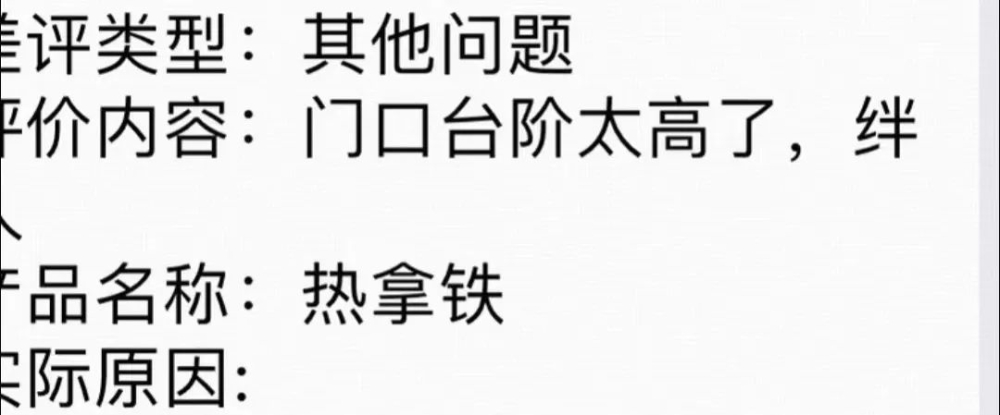
In the coffee industry, customer reviews have always been an important metric for evaluating store service and a crucial bridge connecting consumers with shops. However, when negative reviews appear, staff often have to repeatedly review service procedures, yet some comments can be both baffling and amusing. Complaints about doors being too heavy, not being addressed as “princess,” or even being fired for being too energized by coffee during a meeting—these nonsensical evaluations often leave baristas feeling helpless.
Beyond these laughable comments, many negative reviews actually stem from customers’ unfamiliarity with or difficulty adapting to certain coffee flavors. For example, adding hot water to pour over coffee (commonly known as bypass) is sometimes mistaken for dilution with plain water, or the intense taste of espresso may be uncomfortable for those unaccustomed to it. It’s particularly worth noting that:chain brand stores usually do not have the authority to adjust recipes on their own, which makes it even more difficult for staff to handle complaints related to taste.

Faced with these situations, coffee professionals have developed various coping strategies. Some shops clearly indicate drink characteristics on their menus, such as temperature options, caffeine content, and other useful information to help customers make suitable choices. Others post FAQs in prominent in-store locations, such as “Why is water sometimes added to pour over coffee?” or “What are the standard flavor characteristics of espresso?” to reduce the chances of misunderstanding.
Looking at real cases, some customers have complained about “doors being too heavy,” which may actually be related to the store’s anti-theft design or building structure; others have left negative reviews for not being called “princess,” reflecting a gap between service expectations and reality. More interestingly, one review mentioned that “the cream seems to have been farted on,” where such comments often reflect the customer’s mood at the time rather than the actual quality of the product.

For professional baristas, explaining the flavor characteristics of coffee can also be a challenge. For instance, when a customer questions whether “adding water to pour over coffee” is an insult to intelligence, it’s actually a common industry technique known as bypass, used to adjust the concentration and flavor balance of espresso. Professionals explain that this approach is a personalized adjustment based on the customer’s taste preferences, not a matter of quality.
Faced with all kinds of nonsensical feedback, coffee professionals demonstrate remarkable creativity in their responses. Some shops create cute illustrated guides to explain the coffee-making process; others respond with humor, such as using “Action Plan: Keep calm and be yourself” to address complaints about not being called “princess.” These approaches not only showcase the professionalism of the industry but also reflect the challenges of working in service.
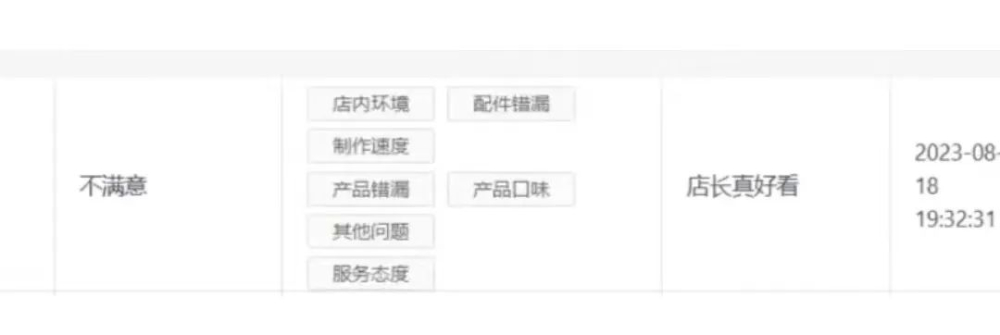
It’s worth noting that many negative reviews actually stem from consumers’ lack of basic understanding of coffee products. For example, not being accustomed to the strong taste of espresso, not understanding the flexibility of pour over coffee, or misconceptions about the uniformity of chain brand recipes.Chain coffee shops typically have strict quality control standards, and staff cannot arbitrarily change the recipes, which often leaves service personnel feeling powerless when faced with complaints about taste.
From these real-life examples, we can see the complexity of service in the coffee industry. A single cup of coffee involves not only technical considerations like roasting and extraction, but also the art of communicating with customers. For consumers, understanding the basic principles and common variations in coffee preparation can lead to more reasonable evaluations; for professionals, the eternal challenge lies in resolving misunderstandings while maintaining professional standards.
The above content is compiled by CoffeeHunters, a coffee news website.


