







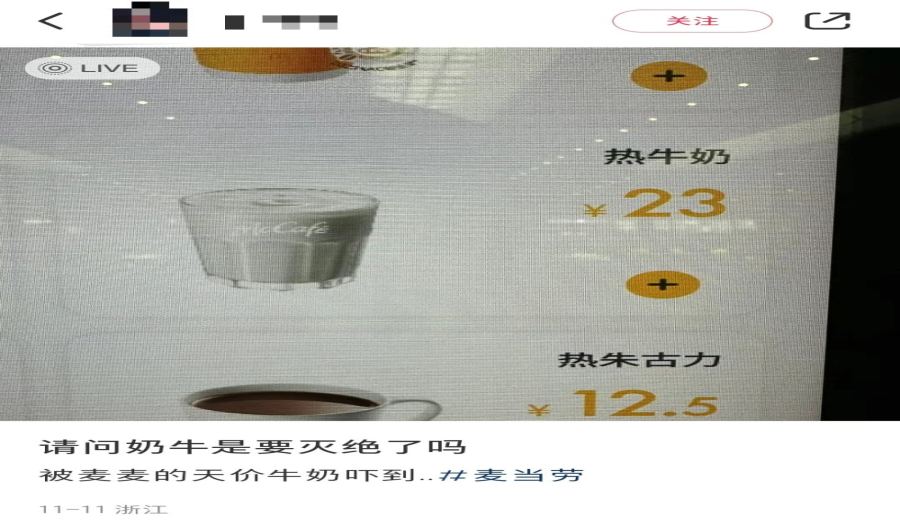
Introduction:A 23-yuan cup of hot milk at McDonald’s has sparked heated online discussion, earning it the nickname “milk assassin.” The price and milk source of this drink vary across different city locations, with pricing even higher in special commercial areas such as high-speed railway stations. This article delves into the pricing strategies of chain restaurants, uncovers the connection between milk quality and cost, and offers purchasing advice to help you better understand the business logic behind coffee and dairy products.
Recently, the topic of a 23-yuan cup of hot milk at McDonald’s has gone viral on social media, with netizens dubbing it the “milk assassin.” The discussion began with a customer’s complaint posted on a social platform on November 11, which quickly gained traction. Many were surprised by the price, with some exclaiming, “You could buy a whole carton of milk for the price of two cups,” or even questioning, “Is 23 yuan for freshly squeezed and brewed premium milk?”
In fact, according to information from McDonald’s official mini-program, this hot milk is available in three sizes—large, medium, and small—with prices of 23 yuan, 19 yuan, and 15 yuan respectively, and the price is the same for both hot and iced versions. The medium size (approximately 354.84 ml or 12 oz) is priced at 23 yuan, about 4 yuan higher than the typical retail price. It’s worth noting that the milk source used in McDonald’s outlets can vary by city.
Some customers have shared personal experiences, claiming they witnessed staff members opening a bottle of store-bought pure milk—possibly costing only around 2.5 yuan—and pouring the heated contents directly into a cup for sale after machine heating. This has led many netizens to question the pricing rationale, arguing that “it’s advertised as freshly made, but it’s actually just low-cost heating.”
However, some netizens have pointed out that special commercial areas like high-speed railway stations typically have higher rents and operational costs, making higher pricing the norm. If the price of an individual item seems too steep, choosing a combo meal is usually more economical—or you can opt not to purchase it at all.
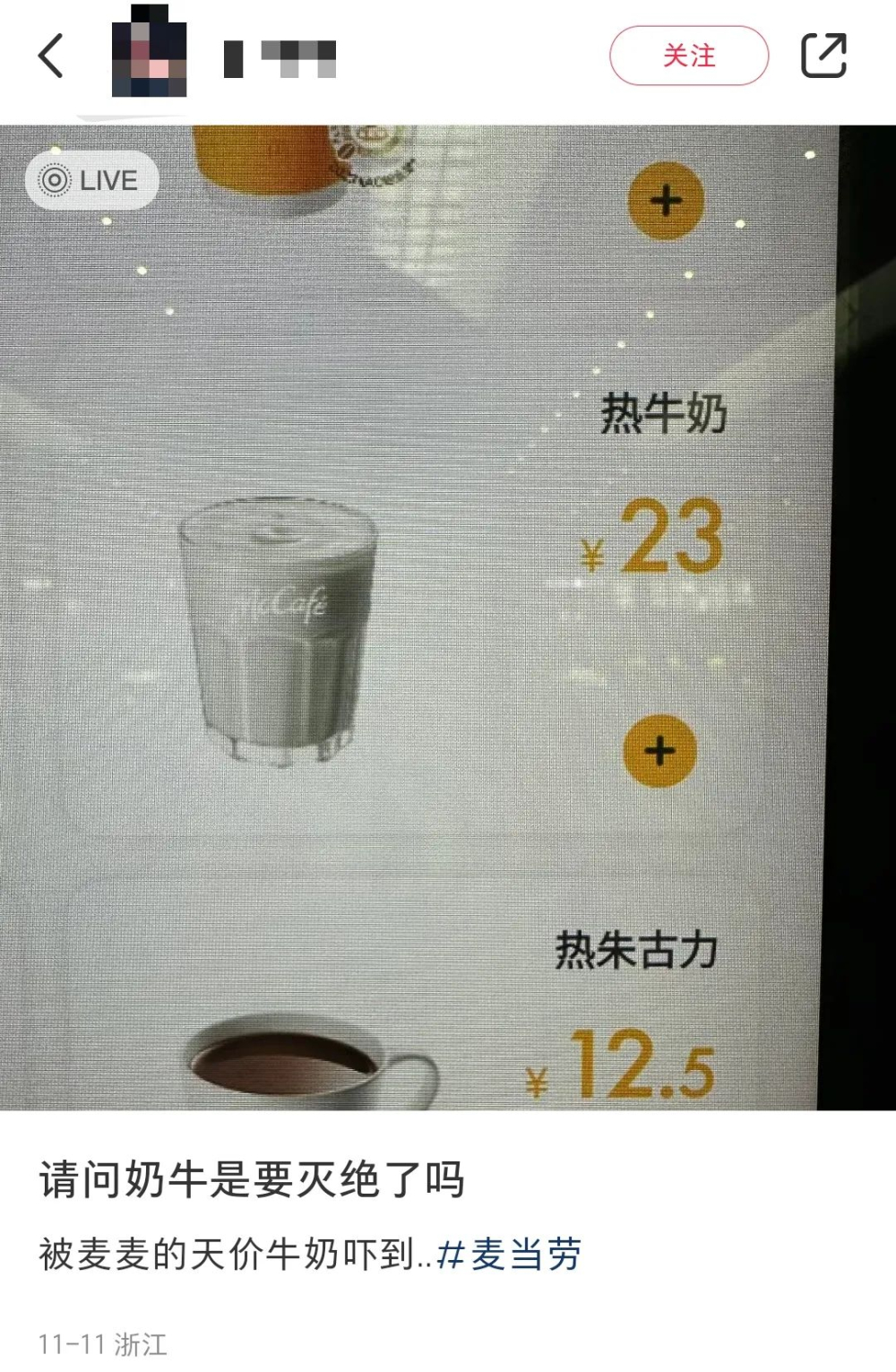
In response to the controversy over the 23-yuan hot milk, a customer service representative from a McDonald’s outlet at a high-speed railway station explained: “Restaurant prices at train stations are a bit higher, and there are naturally differences between various commercial areas and budget-friendly eateries.” As for how this milk differs from regular store-bought milk, the representative admitted they were unsure.
According to media reports, McDonald’s officially explained that this hot milk uses San Yuan fresh milk, which is only heated via machine. Regarding why the price is uniformly set so high, the official response was: “This is part of our unified pricing strategy—all outlets sell this hot milk at this price.”
Further investigation through McDonald’s official mini-program reveals that besides Beijing, some outlets in cities like Shanghai and Guangzhou also sell this hot milk, but the milk sources differ. Staff at a Shanghai outlet mentioned they use Bright’s Pure Fresh Milk, while a Guangzhou outlet uses Vitasoy Fresh Milk—a well-known Hong Kong brand that originated in 1940.
This incident shows that the pricing of chain restaurants is influenced not only by location and operational costs, but also by the choice of milk source. When making purchases, consumers can look beyond the price tag and pay attention to the origin of the ingredients used, allowing them to make more informed choices. For coffee enthusiasts, understanding these details can also help better assess the cost-effectiveness and quality of beverages.
The above content is compiled by CoffeeHunters, a coffee news website.


