







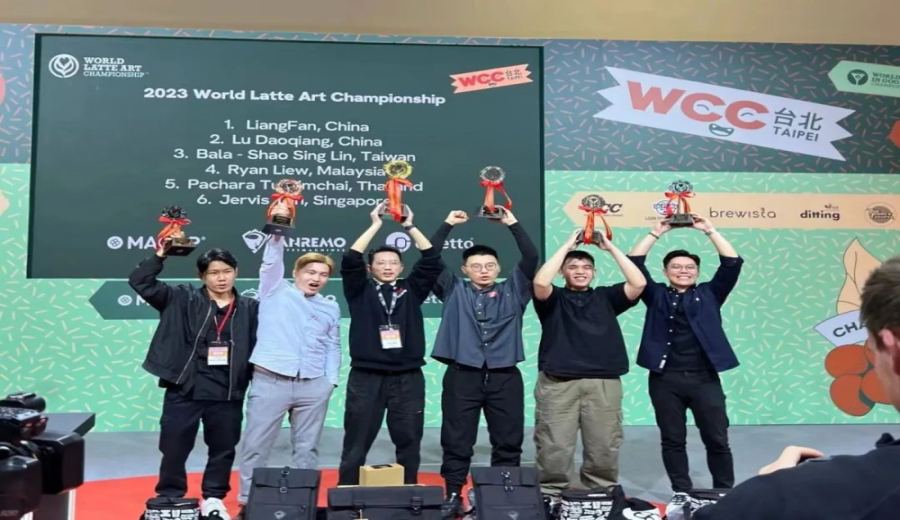
Introduction:The 2023 World Latte Art Championship (WLAC) was held in Taiwan, China, where Chinese contestant Liang Fan won the championship with innovative techniques, becoming the first Chinese national to claim the world title in this competition. He, along with mainland Chinese contestant Lu Daoqiang and Taiwanese contestant Lin Shaoxing, swept the top three spots. This article delves into how Liang Fan integrated mathematical Boolean operations and photographic composition into his latte art creations, and takes you through the competition’s scoring criteria and the design philosophy behind the champion’s work.
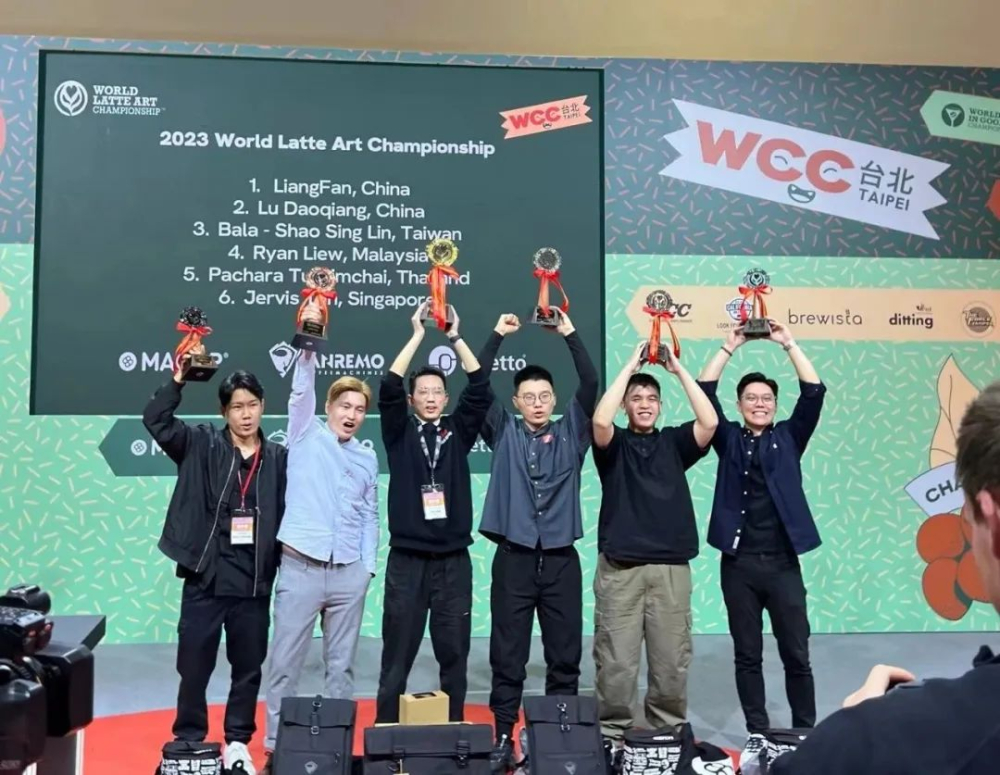
The 2023 World Latte Art Championship (World Latte Art Championship, abbreviated as WLAC) concluded successfully in Taiwan, China. This event is not only a top-tier gathering in the field of latte art but also marks the international rise of Chinese baristas. Chinese contestant Liang Fan delivered an outstanding performance to win the championship, becoming the first Chinese national to claim the world title in the history of the competition. He, along with mainland Chinese contestant Lu Daoqiang and Taiwanese contestant Lin Shaoxing, swept the top three spots, creating a historic moment.
As the world’s second-largest coffee competition, WLAC is the highest arena in the field of latte art, attracting top baristas from around the globe to compete. In the competition, baristas are required to create exquisite patterns using espresso and steamed milk as the base, showcasing their exceptional latte art skills. Judges score based on five criteria: color contrast, pattern difficulty, pattern completion, pattern symmetry, and pattern creativity. Each criterion is scored out of 5 points, with a total possible score of 25.
Liang Fan demonstrated extraordinary creativity and technical skill during the competition. He incorporated mathematical Boolean operations (Boolean Operation) into his latte art, using three types of circular combinations—intersection, union, and exclusion—to create ever-changing yet neatly beautiful designs. His finals works included a “rooster,” a “dinosaur,” and a “kangaroo.” These pieces were not only visually stunning but also reflected a perfect blend of rationality and sensibility.
As early as the 2018 World Latte Art Competition, Liang Fan began experimenting with incorporating compositional concepts from photography into coffee latte art, striving for the ultimate aesthetic in cup designs. He believes that an excellent latte art piece is a combination of emotion and rationality, a harmonious coexistence of softness and structure. This unique creative philosophy enabled him to stand out on the international stage.
In addition to Liang Fan, mainland Chinese contestant Lu Daoqiang also delivered an impressive performance. With his finals piece featuring three vividly cartoonish dogs, he secured the runner-up spot. His work won favor with the judges for its intricate line composition. Taiwanese contestant Lin Shaoxing claimed third place, showcasing the solid strength of Taiwan’s baristas.
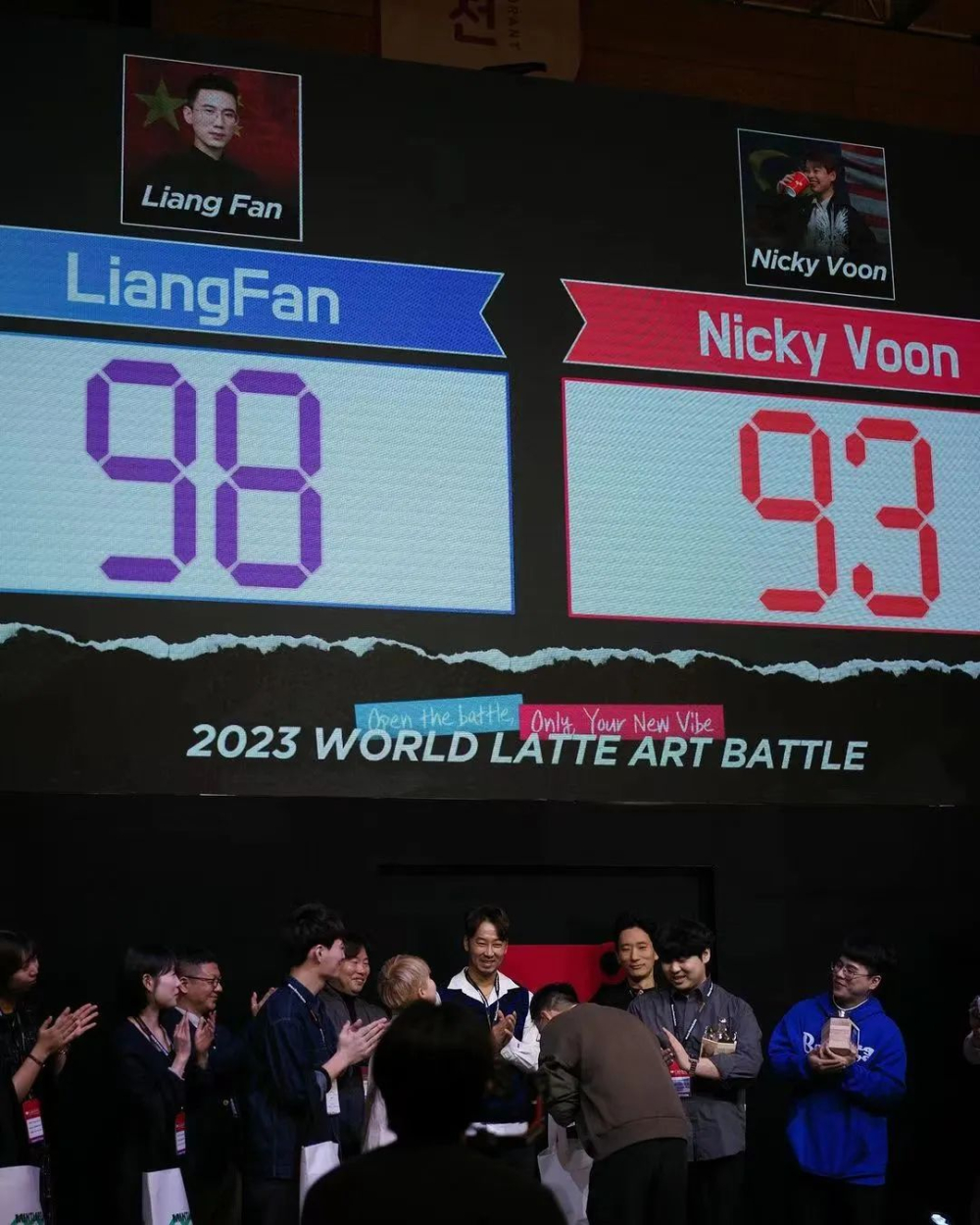
This competition is not only a victory for Chinese latte art but also a powerful showcase for the global coffee industry. The outstanding performances of Liang Fan, Lu Daoqiang, and Lin Shaoxing allowed the world to witness the rise and progress of China’s coffee industry, and inspired more domestic coffee professionals to pursue excellence.
Liang Fan’s journey to the championship was not only a breakthrough in technique but also a leap in creativity. By integrating mathematics and photographic composition into his latte art, he opened up new possibilities for the art of coffee latte. This cross-disciplinary innovative thinking is a key direction for the future development of coffee art.
The above content is compiled by CoffeeHunters, a coffee news website.


