







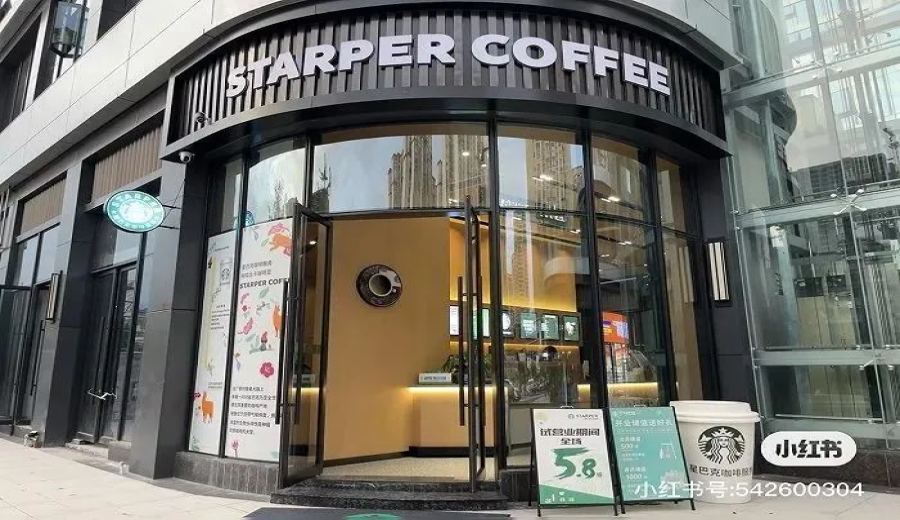
Introduction:In recent times, "STARPER COFFEE" stores that closely resemble Starbucks have sprung up in small county-level cities across China — from their logos to their menus, they are almost indistinguishable, with some even claiming to be Nestlé co-branded service stations. How are these businesses exploiting legal loopholes? How have Nestlé and Starbucks responded? This article delves into the tactics behind trademark infringement, expansion strategies, and offers key details to help consumers identify the differences and avoid falling into traps.
Recently, a type of coffee store called "STARPER COFFEE" has quietly emerged in smaller cities such as Ürümqi in Xinjiang, Lhasa in Tibet, and Sanming in Fujian. Their storefront designs, brand logos, and even menu structures bear an astonishing resemblance to those of Starbucks. These outlets not only replicate the iconic green mermaid logo, but also mimic the naming and pricing strategies of beverages, sparking widespread discussion among consumers.
Notably, some STARPER outlets have directly used Starbucks' classic green mermaid emblem on their signs, while their in-store menus even display the words "Starbucks Coffee Service," and they sell Starbucks-branded merchandise. Such high levels of imitation have led many customers to mistakenly believe that Starbucks has officially entered their local markets — but this is not the case.
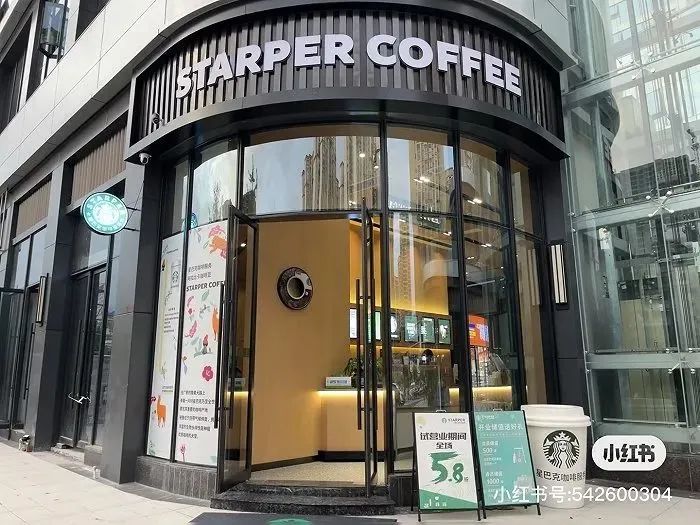
In response to market rumors that these outlets are part of a "Nestlé and Starbucks co-branded service station," Nestlé quickly issued a statement clarifying: "The 'STARPER' trademark is registered by Qatarr Supply Chain (Shanghai) Co., Ltd., which has no contractual relationship whatsoever with Nestlé or its authorized distributors. Nestlé explicitly states that this constitutes trademark infringement, and emphasizes that the 'Starbucks Coffee Service' program has never been open to franchising or agency operations. The related infringement issues have been handed over to the Starbucks China team for handling."
Further investigation reveals that the site selection strategy of these imitation stores is highly targeted — deliberately avoiding areas in first- and second-tier cities where Starbucks already has a presence, and instead focusing on small county towns with relatively lax regulation and weaker brand protection awareness, such as Qingyang County in Chizhou, Anhui, and Xichang City in Sichuan. They even target high-footfall but underbranded areas such as school campuses and farmers’ markets.
According to feedback from customers on-site, employees at STARPER outlets often claim to be "Nestlé and Starbucks co-branded service points," stating that they only offer some of Starbucks' products. However, when further questioned about whether they are official stores, most staff give vague responses such as "we are just a coffee service point in a small county town, not a direct outlet." These claims clearly contradict Nestlé's official stance.
Nestlé customer service further explained that its "Starbucks Coffee Service" program, in partnership with Starbucks, is limited to office coffee corners. Store decorations are strictly regulated to only display the words "Starbucks Coffee Service," and the use of any non-official identifiers such as "STARPER" is strictly prohibited. This directly refutes the so-called "co-branding" claims made by STARPER outlets.
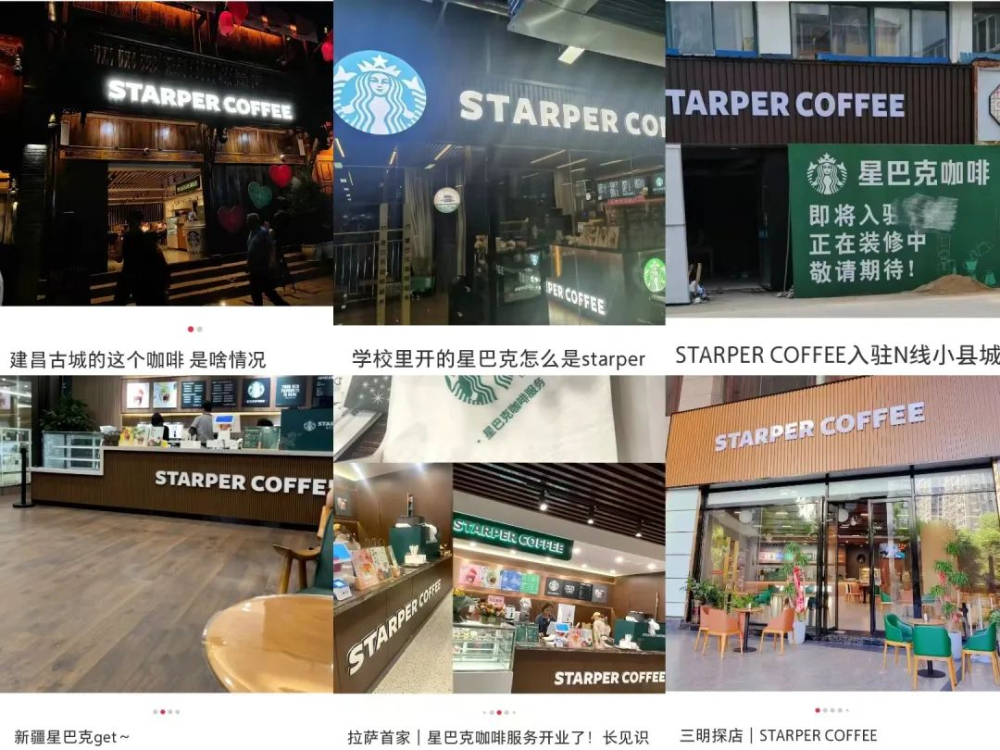
A review of corporate registration records shows that both Qatarr Supply Chain (Shanghai) Co., Ltd. mentioned in Nestlé’s statement and Jiangsu Bohang Supply Chain Management Co., Ltd. were established in 2021, and both have applied for multiple trademarks similar to Starbucks' brand this year. Qatarr applied for the "STARPER" trademark, while Jiangsu Bohang applied for similar ones such as "STARKAY COFFEE" and "SHARPER." Currently, these applications are all under substantive examination and have not yet been officially approved.
This series of imitation actions reflects how some supply chain companies are attempting to exploit the fuzzy boundaries of consumer recognition of well-known brands to seize business opportunities in lower-tier markets. However, according to relevant trademark laws, the unauthorized use of similar trademarks and the imitation of a brand’s visual identity system constitutes clear infringement. Consumers should remain vigilant when encountering such situations.
Industry insiders advise that identifying genuine Starbucks stores can be done by paying attention to several key details: the store must display an official Starbucks authorization certificate, the interior decor and staff uniforms must follow unified design standards, and product packaging will only feature the official Starbucks logo — never third-party names such as "STARPER." Additionally, information about official Starbucks stores can be verified through its global website or official app to avoid mistakenly entering imitation outlets.
The above content is compiled by CoffeeHunters, a coffee news website.


