







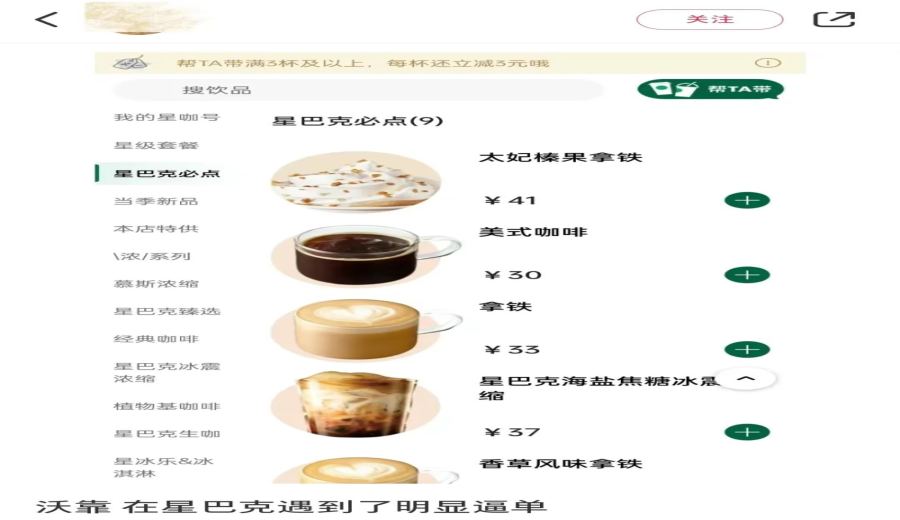
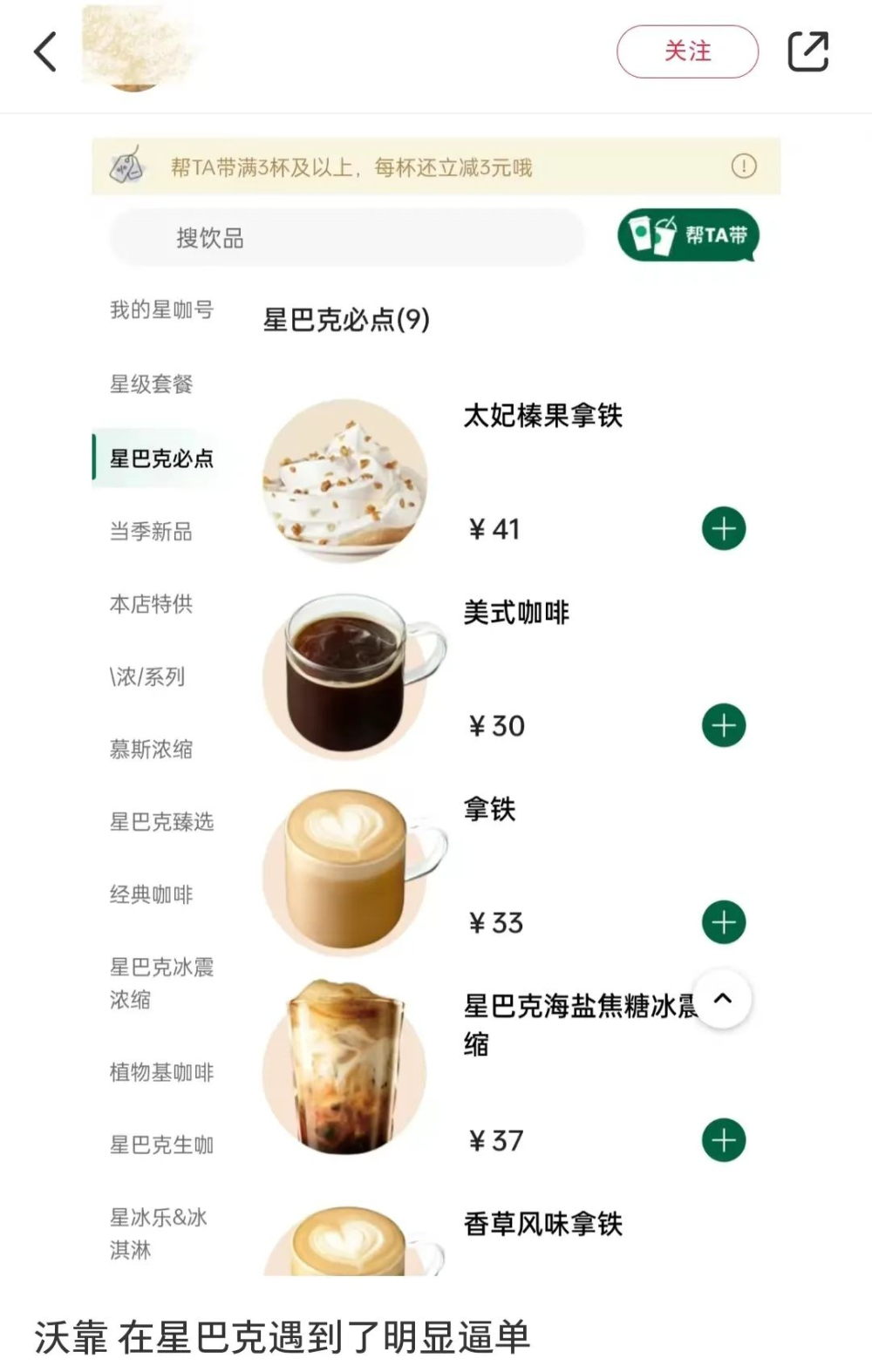
Introduction:A netizen encountered a middle-aged woman at Starbucks who forcibly asked them to place an order via QR code and even threatened, "The air conditioning isn’t free, you know," sparking widespread discussion about issues such as ticket scalping and collusion between staff and scalpers. Beyond examining Starbucks’ positioning and management of its "third space," the incident also revealed common tactics used by scalpers to profit from point vouchers, helping consumers avoid potential consumption traps.
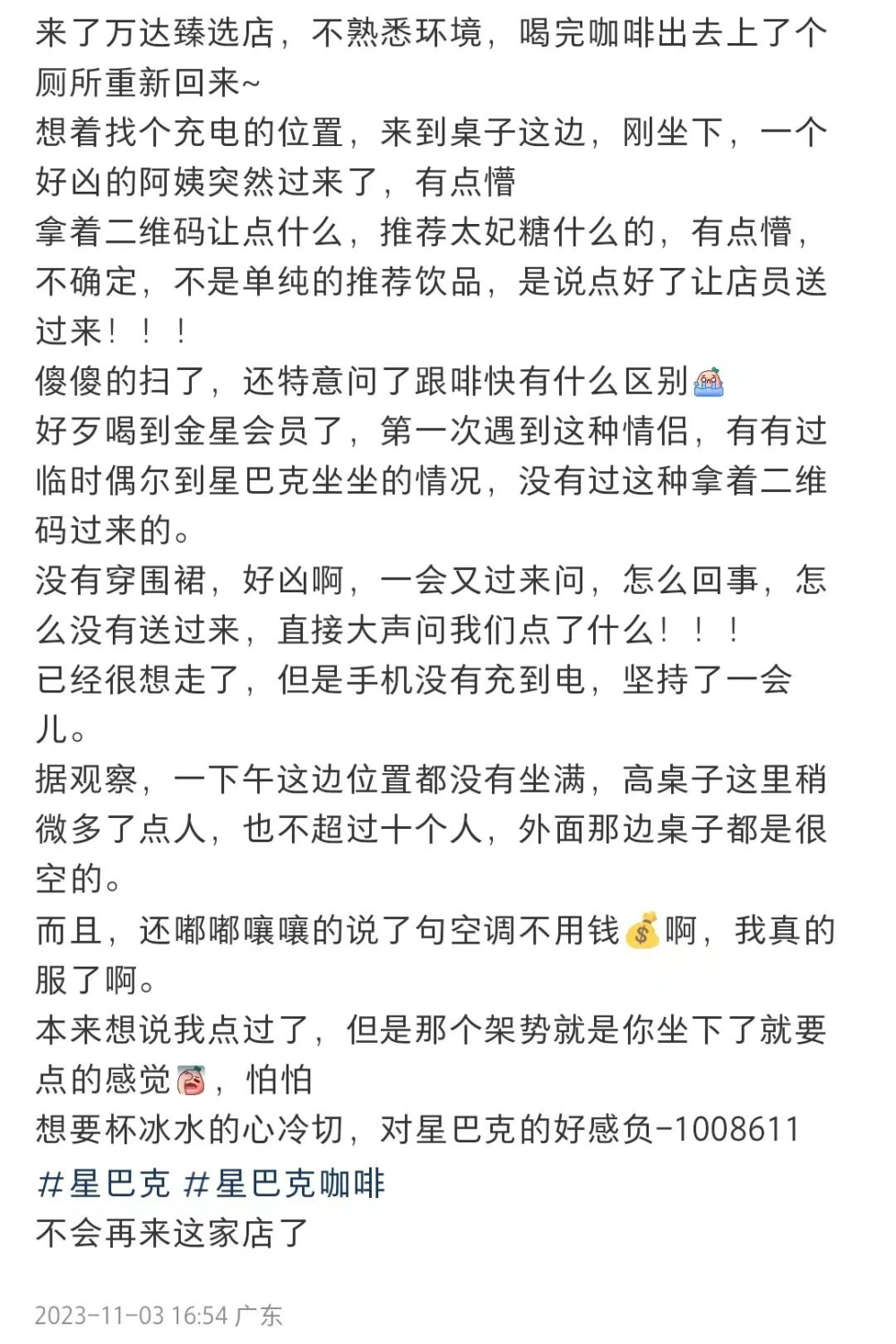
Recently, a netizen shared an unpleasant experience at Starbucks on Xiaohongshu: after purchasing and drinking her coffee, she temporarily left and returned to change seats, only to be handed a QR code by an apron-less middle-aged woman who insisted she place another order. The woman was aggressive, even threateningly saying, "The air conditioning isn’t free, you know," leaving the netizen deeply uncomfortable.
According to the netizen’s account, she had already ordered a drink and clearly stated she didn’t need another, but the woman insisted she place an order via the QR code, which would then be served by a staff member. "It felt like I had no choice but to order—her presence was very overbearing." Even more confusing was that the café had plenty of empty seats, with fewer than ten people at the high-top tables and many unoccupied spots in the dining area, meaning there was clearly no shortage of seating.
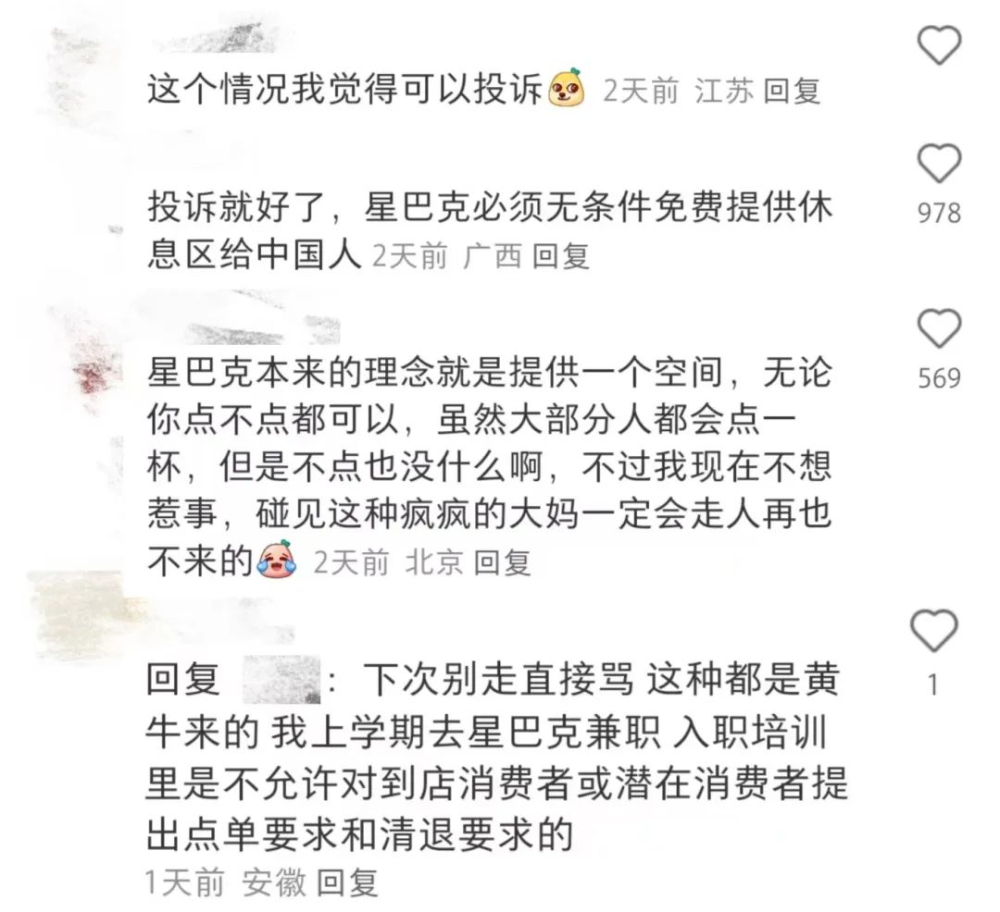
The incident quickly sparked online discussion. Some netizens argued that as a brand providing a "third space," Starbucks should allow non-paying customers to stay briefly, while others questioned whether tolerating "seat squatters" would negatively impact the experience of paying customers. Some suggested that if faced with similar situations, one should directly report it to café staff or even complain to Starbucks headquarters.
Regarding the debate over whether "all guests should be unconditionally admitted," an American netizen pointed out that this policy stemmed from an incident years ago when a U.S. Starbucks was protested for ejecting an unpaying Black customer. Afterward, the policy allowed people to sit without ordering, though it’s unclear if this is a global standard. In reality, Starbucks has never explicitly mandated that "everyone must be seated," but over time, a relatively lenient seating culture has developed.
As for the woman who demanded the QR code order, opinions among netizens varied. A Starbucks employee revealed that while staff may offer to help non-ordering customers place an order as an extended service, "this woman’s attitude was clearly inappropriate, and she didn’t seem like regular staff." Most netizens bluntly stated that Starbucks employees always wear aprons while working, "take off the apron and you’re off-duty," so the woman was very likely a scalper.
An insider further revealed that scalpers often use credit card points to redeem medium-sized drinks, profiting by about ten yuan per cup—a key reason why scalper-assisted ordering persists. The netizen also mentioned that the woman specifically sought out an apron-wearing staff member to assist, claiming, "She doesn’t know how," raising suspicions that the two might know each other or even be colluding.
Whether it’s the prevalence of scalpers or suspected staff complicity, both seriously undermine consumers’ trust and experience in Starbucks’ "third space." As a globally recognized brand, Starbucks must strengthen store management to prevent such disorder, ensuring customers can enjoy their coffee and the space in a comfortable, safe environment.
For consumers, if faced with similar situations, it’s advised to stay calm, firmly reject unreasonable solicitations, and report the issue to staff or headquarters if necessary—to collectively uphold a positive consumption environment.
The above content is compiled by CoffeeHunters, a coffee news website.


