







Introduction:Opening a coffee shop may seem romantic, but it actually comes with challenges such as high commission fees from delivery platforms and unstable customer traffic. This article delves into how independent coffee shops struggle when delivery orders yield only a few cents in profit, and explores the reasons behind the wave of physical store closures. Through real-life cases, it reveals the cost structure of operations and the current market situation, helping readers understand the practical challenges in the coffee industry and possible directions for transformation.
Just how much loss can opening a coffee shop entail? Many shop owners have shared actual income data from delivery platforms on social media: a cup of coffee priced at around twenty-plus yuan may end up earning the owner just a few cents—or even result in a negative order—after deducting platform discounts, promotional subsidies, and high commissions. Even so, many shops continue to offer delivery services because if they opt out of the promotions, they might not get any orders at all.
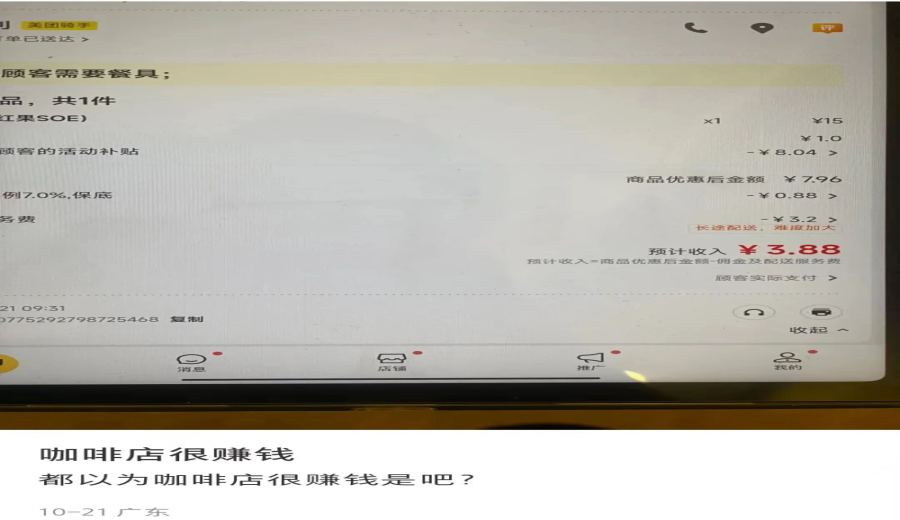
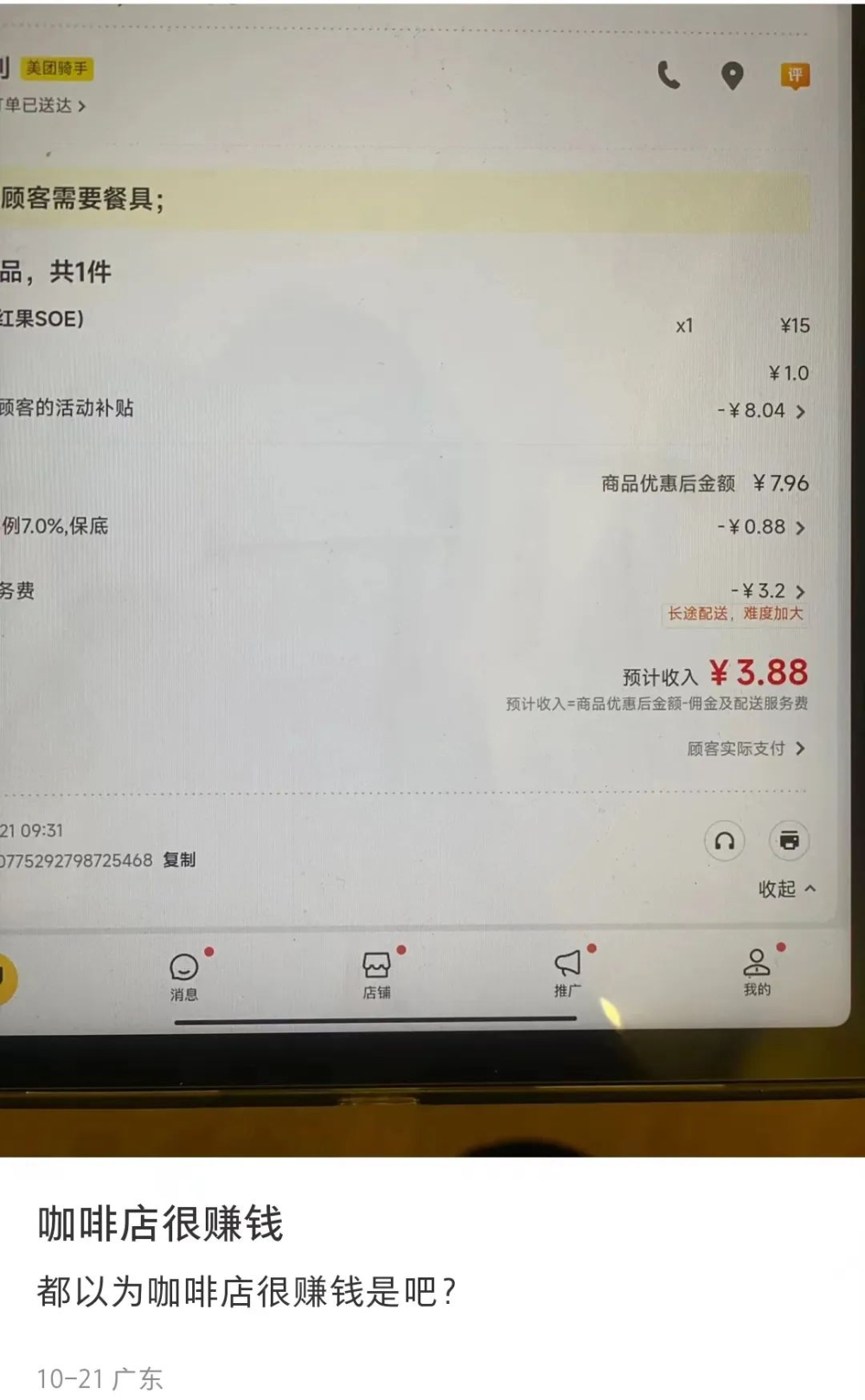
In fact, such cases are not isolated. An independent coffee shop owner shared a screenshot of a delivery platform order showing an estimated income of just 3.88 yuan, which resonated with many peers. Numerous shop owners posted their own revenue situations: a coffee originally priced at 21 yuan often ends up earning just a few yuan—or even a few jiao—after all kinds of discounts and platform commissions. More shockingly, some owners reported receiving single orders as low as 0.38 yuan or 0.32 yuan, and even orders that resulted in negative income.
Faced with such an operating environment, why do many shop owners still insist on offering delivery services? When asked “why not raise delivery prices or opt out of platform promotions,” the owners admitted that raising prices or withdrawing from promotions could mean zero orders for the day. Under the platform-controlled traffic distribution mechanism, not participating essentially means being eliminated.
Compared to the “meager profit” or even “loss” of delivery services, many physical stores also face the dilemma of having few customers. On regular days, aside from slightly busier holidays, coffee machines often run only a few times on weekdays, with very few customers in the shop—some periods rely even on baristas visiting each other to maintain some foot traffic. Some owners admit that daily revenue may range from 0 to 100 yuan, far below daily operating costs.
This phenomenon is also directly reflected in the current “coffee shop transfer wave” in the market. Searching for the keyword “coffee shop transfer” on social platforms like Xiaohongshu reveals a surge in related posts—from just a handful per day in the past to dozens of transfer listings now. These shops for transfer are spread across big cities and small towns, ranging in size from multi-story, several-hundred-square-foot complexes to tiny shops of just over ten square feet. Transfer methods vary, including full shop transfers, empty space rentals, and some even include equipment and technical transfers, reflecting the pressure shop owners feel to offload their businesses quickly.
Many first-time entrepreneurs entering the coffee industry often start with the optimistic mindset of “open the shop first, then cultivate a loyal customer base,” believing that even if they don’t make money initially, they can eventually turn a profit with a stable clientele. However, when faced with the realities of rent pressure, daily operational expenses, and long-term income that falls short of expenditure, they realize that running a coffee shop is far more challenging than imagined. Many owners say their actual expenses often exceed the original budget by more than double, and in the end, they simply have to grit their teeth and endure clear losses.
Despite the harsh market conditions, many newcomers continue to rush into the coffee industry. Under every transfer post, it’s not hard to find newcomers actively asking about the transfer price and details. Even in the face of shared experiences about challenges and losses, many still hold onto the dream that opening a coffee shop can help them achieve their dreams or even get rich, persisting in entering this highly competitive and low-margin market.
This phenomenon may well prove the old saying: “You won’t turn back until you hit a wall.” For many coffee-loving entrepreneurs, only through firsthand experience can they truly understand the realities and challenges of this industry.
The above content is compiled by CoffeeHunters, a coffee news website.


