








Introduction:During the process of latte art, the thickness and density of milk foam are key factors that determine success or failure. Many baristas and amateur enthusiasts have faced challenges such as foam that is too thin, too thick, uneven, or layered. In fact, by carefully listening to the “hissing” sound produced when steaming milk with the steam wand, you can instantly gauge the amount of air being incorporated and the steaming condition, thereby controlling the texture of the milk foam and creating the fine, smooth foam ideal for latte art. This article will delve into the relationship between steam sounds and milk foam, and teach you how to adjust air intake by controlling the duration of the sound to craft the perfect foam.
In the process of creating latte art, the texture of milk foam is crucial. Fine, smooth, and well-flowing milk foam not only makes latte art patterns clearer and more aesthetically pleasing but also enhances the overall taste experience of the coffee. However, many people often encounter issues such as foam that is too thin, too thick, coarse, or even layered while practicing steaming milk. In reality, by using your ears to listen to the sounds produced by the steam wand, you can effectively assess the state of the foam, adjust your steaming technique accordingly, and achieve the desired result.
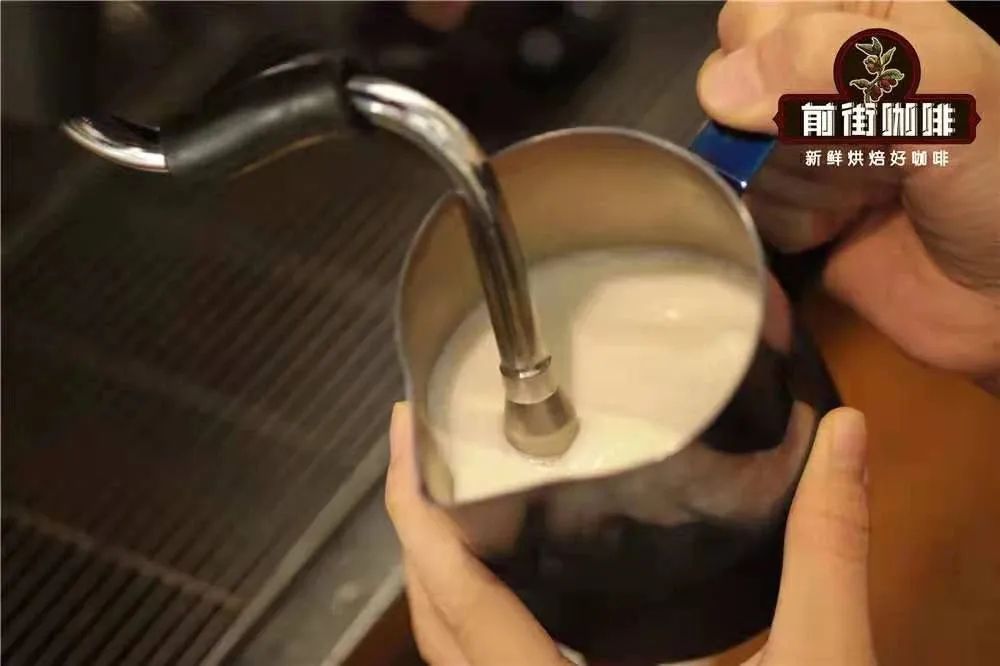
When we use the steam wand of an espresso machine to steam milk, high-temperature steam is ejected from the nozzle, comes into contact with the milk, and creates a vigorous interaction. If the steam wand is fully submerged in the milk, the temperature of the milk will rise quickly; however, when the tip of the steam wand is partially exposed above the liquid surface—meaning it is half-submerged—air enters the milk along with the steam and is encapsulated by the milk’s proteins to form tiny bubbles. This is the basic principle behind milk foam formation. During the initial stage of steaming, controlling the appropriate amount of air intake allows the foam to achieve the desired thickness and texture.

One of the most直观 ways to judge the state of steamed milk foam is by listening to the sound emitted by the steam wand during operation. When the steam wand is partially exposed to the air and air is introduced into the milk, a sound similar to tearing paper—a “hissing” noise—is produced. The duration and intensity of this sound actually reflect the amount of air being incorporated, which in turn affects the thickness and texture of the foam. Becoming familiar with these sound characteristics can help you adjust your steaming technique in real time and avoid mistakes.
The following is an experimental comparison demonstrating how different durations of the “hissing” sound affect the final outcome of the milk foam. The experiment used milk pitchers of the same capacity and material, under the same steam pressure, while only adjusting the amount of time the steam wand was exposed above the milk surface to observe changes in the resulting foam.
Experiment 1: Short hiss (short air intake time)
When the steam wand first starts operating and begins to create a whirlpool in the milk while exposing the steam tip, you will immediately hear a “hissing” sound—but this sound lasts for only about 0.5 to 1 second, after which you lift the pitcher to fully submerge the steam wand in the milk, entering what is known as the “texturing phase.” This phase primarily aims to refine the already-formed foam. However, due to the insufficient initial air intake, the volume of the foam is noticeably inadequate. The resulting foam is almost liquid-like, with excellent flow but extremely low thickness, showing almost no change in the milk surface, making it very unsuitable for subsequent latte art and resulting in a flat, one-dimensional taste.
Experiment 2: Long hiss (long air intake time)
Conversely, if during the initial operation of the steam wand you allow the steam tip to remain exposed above the milk surface and continue producing a “hissing” sound—and this sound persists for about 7 to 8 seconds—it indicates that a large amount of air has been introduced into the milk. Subsequently, when the steam wand is fully submerged into the milk for the texturing phase, a heavier suction sound can be heard. While this method does produce abundant foam, the excessive air causes the foam to become overly fluffy, excessively thick, and poor in flowability, with a coarse texture—similar to the foam used in cappuccinos. Foam that is too thick can easily cause layering in the drink and negatively impact the overall balance of taste.

So, what is the ideal state of milk foam for a standard latte? The key lies inmoderate air intake and consistent texturing. First, when beginning to steam the milk, adjust the angle between the steam wand and the pitcher so that the steam tip is about halfway exposed above the milk surface. Once the steam is activated and the milk begins to whirl, you will hear a brief and clear “hissing” sound. It is recommended to maintain this phase for about 2 seconds to achieve the right amount of air intake. Then, slightly lift the pitcher so that the steam wand is fully immersed in the milk, entering the texturing phase. At this point, the sound becomes a steady and subtle suction noise, which should continue until the milk temperature reaches 55 to 65 degrees before stopping.
This approach results in fine, smooth, and well-flowing milk foam—neither too thin nor too thick—which is the ideal foam condition for latte art. It enables clear patterns and a balanced taste.
In summary, the length of the “hissing” sound directly reflects the amount of air intake during the steaming process. A short sound indicates little air intake and thinner foam; a long sound means too much air and overly thick foam; if only a sharp, piercing sound is heard throughout, it means no air has been incorporated at all, and the foam fails to form. By practicing and learning to listen to these sound characteristics, you can more intuitively grasp the steaming rhythm and avoid common foam mistakes.
Finally, remember that in addition to sound judgment, the insertion angle of the steam wand, the initial temperature of the milk, the shape and capacity of the pitcher are also important factors affecting foam quality. It is recommended that during daily practice, you observe and listen more attentively to gradually develop a sensitivity to the state of the foam, so you can consistently produce perfect foam suitable for all kinds of coffee beverages.
The above content is compiled by CoffeeHunters, a coffee news website.


