







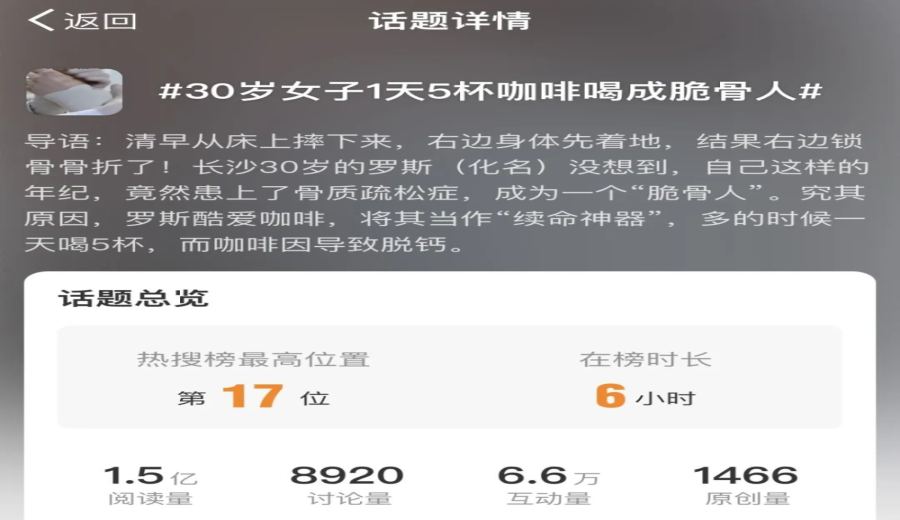
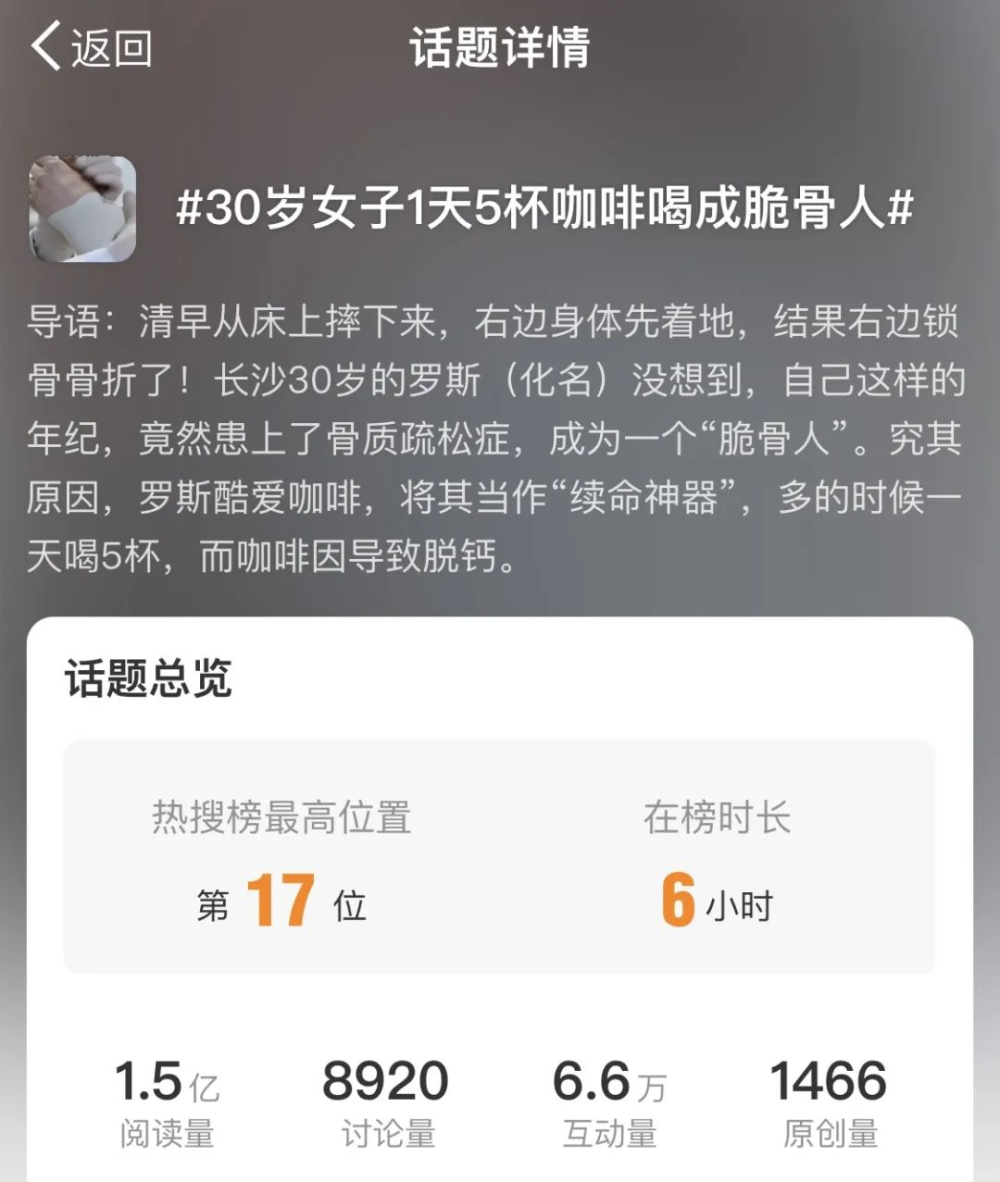
Introduction:A 30-year-old woman in Hunan was unexpectedly diagnosed with osteoporosis after drinking five cups of coffee daily, even suffering a clavicle fracture from a minor fall. This case has sparked heated discussion: does caffeine really accelerate calcium loss, putting young people at risk of osteoporosis? This article analyzes the connection between coffee and bone health from a scientific perspective, breaks down the daily safe intake limit, and offers practical advice to help coffee lovers balance enjoyment with well-being.
In modern life, coffee has long become an essential daily pick-me-up for many office workers, with some even drinking several cups a day to get through work and study. However, a recent news story about a 30-year-old woman developing osteoporosis due to excessive coffee consumption has led many to re-examine their coffee habits.
According to media reports, this junior high school teacher living in Changsha, Hunan, often stayed up late preparing lessons due to a heavy workload, gradually forming the habit of drinking up to five cups of coffee a day. One day, she accidentally fell off her bed and experienced severe pain in her right shoulder. After seeking medical attention, she not only found out she had a clavicle fracture but was also diagnosed with osteoporosis, with bone density dropping below -2.5 — a clear sign of significant bone loss.
Doctors pointed out that her age should not have made her part of the high-risk group for osteoporosis, and long-term heavy caffeine intake was likely one of the key factors worsening her condition. Excessive caffeine can interfere with the intestinal absorption of calcium and increase the excretion of calcium through urine. Over time, this may lead to insufficient calcium in the bones, ultimately affecting bone density.
Once this news broke, it immediately triggered intense discussion among netizens on social platforms. Some users argued that this case is an extreme individual example and that osteoporosis cannot be entirely blamed on coffee. Some netizens shared their own experiences, stating they had regularly consumed over three cups of coffee a day for years — even during pregnancy — without showing any signs of calcium deficiency in regular health checkups, suggesting that individual body differences are also a significant factor.
According to multiple studies, caffeine in coffee can indeed affect calcium balance, especially when intake is relatively high. Generally, each cup of coffee contains about 80 to 150 milligrams of caffeine, and according to nutrition experts’ recommendations,keeping daily caffeine intake within 300 milligrams is considered safe for most people, which roughly equates to 2 to 3 regular cups of coffee. However, consuming more than 400 milligrams per day may negatively impact bone health.
Specifically, caffeine can inhibit the absorption of calcium ions by the small intestinal mucosa while promoting the excretion of calcium by the kidneys. The combined effect of these actions may reduce the amount of available calcium in the body, further affecting bone deposition and renewal. Particularly for adults who consume insufficient calcium or are past their peak bone mass period, long-term heavy coffee consumption can more easily exacerbate the risk of bone loss.
Experts suggest that if reducing daily coffee intake isn’t feasible, some simple methods can help balance calcium loss. For instance, adding an appropriate amount of milk to coffee not only adjusts the taste, but the calcium in the milk can also effectively compensate for calcium loss caused by caffeine. In addition, one’s daily diet should include more calcium-rich foods such as dark green vegetables, tofu, dried small fish, and nuts, all of which contribute to maintaining bone health.
In summary, coffee itself is not the sole culprit behind osteoporosis. The key lies in the“quantity” and “overall balance of diet and lifestyle habits”. For those who regularly drink multiple cups of coffee a day, it is advisable to moderately control the number of cups and pay attention to daily calcium supplementation to balance the energizing effects of coffee with long-term bone health.
The above content is compiled by CoffeeHunters, a coffee news website.


