







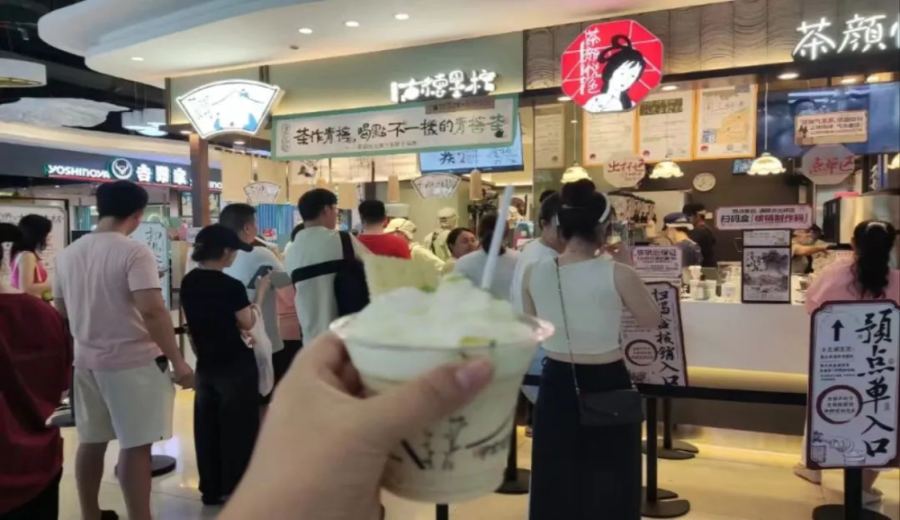
Introduction:Cha Yan Yue Se (Tea.Yeah) has once again expanded its beverage offerings by launching a new sub-brand exclusively focused on lemon tea, named “Gu De Mo Ning.” The first five stores began trial operations in Changsha on September 19. While riding the wave of the rapidly growing lemon tea market, the new brand has sparked polarized consumer feedback due to its continuation of the parent company’s “verification-and-queue” model and its poetic yet hard-to-understand menu design. This article delves into the new brand’s strategy, the market background, and real consumer experiences.
The competitive landscape of the beverage market has made brand cross-sector expansion and market segmentation a clear trend. Tea.Yeah has made another move by unveiling its brand-new sub-brand “Gu De Mo Ning,” dedicated entirely to lemon tea items, all on September 19, 2024, in Changsha. The first five stores were not opened as standalone locations but instead set up within specific zones of existing large Tea.Yeah outlets, leveraging existing foot traffic to quickly build initial exposure and attract first-time customers.
This is not Tea.Yeah’s first attempt at managing sub-brands. As early as 2015, it launched the literary-style “Zhihu Cha Ye,” which was later integrated back into the main brand in 2019. In 2022, it introduced “Yuan Yang Coffee,” positioned as “new Chinese-style coffee & tea,” aiming to capture the mid-to-low price coffee market. The launch of “Gu De Mo Ning” this time clearly reflects the brand’s bet on the strong demand for lemon tea products.
According to Meituan’s “2022 Tea Beverage Category Report,” the sales volume of lemon tea in 2022 saw an annual growth rate exceeding130%, indicating that consumer preference for refreshing lemon-based drinks continues to rise. Capitalizing on this trend, Tea.Yeah plans to expand Gu De Mo Ning to between15 and 20stores in the Changsha area during 2024, striving to secure a foothold in the fast-growing lemon tea market.
However, initial feedback from consumers has not met expectations. Most criticized is the continuation of Tea.Yeah’s signature “verification-and-queue” process. Like the main brand, Gu De Mo Ning currently does not offer online ordering. Customers must first queue in person to place their orders and then queue again to pick them up. When collecting their drinks, staff need to scan a QR code on a paper receipt to verify the order before preparing the beverage on-site.
Due to limited store space, it is common to see three separate lines for ordering, verifying codes, and picking up drinks, making the overall flow congested and significantly increasing customers’ waiting time. Many netizens have left comments such as: “That same old annoying model—queue to order, then queue to pick up. So tedious.” “I really don’t get why you have to stand in line just for lemon tea.” “Classic Tea.Yeah style: want to drink? First, stand in line…” “This standing-in-line culture really needs to stop!” These remarks reflect the impact of this model on the customer experience.
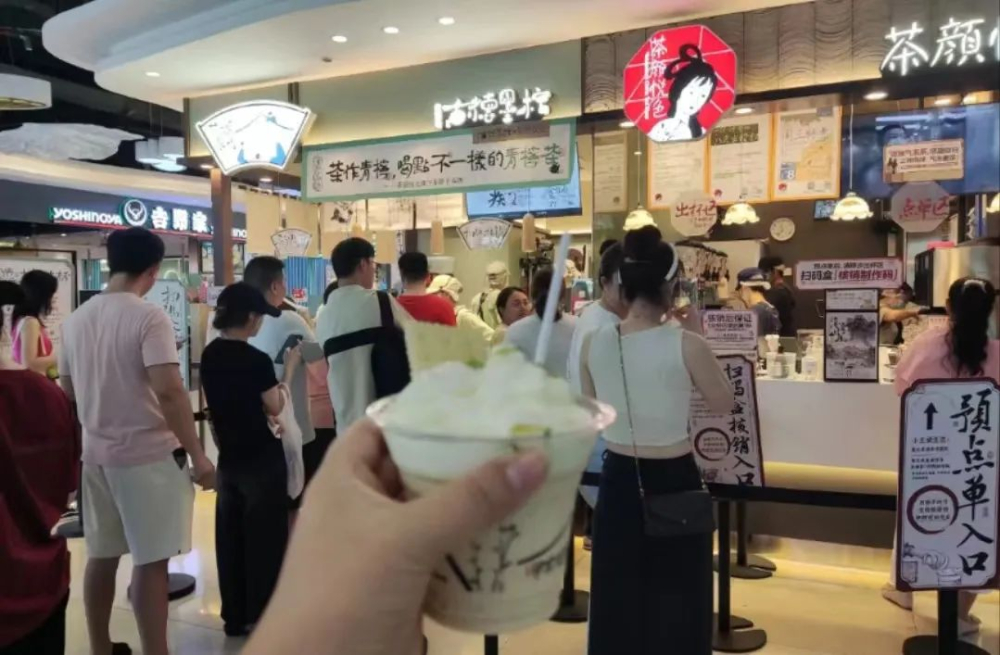
Aside from the queuing system, the menu design of Gu De Mo Ning has also become a hot topic. From leaked images of the menu circulating online, it can be seen that drink names use a lot of classical Chinese expressions, such as “Xiao Yao Pian” (Carefree Chapter) and “Fang Qing Song” (Relaxing Pine), paired with a unique calligraphic-style layout. Though seemingly rich in cultural charm, these designs have left many consumers puzzled.
The brand explained that this design aims to convey the spirit of traditional Chinese aesthetics, attempting to integrate cultural elements into modern beverage presentation. However, in reality, many customers on-site found the menu content difficult to comprehend. Comments such as: “Yesterday when I ordered, I was completely clueless about what to get.” “Looking at the big titles like ‘Xiao Yao Pian’ and ‘Fang Qing Song’ on the mini-program, plus most of the drink names being abstract and artistic, I really had no idea what you’re actually selling.” “Can you please switch back to the original style? This literary vibe really doesn’t suit your brand.” These remarks reflect the actual challenges consumers face when making selections.
In summary, as Tea.Yeah’s new attempt to tap into the lemon tea market, Gu De Mo Ning possesses the advantages of brand synergy and market growth potential. However, there remains considerable room for improvement in customer experience and menu communication. Whether it can sustain the parent brand’s popularity and stand out in the fiercely competitive lemon tea segment still awaits further scrutiny from the market and consumers.
The above content is compiled by CoffeeHunters, a coffee news website.


